
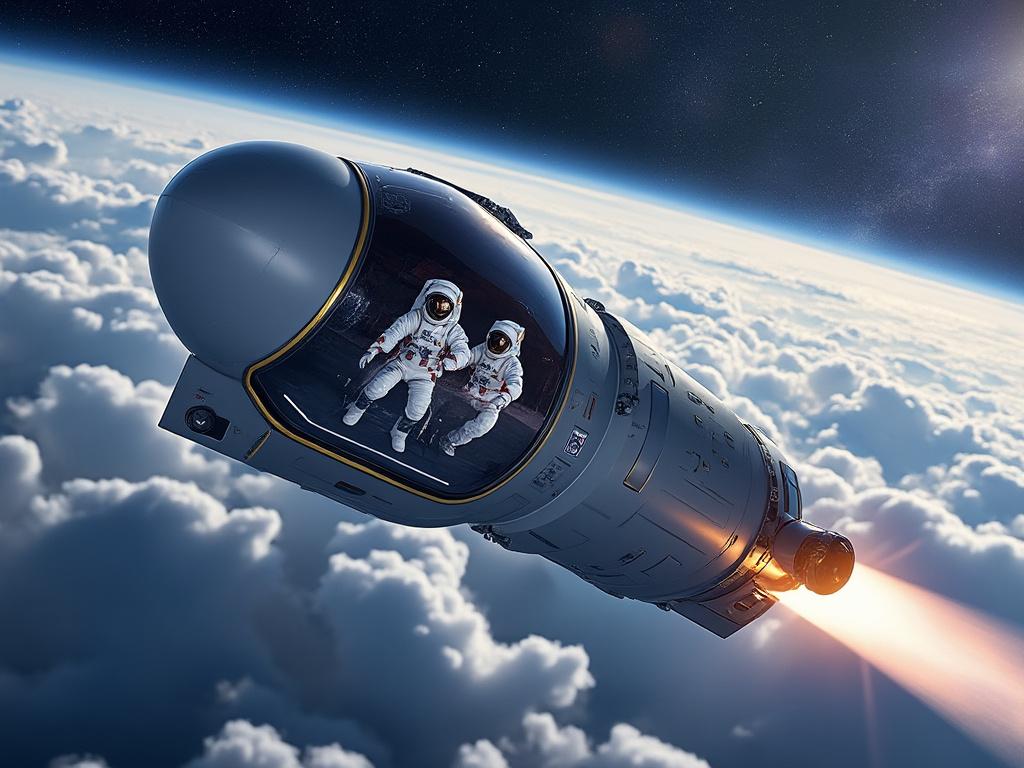
On August 1, 2025, NASA’s SpaceX Crew-11 mission embarked on a groundbreaking journey to the International Space Station. This mission highlights significant advancements in international space collaboration and cutting-edge scientific research, setting the stage for future space exploration endeavors.
Mission Launch and Crew Dynamics
As the SpaceX Falcon 9 rocket pierced through the murky skies, the Crew-11 mission, despite weather concerns, marked a historic launch from Cape Canaveral. This mission not only highlighted the resilience and technological finesse required for modern space travel but also brought together a remarkably diverse group of astronauts. The crew consisted of specialists from NASA, JAXA (Japan Aerospace Exploration Agency), and Roscosmos, each bringing unique skills and perspectives critical for the success of international space missions. Their collaboration underscores a global commitment to not only maintain but expand human presence beyond Earth, demonstrating an unprecedented level of teamwork and intercultural communication in the extreme environment of space.
Advancing Science in Microgravity
Following their triumphant launch into space, the Crew-11 team immediately set to work on a series of ambitious scientific experiments designed to advance our understanding of human and technological potential in microgravity. Their first project involved simulating lunar landings using a specially designed virtual reality environment. This technology not only prepares astronauts for future lunar missions but also provides invaluable data on spatial awareness and human-machine interaction in reduced gravity.
Another significant area of research focused on ocular health, studying the effects of prolonged exposure to microgravity on the human eye. This is critical, as vision impairment is a known risk for astronauts during extended space missions. The data gathered could lead to better protective measures and treatments for astronauts, as well as insights into ocular diseases on Earth.
Lastly, Crew-11 pushed the boundaries of regenerative medicine by conducting experiments on tissue regeneration in space. This research could lead to breakthroughs in healing wounds and regenerating organs, with microgravity providing unique conditions that are impossible to replicate on Earth, potentially revolutionizing medical treatments worldwide.
Life Aboard the ISS
Life aboard the ISS during the Crew-11 mission entails a blend of rigorous routine and pioneering collaboration. Astronauts adapt daily, managing scientific experiments relayed from the preceding chapter, such as ocular health studies, within confined, meticulously organized spaces. This period saw the seamless integration of new astronauts arriving via international spacecraft like Dragon and Soyuz, demanding robust coordination and real-time problem-solving skills. The communal lifestyle—sharing duties, meals, and personal experiences—strengthens team dynamics, essential for overcoming the isolation of space. Moreover, the continual arrival of supply vehicles like Cygnus ensures the sustenance of both crew and research activities, epitomizing a synergistic international effort to maintain the station’s role as a floating laboratory.
Technological Innovations and Challenges
The Crew-11 mission showcased significant technological advances and faced notable challenges, primarily using the robust capabilities of the SpaceX Falcon 9 rocket. This rocket, known for its reliability and reusability, enabled a smooth journey to the ISS. Beyond the launch vehicle, the resilience of the Crew Dragon spacecraft was paramount, incorporating enhanced life-support systems and automated docking procedures that helped maintain mission integrity despite previous program delays.
Adaptive strategies became crucial, especially in response to earlier setbacks in crew transportation which pushed NASA to improve contingency protocols and upgrade spacecraft communication systems. These enhancements significantly reduced the risks associated with prolonged space travel and laid a foundational stone for future long-duration missions.
The collaboration with commercial partners like SpaceX not only streamlined ISS operations but also brought fresh impetus to the commercial space flight sector, stimulating technological innovation and reducing costs. This partnership is pivotal for expanding human presence in space as envisaged in upcoming lunar and Mars missions, embodying a critical step toward more complex space exploration endeavors.
Looking Ahead to Future Missions
Building on the technological advancements discussed earlier, Crew-11’s mission serves as a critical stepping stone for future ventures beyond the International Space Station. With the data gathered on crew health, spacecraft systems, and operational efficiency, NASA and its international partners are meticulously tailoring protocols for the Artemis missions that aim to land humans on the Moon and, eventually, Mars. The insights into resource sustainability, such as closed-loop life support and advanced waste management systems, are imperative for ensuring that astronauts can thrive during extended lunar stays and the eventual Martian expeditions. This mission’s success paves the way for implementing these technologies in harsher environments, marking a significant progression towards a sustainable presence in space.
Conclusions
NASA’s Crew-11 mission not only signifies a leap in international space cooperation and scientific research but also sets a precedent for future exploratory missions. The groundbreaking work conducted aboard the ISS is integral to the ongoing pursuits in space exploration, reflecting the mission’s pivotal role in shaping the future of humanity beyond Earth.