
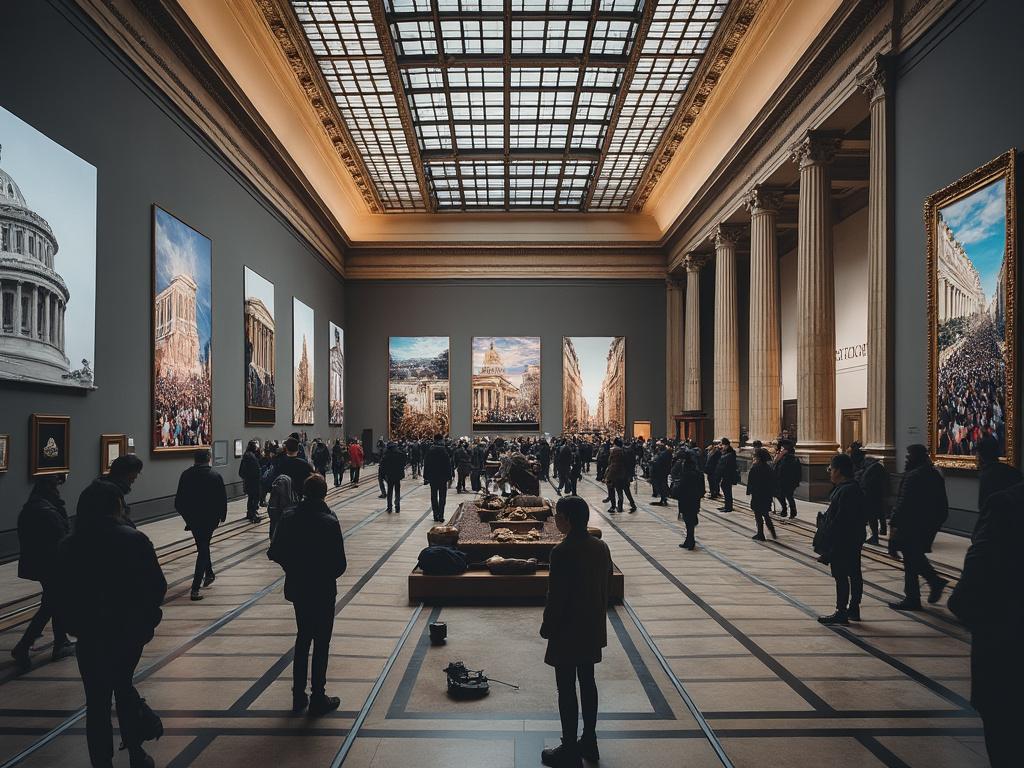
Donald Trump’s second term as President in 2025 marked the initiation of significant changes aimed at transforming American cultural institutions. His administration’s contentious policies have fueled debates over history, ideology, and the role of the arts in public life, raising questions about the future of national identity and historical narrative.
Clash at the Smithsonian
In a notable instance of cultural and historical reinterpretation under the Trump administration, references to Donald Trump’s impeachments were conspicuously removed from the Smithsonian’s exhibit on presidential power. This decision sparked significant controversy, highlighting tensions between preserving historical accuracy and projecting a particular political narrative. Government officials largely defended the removal as an effort to focus on presidential achievements unclouded by political bias, while public reaction was sharply divided. Critics argued that this act was part of a broader attempt to reshape American historical narrative to favor a more flattering view of the Trump presidency, asserting that it undermines the integrity and educational purpose of national institutions. This incident is emblematic of the ongoing struggles over how history is presented in America’s cultural institutions, reflecting a national debate over memory and identity.
Executive Orders and Escalating Pressure
In March 2025, an executive order signed by Donald Trump mandated federal cultural institutions to prioritize narratives emphasizing national achievements while suppressing those considered ‘divisive.’ This directive led to a significant shift in the operational ethos of these institutions. The Smithsonian, typically a bastion of pluralistic and comprehensive historical narrative, found itself at a crossroads between compliance and resistance. Initially, the institution attempted to subtly reinterpret the order by integrating celebratory content without completely omitting contentious historical events. However, the pressure escalated as the administration increasingly scrutinized the Smithsonian’s exhibitions and programs. This scrutiny led to internal conflicts about whether to adhere strictly to the order or to strategically negotiate its terms. The situation exemplified a broader clash of cultural values and challenged the very ethos of public historical narration and preservation inherent to the Smithsonian’s mission.
Broader MAGA Agenda
Beyond the Smithsonian, the MAGA agenda’s pressure on cultural institutions is notably extensive. Targeted entities like the Kennedy Center and PBS faced policies that vastly altered the funding and executive steering to sway public broadcasting and national arts programs towards a conservative narrative. Particularly, the emboldening of these policies were not only to restore what was perceived as ‘traditional American culture’ but also to sculpt the arts into vehicles for nationalistic rhetoric. These moves, intended to secure long-term dominance over cultural narratives, also signal potential shrinking grounds for artistic freedom and teeter on the pivotal redefinition of public funding priorities. The ramifications of these approaches could significantly alter the landscape of American cultural and artistic expression, setting precedents for future governance and influence over the arts.
Leadership Purges and Resignations
During the Trump administration, the cultural sector witnessed significant shifts in leadership, often echoing the broader MAGA agenda’s values. One of the most notable incidences was the departure of Kim Sajet, the respected director of the National Portrait Gallery. Sajet’s resignation came amid pressures and controversies over how historical figures were being represented in the galleries. Allegations surfaced suggesting that there was a targeted push from Trump-appointed overseers to influence curatorial decisions, steering the narrative to favor more traditional, conservative views. This purported interference did not just alter the landscape of the institution internally but also signaled a broader attempt to reshape cultural narratives in alignment with a specific political ideology, leading to a contentious environment within the arts community. These maneuvers led to a chilling effect on arts institutions, as curators and directors were left to navigate the tension between political expectations and historical integrity.
Responses and Debates Over Historical Memory
The cultural policies under Trump’s administration sparked fierce debates over the representation of history in America’s prestigious institutions. Critics, including historians and curators, accused the Trump White House of attempting to erase complex historical narratives in favor of a more sanitized, nationalist version of history. This contention centered on actions like the controversial attempts to influence exhibits in the Smithsonian, which many saw as undermining scholarly and cultural integrity. Advocacy groups launched numerous campaigns to preserve academic freedom, arguing that the intrusion of politics threatened the objective storytelling essential to museums and educational institutions. On the other side, supporters of Trump’s cultural interventions contended that these were necessary corrections to what they perceived as a long-standing liberal bias within cultural narratives. They argued that such adjustments were overdue and essential to restoring a balanced understanding of American history that they believed was distorted by previous administrations. As this tug-of-war over historical memory intensified, it set the stage for a broader national discussion on the role of politics in cultural stewardship and public education.
The Stakes
Donald Trump’s tenure stirred significant controversy regarding the narrative portrayed in American cultural institutions like the Smithsonian. His administration’s stance, often characterized by a “Make America Great Again” philosophy, clashed with established historical narratives and sought to reshape public perception of U.S. history. This realignment sparked debates about the balance between federal oversight and the intellectual freedom of cultural organizations. Moving forward, the future of museology and public history seems poised at a critical juncture. The extent of political influence—whether diminishing or bolstering intellectual autonomy within these entities—will be pivotal in determining their trajectories. There lies a potential risk that political pressures could lead institutions to self-censor or alter exhibitions to align with prevailing political winds, rather than uphold historical integrity and complexity.
Conclusions
Trump’s presidency has markedly influenced the landscape of American cultural institutions, highlighting a complex battle over what constitutes national history and identity. As both federal policy and political ideology reshape the arts scene, the implications for public interpretation and institutional autonomy continue to unfold.