
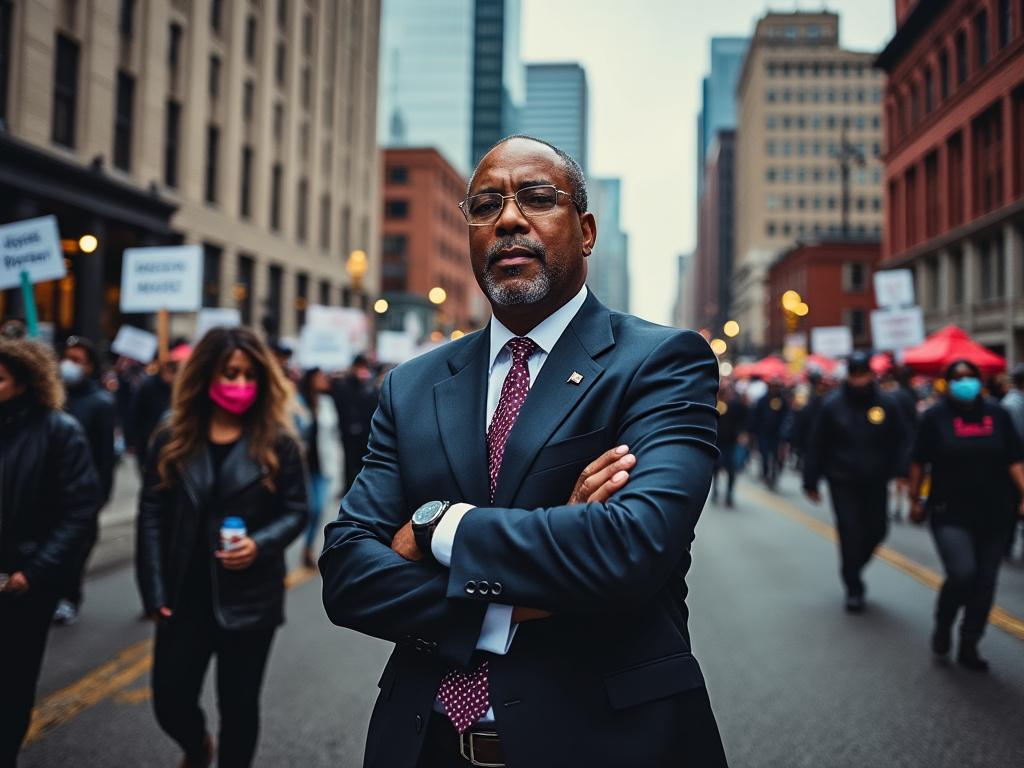
Senator Bernie Moreno has threatened to suspend all federal funding to Cincinnati unless a comprehensive civil rights and public safety plan is devised. This bold move follows a violent incident in the city and has ignited a significant political debate.
Background: The Viral Brawl and Political Fallout
The incident in question, a violent street brawl in the heart of Cincinnati, not only shocked local residents but also captured national attention when it spread across social media platforms. The footage showed a chaotic scene involving multiple participants, which escalated quickly despite the presence of onlookers. The public outcry was swift, with many condemning the local authorities for their perceived slow response and failure to prevent the incident.
The repercussions of the brawl were immediate. Local officials faced a barrage of criticism over their handling of public safety, with debates and discussions flooding local news cycles, pointing to deeper issues of civil unrest and the effectiveness of current governance. Senator Moreno, known for his staunch advocacy for civil rights and public safety, was particularly vocal, leveraging the incident as a turning point to address systemic issues within the city. His ultimatum to withdraw federal funds unless significant reforms were made underscored the serious implications of the brawl for Cincinnati’s leadership and provided a stark example of how local incidents can precipitate broader political consequences.
Moreno’s Demands and Rationale
Senator Moreno’s ultimatum came swiftly following the disturbing viral brawl, giving Cincinnati a stark 30-day deadline to enact substantial reforms or face the withdrawal of vital federal funds. He labelled the event a ‘tragedy’—not just in terms of the violence, but as a systemic failure, necessitating immediate federal intervention. His rationale? The city’s apparent neglect in addressing escalating street violence and the broader implications for civil rights and community trust. By leveraging federal funding, Moreno aimed to push for a more aggressive stance on public safety while spotlighting the federal government’s role in safeguarding civil rights. This strategic move raised questions about the balance between local autonomy and federal oversight in managing urban public safety crises.
City Leaders Respond: Accusations of Political Theater
Response from Cincinnati’s Mayor Aftab Pureval and other city leaders was swift and strong. They contested Senator Moreno’s assertions that the city neglected public safety, detailing robust local initiatives like the Drone as First Responder program and a newly formed street crime task force. These measures, they argued, demonstrate a proactive approach to enhancing safety without federal intervention. Mayor Pureval suggested that Moreno’s threat to withhold funding was more about political grandstanding than genuine concern, emphasizing that such threats undermine local efforts and could unnecessarily alarm the community. City officials also employed a transparent communications strategy to keep the public informed and rally support, framing the Senator’s actions as detrimental to the collaborative spirit needed to address urban challenges effectively. Their response aimed not only to refute the Senator’s claims but also to spotlight their comprehensive strategy for maintaining public order and civil rights.
Public and Political Reactions
Public and political reactions to Senator Moreno’s threat to withhold federal funding from Cincinnati have been notably divided. Supporters of Moreno’s ultimatum argue that such a drastic measure is essential for enforcing accountability over local law enforcement policies. They view it as a bold step towards ensuring that civil rights are upheld within the city’s public safety strategies. Conversely, critics claim that cutting federal aid would primarily harm the citizens who depend most on government support—especially in essential services like education, healthcare, and public safety. This tension highlights a broader societal dilemma: the legitimacy and implications of using federal funding as leverage to induce local policy reforms. Many worry that such a precedent could lead to overreach or misuse of federal powers, potentially undermining the autonomy of local governments. The debate also underscores the intricate dance between local and federal officials in addressing civil rights within the framework of public safety. These divergent perspectives suggest an ongoing struggle to find a balance that respects both local authority and national standards for civil rights protections.
Federal Funding: Potential Scope and Impact
The suspension of federal funding in Cincinnati could potentially cripple a range of essential public services. These services include public safety initiatives, infrastructure development, and social welfare programs like housing assistance and food security provisions. Cutting off federal funds may intensify the challenges in these sectors, disproportionately affecting marginalized communities already vulnerable to systemic inequities. Legally, Senator Moreno’s threat to withhold federal funds would require substantial procedural alignment from federal agencies and potentially Congressional approval, depending on the specific nature of the threatened funds. The feasibility of such a significant funding cut remains bounded by these legal and bureaucratic processes, making the immediate implementation of Moreno’s threat complex and possibly protracted over time.
Conclusions
Senator Moreno’s ultimatum puts Cincinnati’s leadership under severe pressure to revise their approach to public safety and civil rights. The coming weeks are crucial as the city must balance political pressures, civil rights advocacy, and practical governance to navigate this complex situation.