
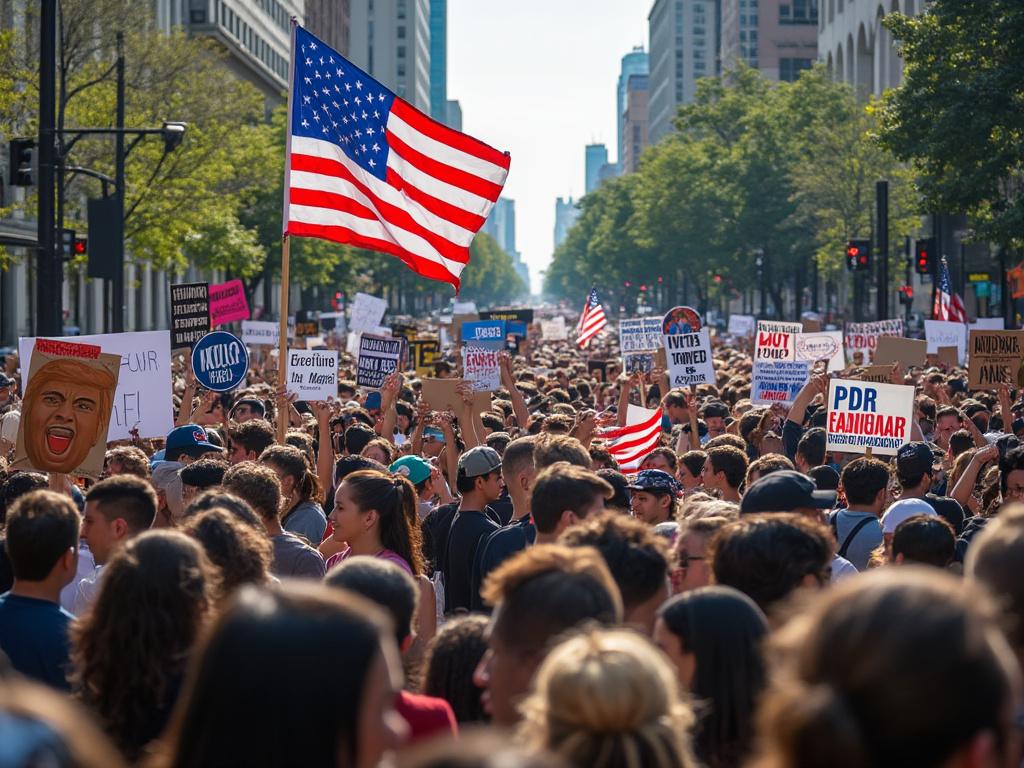
On August 2, 2025, the ‘Rage Against the Regime’ protests erupted across over 400 U.S. cities, marking a pivotal day in American civil activism. This article explores the motivations, unfolding, and broader implications of this significant political movement.
Origins and Purpose of the Protests
Origins and Purpose of the Protests: The ‘Rage Against the Regime’ protests sprung from deep-seated dissatisfaction with autocratic tendencies that seemed to increase rapidly within the U.S. governance structure. Central to the discontent were severe immigration crackdowns that disregarded human rights, efforts to destabilize long-standing federal agencies, opaque decision-making processes, and perceived encroachments on democratic principles. Each of these issues galvanized citizens from varied backgrounds, creating a broad coalition focused on defending democratic norms. The naming of the protests, ‘Rage Against the Regime,’ serves as a powerful echo to historical movements resisting oppressive governance, highlighting a profound collective call for accountability and reform. This movement not only draws from past lessons but also vividly underscores the urgency of the current political climate’s demands for transparency and justice.
How the Protests Unfolded
Day of Action: The protest strategies manifested in a spectacular display of unity and coordination across the nation. In major cities, activists employed nonviolent tactics, a benchmark of the movement. Central to the expressions were symbolic gestures, such as the immense balloons depicting President Trump, which soared above the crowds in New York and Los Angeles, capturing the public’s attention. This approach not only maintained peace but also ensured that disruption remained significant without crossing into violence. The protests were organized through a leaderless, yet highly effective network, using social media platforms to synchronize efforts and share real-time updates. This methodology allowed for spontaneous gatherings, while also adhering to a pre-planned agenda that maximized impact and visibility, turning these cities into focal points of the national dialogue on autocratic policies.
National Scope and Key Cities
Geographic Spread and Turnout: The ‘Rage Against the Regime’ protests achieved unprecedented geographic spread, engaging cities from Seattle to Miami, demonstrating the heterogeneous and yet synchronized nature of this movement. Pioneered through digital platforms, the coordination facilitated real-time updates and strategies, linking isolated groups into a cohesive network. The turnout, initially projected in the thousands, swelled far beyond expectations, with key cities reporting tens of thousands in attendance. Diverse demographics — from young activists to seasoned dissenters — gathered, their collective voice amplified through meticulous planning that involved local leaders and coordinated nationwide events, shedding light on a deeply entrenched dissatisfaction with current governance, while paving the way for the articulation of specific movements’ demands in subsequent gatherings.
Demands and Broader Significance
Voices Behind the Movement: At the heart of the ‘Rage Against the Regime’ protests are concise yet profound demands that embody the movement’s aspirations. Protesters fiercely advocate for the defense of immigrant rights, highlighting troubling deportations and the need for inclusive reform. Calls for genuine transparency are prominent, with demands that governmental procedures and decisions be open to public scrutiny. Moreover, the protection of democratic institutions stands as a critical demand, aiming to safeguard the structures essential to a democratic society. These demands are not just reactions to current circumstances but represent a broader desire for systemic change. Advocates see these issues as interconnected, demonstrating a comprehensive critique of the prevailing political dynamics and a push towards a reformed, inclusive governance model.
Peaceful but Disruptive Tactics
The tactical approach of the “Rage Against the Regime” protests reflects a deliberate strategy of nonviolent disruption aimed at maximizing visibility and impact. These organized actions—ranging from sit-ins at government buildings to blocking major traffic arteries—inherently aim to inconvenience daily operations while maintaining peaceful conduct. This method serves to spotlight the movement’s demands and generate public debate. Law enforcement’s response has generally emphasized de-escalation, keen on avoiding any escalation to violence, yet their presence is sizable. The impact of such tactics on public policy is palpable, as notable disruptions often force governmental acknowledgment and can hasten policy discussions. Moreover, public perception is continually shaped by these actions; the deliberate peacefulness of protests garners wider sympathy for the movement’s aims, contrasting sharply with any heavy-handed police actions or governmental dismissals.
Conclusions
The ‘Rage Against the Regime’ event marks a watershed in U.S. protest history, symbolizing a broad and intense resistance to perceived erosion of democratic values and social justice. It reflects an evolving tactic of mass mobilization that is likely to influence political engagement as the nation approaches future elections.