
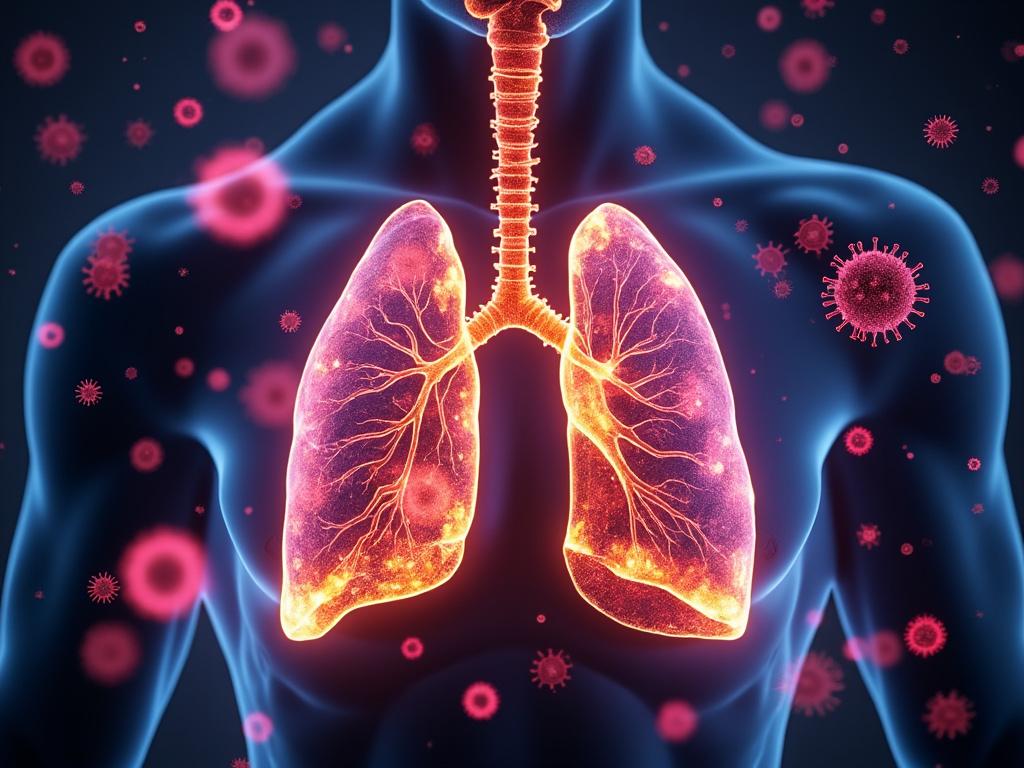
A recent study published in Nature has unveiled a startling connection between respiratory viruses such as COVID-19 and the flu, and the reactivation of dormant breast cancer cells. This discovery sheds light on a potential trigger for cancer metastasis in the lungs.
Dormant Breast Cancer Cells and Metastasis
Dormant breast cancer cells (DCCs) represent a significant latent threat due to their ability to evade detection and withstand conventional cancer therapies. After initial tumor removal, these cells can migrate and quietly reside in distant sites, such as bone marrow or lungs. Their dormancy can persist for years without manifesting any clinical symptoms, making them undetectable by typical diagnostic methods. This silent residency poses a risk of unexpected metastatic growth when these cells reawaken, leading potentially to aggressive and difficult-to-treat tumors.
How Respiratory Infections Trigger Reactivation
In a pioneering study, researchers utilized animal models to elucidate the potential linkage between common respiratory viruses such as influenza and SARS-CoV-2 and the reactivation of dormant breast cancer cells. Highly rigorous in design, the experiments involved introducing these respiratory viruses to mouse models previously implanted with human breast cancer cells, which were in a dormant state. Subsequently, a stark and alarming enhancement in metastatic activity was observed, yielding a profound proliferation in cancerous tumors within these models. This surge appeared to align with phases of heightened immune response, specifically an increase in inflammatory markers which have been hypothesized to awaken dormant cancer cells. These findings have monumental implications, suggesting that viral infections, traditionally seen as transient health issues, could pose severe risks by reactivating latent cancer threats in breast cancer survivors, immensely complicating their prognosis and treatment landscape. This correlation propels further investigation into how treatments for common respiratory infections might need to be adapted to mitigate these newly uncovered cancer metastasis risks.
Molecular Mechanism: The Role of Interleukin-6 (IL-6)
During a respiratory infection, the body’s inflammatory response intensifies, marked significantly by raised levels of interleukin-6 (IL-6). This cytokine, generally involved in immune responses, appears to bridge infectious diseases and cancer metastasis by reactivating dormant breast cancer cells. The mechanism involves IL-6 signaling pathways which promote a unique hybrid cellular state in dormant cells, transitioning them towards a proliferative state. These reawakened cells display traits of both dormancy and activation, making them elusive targets for treatment. Crucially, this process exemplifies a perilous link between inflammation induced by common infections and the potential for breast cancer recurrence.
Evidence in Human Populations
Building on prior research elucidating the molecular mechanisms, like the role of IL-6 in respiratory virus infections and cancer cell reactivation, recent human studies have advanced our understanding. These involve analysis of retrospective data comparing respiratory viral infection rates among breast cancer survivors. A statistically significant correlation was observed between such infections and increased metastatic cancer events, and higher overall mortality rates. Research focused on large population samples across various geographic locations reinforced these findings, highlighting the need for specific clinical strategies to manage this elevated risk. The dataset included not only flu and COVID-19 patients but also controlled for other variables such as age, cancer stage at diagnosis, and initial treatment modalities, ensuring the robustness of results suggesting the impact of respiratory viruses on cancer recurrence dynamics.
Clinical Implications and Recommendations
Given the established correlation between respiratory infections and increased metastatic activity in breast cancer survivors, it is imperative for healthcare providers to integrate robust preventive strategies within survivor care plans. Recommendations include the prioritization of vaccinations, particularly against influenza and SARS-CoV-2, to reduce the risk of activation of dormant tumor cells. Moreover, regular screening for early detection of metastasis should be incorporated into routine follow-ups. Equally important is the customization of care plans to factor in individual patient history, potentially modifying treatment based on the patient’s exposure to these viral agents. These measures not only aim to prevent the reactivation of cancer cells but also enhance the overall management of breast cancer survivorship, potentially improving long-term outcomes.
Conclusions
The 2025 study bridged a pivotal gap in understanding how respiratory viruses can awaken dormant breast cancer cells, leading to new lung metastases. By targeting inflammation and specific immune responses, future research and clinical practices must adapt to protect cancer survivors from these hidden threats.