
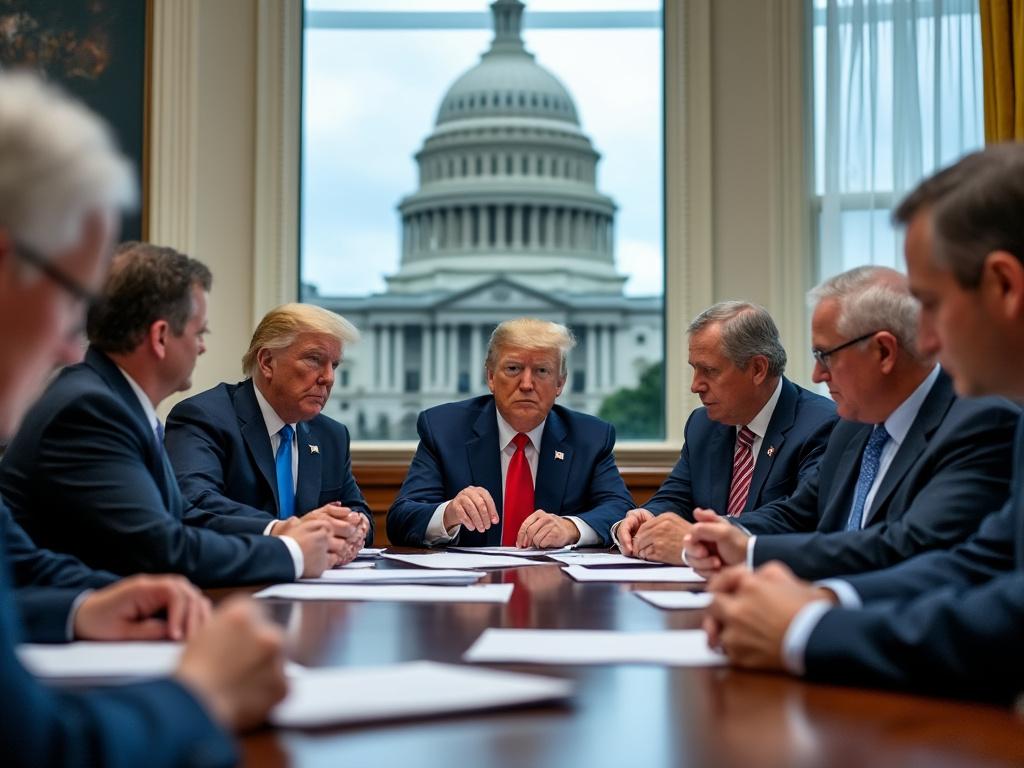
As former President Trump re-enters the White House, his unique foreign policy comes under scrutiny from conservatives. These critics, embedded in traditional Republican values, question his unilateral approaches and strive to preserve established U.S. allegiances and commitments.
Trump’s Foreign Policy Approach
Donald Trump’s foreign policy during his second term notably diverged from traditional U.S. international strategies, asserting a robust ‘America First’ attitude. This approach manifested in his continuing skepticism towards NATO, which he criticized for burdening the U.S. financially and strategically. Trump’s trade policies favored imposing tariffs and renegotiating trade deals to prioritize American industries and workers, leading to tensions with both allies and rivals. His administration also significantly cut foreign aid, arguing that the U.S. was overextended financially in global aid contributions. Preference for bilateral negotiations over multilateral ones was a cornerstone, as Trump believed they allowed the U.S. to leverage its power more effectively. These actions collectively shifted global perceptions, steering the U.S. away from its role as a traditional global leader towards a more isolated stance.
Conservative Critiques and Challenges
While Trump championed an ‘America First’ doctrine, notable conservative figures and institutions have articulated profound concerns about its implications on U.S. leadership and global stability. Kori Schake of the American Enterprise Institute argues that this approach weakens international alliances, crucial for U.S. security and influence. The doctrine’s skepticism towards multilateral engagement—contrasting sharply with traditional conservative views on foreign diplomacy—alarms many who advocate for a robust U.S. presence on the world stage. Concerns center around the perceived abdication of U.S. responsibilities in international politics and the potential vacuum that might be filled by adversarial powers, undermining long-term U.S. interests and global order. These critiques highlight a significant schism within the conservative camp, pitting traditionalist views against Trump’s nationalist inclinations, each advocating different paths for America’s role in the world.
Institutional and Congressional Resistance
Throughout Donald Trump’s presidency, conservative lawmakers actively shaped U.S. foreign policy through various legislative and bipartisan actions. Notably, the bipartisan sanctions bill against Russia, passed overwhelmingly in 2017, demonstrated Congress’s readiness to assert its powers, countering Trump’s friendlier stance towards Vladimir Putin. Moreover, prominent Republican senators frequently criticized Trump’s decisions on Syria, advocating for sustained military presence rather than rapid withdrawal. Public endorsements from conservative figures for stronger NATO ties and maintaining U.S. positions in international agreements also highlighted an institutional pushback against the isolationist tendencies of Trump’s ‘America First’ doctrine. These actions collectively underscored a critical, though often underappreciated, role of conservative resistance in navigating foreign policy directions.
Ideological Divisions within the Conservative Movement
Ideological divisions within the conservative movement significantly influence the shaping of U.S. foreign policy, particularly under Donald Trump’s administration where ‘America First’ often clashed with traditional conservative principles like global engagement and maintaining alliances. Nationalists within the party rallied behind Trump’s skepticism towards international agreements and institutions, which they perceived as infringing on U.S. sovereignty. In contrast, traditional conservatives argued for a ‘peace through strength’ approach, emphasizing the need for robust military capabilities allied with diplomatic strategies to assert American interests globally. This ideological diversity not only created policy tensions but also provoked vigorous intra-party debates, asserting substantial pressure on Trump’s policy directions and coherence. These debates echo the broader conservative dilemma of balancing national interests with global leadership responsibilities.
Implications: Why the Conservative Challenge Matters
Conservative challenges to Trump’s foreign policy, particularly from traditionalist factions within the movement, underscore a critical balancing act. These interventions often prevent the administration from veering too far from established U.S. diplomatic practices, thus ensuring continuity in America’s global role. By advocating for engagement over isolation, these conservatives influence policies that ensure U.S. leadership on the world stage, promote democracy, and uphold international laws and norms. Such stances not only temper more extreme “America First” policies but also pave the way for future administrations to adopt a more balanced and principled global engagement strategy.
Conclusions
Conservative scrutiny of Trump’s foreign policy is more than mere dissent; it’s a critical engagement that shapes U.S. international relations and upholds democratic checks and balances. Their actions reflect intra-party dynamics that will define the future of both U.S. foreign policy and Republican ideological coherence.