
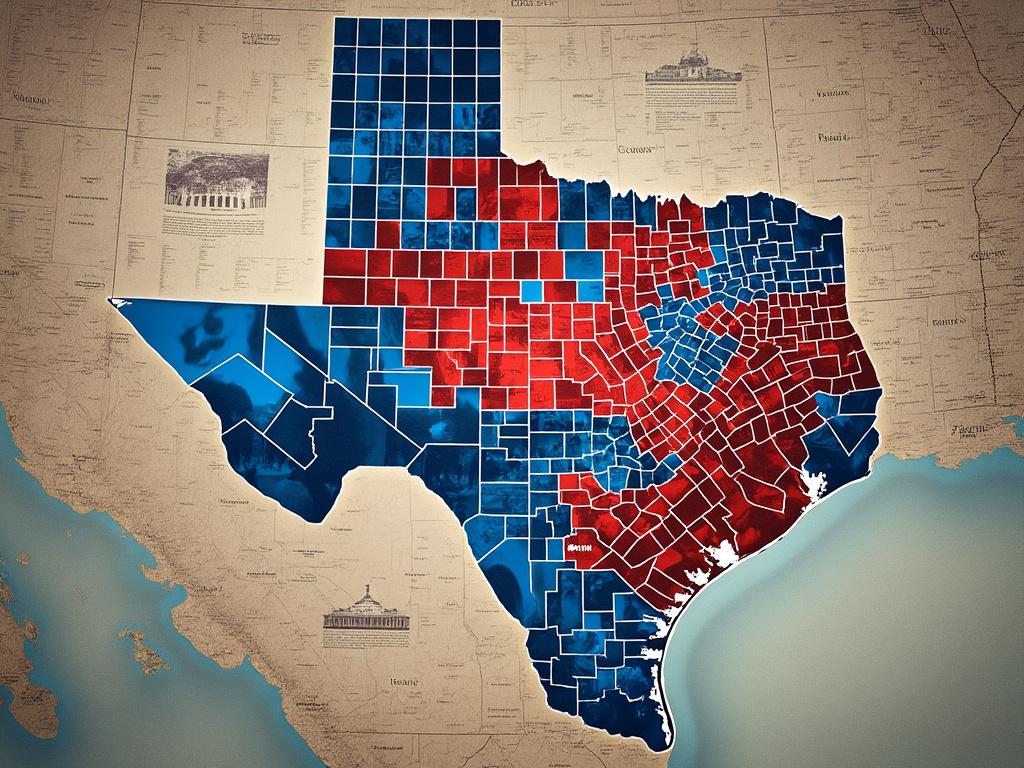
The redistricting battle in Texas has escalated, turning into a political drama with national implications. This article explores the controversial redrawing of Texas’s 38 U.S. House districts, revealing the depth of partisan tactics and their potential effects on voting rights and congressional representation.
The Current Landscape of Texas Redistricting
The recent redistricting proposals by Texas Republicans have sparked intense debates over their potential to reshape political boundaries in favor of the GOP, particularly in critical metropolitan areas such as Austin, Dallas, and Houston. The redrawn maps are alleged to dilute the electoral strength of predominantly Black and Hispanic communities, strategically fragmenting these groups into districts with larger white, Republican majorities. This tactic, critics argue, threatens to undermine the representation of minority voters, contravening federal voting rights protections. The Department of Justice has issued stern warnings regarding the plans, emphasizing the serious implications for compliance with the Voting Rights Act, highlighting a possible federal intervention if the gerrymandered boundaries are found to disproportionately disadvantage minority voter blocs.
Political Strategies and Partisan Battles
In the escalating partisan struggle over Texas’ redistricting, State Rep. Todd Hunter, a key Republican figure, defended the reconfiguration by emphasizing districts drawn on the basis of “political performance”. This assertion suggests an intent to secure GOP strongholds by recognizing prior electoral trends, ostensibly sidelining demographic shifts favoring Democrats. The response from Texas Democrats manifested dramatically in a bold quorum break, effectively paralyzing the state legislature to protest what they perceived as an undercutting of fair representation. This move led to immediate backlash, with Republicans issuing civil arrest warrants to compel the return of the dissenting Democrats. This standoff not only heightened tensions within the state but also drew national scrutiny, spotlighting Texas as a battleground for broader issues of voting rights and electoral integrity. The national attention underscored the significant implications such strategies could have beyond state lines, potentially influencing upcoming electoral strategies in other states.
Legal Challenges and Federal Oversight
In the aftermath of the Texas Republicans’ strategic redrawing of congressional districts, the Department of Justice (DOJ) has raised accusations of racial gerrymandering, marking the beginning of what promises to be a formidable legal tussle. Community advocates, spearheaded by prominent figures like Nina Perales, have vocalized their concerns, emphasizing the opaque nature of the redistricting process and the minimal opportunities for public engagement. These criticisms hinge on the arguable violations of the Voting Rights Act, which stipulates that redistricting must not result in discriminatory effects against voters of color. Legal experts anticipate a series of contentious courtroom debates, with implications that may stretch beyond Texas borders, setting a precedent that could influence future redistricting endeavors nationwide. This judicial scrutiny is particularly significant given the broader national discourse on voter suppression and electoral fairness.
National Impact and Response
The redistricting controversies in Texas reverberate far beyond its borders, particularly influencing national political strategies and legislative responses. In a retaliatory move, California Governor Gavin Newsom proposed measures aimed at countering the perceived aggressive gerrymandering in Republican states. These proposals sparked a national dialogue about the fairness and integrity of redistricting processes, underlining the disparities in how states approach this pivotal task.
California Representative Kevin Kiley introduced legislation that seeks to establish a national framework for redistricting, potentially minimizing partisan manipulation. His bill advocates for independent commissions across all states, mirroring the nonpartisan model currently employed by California. This move underscores a growing trend where states influenced by their counterparts’ actions, seek to reform their electoral landscapes to ensure a more equitable representation.
Significantly, this ongoing saga could compel a reevaluation of electoral boundaries nationwide, affecting future elections and emphasizing the urgent need for federal standards in the redistricting process.
Looking Ahead: Implications for the 2026 Midterms and Beyond
The ramifications of Texas’ redistricting skirmish underscore a tactical evolution in electoral strategies, particularly heading into the 2026 midterms and beyond. As both parties digest the outcomes, Republicans might increasingly focus on solidifying their hold in suburban districts, leveraging demographic shifts that favor their base. Conversely, Democrats could escalate efforts in urban centers and growing metropolitan areas, exploiting demographic diversification. Future court rulings are poised to take center stage, potentially redefining the juridical boundaries of redistricting. Moreover, escalating public demand for transparency and fairness in the redistricting process could catalyze more rigorous scrutiny and legislative amendments. The convergence of these factors will not only shape the 2026 midterms but could also significantly realign political power structures in the U.S., auguring deep-seated implications for voting rights and democratic engagement nationwide.
Conclusions
The Texas redistricting battle underscores a critical juncture for voting rights and political control in the U.S. With both sides wielding partisan tactics, the outcomes of this conflict will shape congressional representation and influence the strategic approaches of both parties as they look toward future elections.