
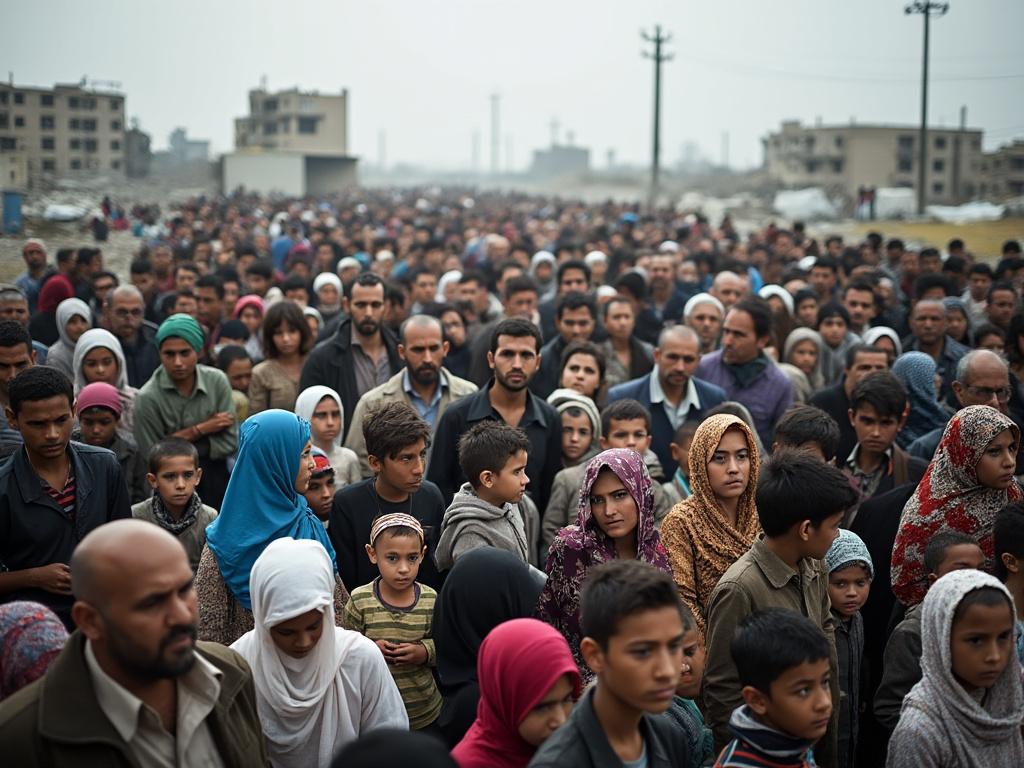
As Gaza faces a severe hunger crisis, international alarms are sounding over the catastrophic conditions threatening over a million lives. This article delves into the human, political, and ethical dimensions of the disaster, exploring the causes, impacts, and urgent calls for action.
The Famine Thresholds Crossed
The Integrated Food Security Phase Classification (IPC) has placed large parts of Gaza beyond emergency thresholds into catastrophe and famine, signaling an urgent humanitarian disaster. According to recent IPC reports, alarming rates of acute malnutrition have been observed, particularly among children under five, considerably exceeding global emergency standards. The World Food Programme (WFP), the Food and Agriculture Organization (FAO), and the United Nations Children’s Fund (UNICEF) report critical shortages affecting over 80% of Gaza’s population. Essential food consumption has significantly declined due to disrupted supply chains, with many families skipping meals regularly. The most vulnerable groups, including children, are experiencing irreversible health impacts due to prolonged dietary insufficiencies, escalating the urgency for international intervention.
Drivers of the Crisis
The escalating hunger crisis in Gaza is largely driven by Israel’s severe restrictions on humanitarian access, compounded by continuous military conflicts and significant infrastructural collapses. These factors collectively disrupt essential food supplies, essentially obliterating market functions and stripping residents of their ability to procure food independently. For instance, frequent closures of the Kerem Shalom crossing, a critical conduit for supplies, severely limit the entry of basic necessities, including food and medical supplies. Additionally, military operations often damage or destroy critical infrastructure such as roads and bridges, further impeding any remaining distribution channels. This has led to a grim scenario where markets can no longer function normally, and residents face extreme difficulties in securing their daily bread, let alone a balanced diet. The resultant food insecurity is not just about scarcity but also the unpredictability and insufficiency of food reaching the populace, further exacerbating the already dire humanitarian situation.
Global Reactions and Accusations
As the humanitarian crisis in Gaza worsens, a chorus of criticism towards Israel’s policies has risen sharply on Capitol Hill, reflecting a broader international disquiet. Members of the U.S. Congress, particularly those from progressive factions, have intensified their calls for a reassessment of U.S.-Israel relations, pointing directly at the stringent blockades that exacerbate the hunger crisis in Gaza. These legislative voices echo UN officials who have labeled the situation as a severe violation of human rights.
Escalating debates question the ethical implications of continued American support amidst ongoing restrictions that hinder food and aid access to Gaza’s civilian population. Such international scrutiny coalesces around urgent appeals from humanitarian organizations, underlining the desperate need for policy shifts. These calls aim not just to address the immediate needs but also to consider long-term solutions to ensure food security and human dignity in Gaza, tying into broader humanitarian efforts discussed in upcoming contexts.
Humanitarian Interventions and Challenges
Delivering humanitarian aid to Gaza presents a profoundly complex challenge, underscored by stringent blockades and intermittent military actions. A myriad of international organizations, including the United Nations Relief and Works Agency (UNRWA), continuously work to distribute food, medical supplies, and critical living necessities. However, these efforts are persistently hampered by restrictions on movement and tensions at border crossings. The aid flow is also significantly constrained by the frequent closures of entry points, ostensibly for security reasons, severely impacting the timeliness and efficiency of aid distribution. Inside Gaza, local NGOs collaborate with global partners, striving to navigate the politicized landscape and the logistical nightmares posed by the damaged infrastructure and the constant threat of conflict. This challenging environment often leads to delays in aid delivery, exacerbating the urgent needs on the ground and leading to severe repercussions for the territory’s civilian population.
The Path Forward
In light of escalating criticisms, a multifaceted approach is essential to address Gaza’s worsening hunger crisis. Advocacy groups are pushing for legislative proposals that advocate for temporary ceasefires and significantly improved humanitarian access. These measures aim to alleviate immediate food shortages and enable a more stable influx of aid. Prolonged inaction may result in irreversible damage to public health and regional stability. Thus, stakeholders, including governments, NGOs, and international bodies, must collaborate intensively. Implementing such solutions would not only mitigate the humanitarian crisis but also help pave the way for longer-term peace and recovery initiatives.
Conclusions
Gaza’s hunger crisis is not merely a regional issue but a global humanitarian disaster that requires immediate and effective response. As the world watches, the necessity for decisive action and international cooperation to address the root causes and symptoms of this crisis has never been more urgent.