
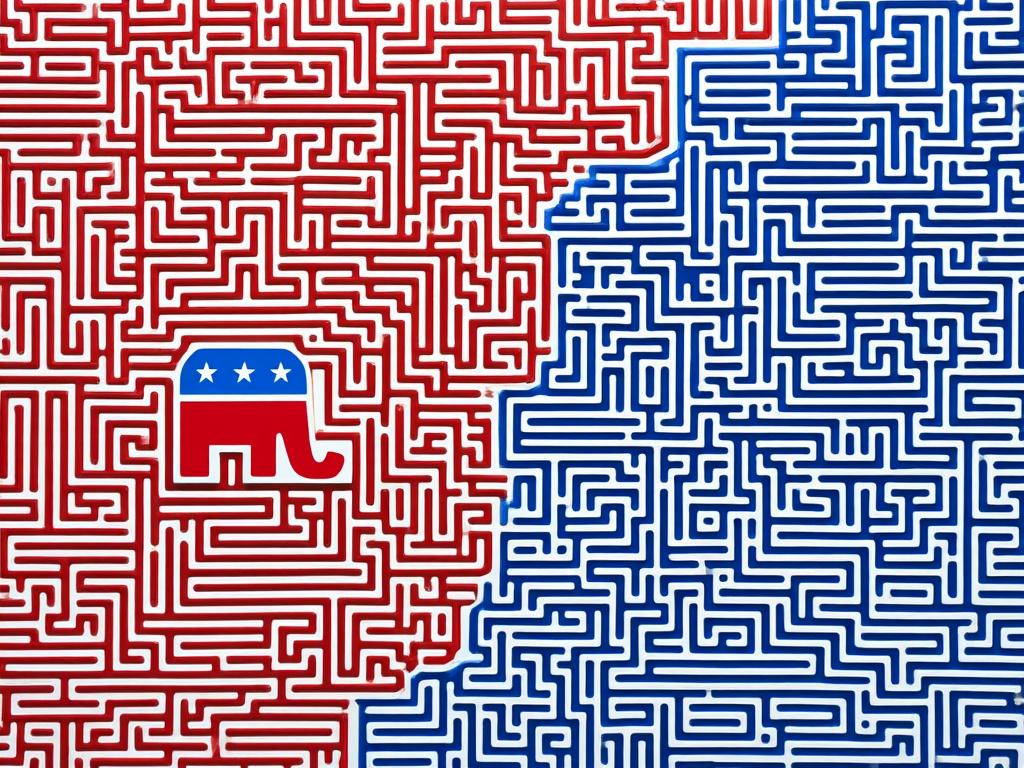
This article explores the paradoxical outcomes of redistricting reforms championed by Democrats. Independent redistricting commissions, intended to ensure electoral fairness, are now seen as a strategic constraint in the battle with Republicans over congressional control.
The Shift to Independent Commissions
The turning tide in favor of independent redistricting commissions, passionately advocated by Democrats, largely aimed at ending partisan gerrymandering, took a concrete form following the 2020 Census. Initially perceived as a means to promote fairer elections, these platforms transformed the drawing of electoral boundaries from a partisan exercise into a more neutral endeavor. Notably in states like California and Colorado, traditional Democratic strongholds were subject to unexpected revisions. These states, which implemented independent redistricting commissions to materialize ideals of impartiality and transparency, witnessed significant electoral map shifts. These changes not only redistributed political power but also diluted traditional Democratic concentrations in urban areas, extending consequences that few within the party had predicted. This shift underscored a paradox where reforms intended to democratize voting power inadvertently undercut Democratic advantages, leading to broader and more competitive electoral landscapes.
Democratic Leaders’ Response and Internal Tensions
As the consequences of independent redistricting commissions unfold, Democratic leaders, notably figures like California Governor Gavin Newsom and former U.S. Attorney General Eric Holder, have been propelled into a thorny battleground of internal party debates and strategic recalibrations. These leaders, originally proponents of redistricting reform to curb gerrymandering, now grapple with the reality that such reforms have inadvertently fortified Republican advantages in battleground states. Newsom has voiced concerns about rigid adherence to nonpartisan redistricting potentially disenfranchising Democratic voters, leading to intense discussions on whether the approach needs recalibration. Concurrently, Holder has channeled efforts through the National Democratic Redistricting Committee to address disparities in redistricting practices and advocate for more balanced maps. This tension underscores a larger existential debate within the party: balancing ethical high ground with political survivability. This painful introspection is marked by challenges in navigating between the ideals of fair play and the harsh tactical realities imposed by the political opposition.
Retaliation and its Limits
In Maryland and similar blue states, Democratic leaders grapple with the constraints imposed by the independent redistricting commissions they once fervently supported. The irony is palpable as they confront a meticulous scrutiny that limits their ability to draw favorable electoral maps—a tactic Republicans employ with fewer qualms in states under their control. Key figures, like Maryland’s House of Delegates Speaker Adrienne Jones, expressed frustration and hinted at the necessity of “playing the game” to ensure electoral competitiveness. This contemplation of more aggressive gerrymandering, however, runs the risk of major legal and public backlash, challenging leaders to balance ethical commitments with pragmatic political strategies. This tension reveals a complicated dance of defending democratic principles while pragmatically negotiating the partisan battleground. The approach contrasts starkly with more unconstrained tactics discussed in the looming discussion of states like Illinois.
Exceptions and Aggressive Maps Where Possible
In states like Illinois and New Mexico, where Democrats control the redistricting process, the strategies reveal a stark contrast to their espoused principles of fairness. These states, unfettered by independent commissions, have crafted maps that maximize Democratic advantages. This pragmatic, albeit aggressive, approach has amplified the party’s electoral presence but at a substantial cost to their public image as advocates for non-partisan redistricting. The implications of these actions are profound, casting a shadow over the party’s commitment to reform and potentially alienating voters who value electoral integrity. Such tactics, while temporarily beneficial in securing Democratic seats, might undermine long-term trust in the party’s dedication to democratic principles, juxtaposing short-term gains against the backdrop of broader electoral credibility.
The Core Dilemma for Democrats
The challenge Democrats face with independent redistricting commissions highlights a profound ideological dilemma. On one hand, these commissions are crucial for fair representation, aligning closely with the party’s advocacy for transparent and equitable political processes. On the other hand, the handcuffing effect these commissions have on strategic partisan redistricting can place Democrats at a disadvantage, especially in fiercely contested regions where Republicans may not hold themselves to similar standards. This tension between maintaining high ethical standards and navigating the ruthless realm of political strategy posits a significant impediment. Looking forward, the sustainability of this principled approach in redistricting forms a crux of debate within the party, questioning whether the pursuit of ideal democracy might inadvertently cede ground in the pragmatic battle for congressional control.
Conclusions
Democrats’ initiative to establish independent redistricting commissions has led to a significant strategic disadvantage. While aiming to promote fairness, these reforms have unfortunately restrained Democrats’ ability to effectively counteract Republican gerrymandering, raising critical questions about the balance of power and political principles in future electoral processes.