
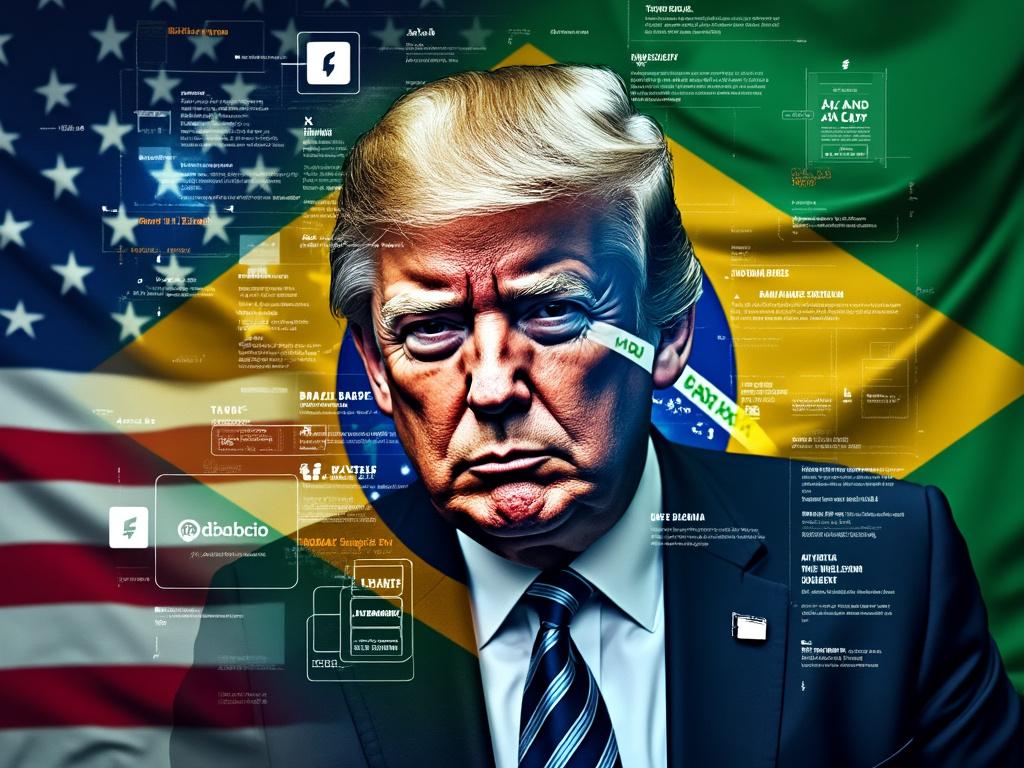
Amidst a tense global landscape, former President Donald Trump has intensified his focus on Brazil, claiming its government poses significant threats to U.S. interests. This article delves into the causes, implications, and responses to Trump’s contentious measures, including hefty tariffs and accusations of democratic erosion in Brazil.
Trump’s Core Claims and Actions
On July 30, 2025, President Trump declared a national emergency, citing Brazil’s increasing influence in critical sectors as detrimental to U.S. national interests. By leveraging the International Emergency Economic Powers Act (IEEPA), Trump mandated a sudden and significant tariff hike on all Brazilian imports. This decisive action reflects his broader economic strategy to correct what he views as unfair trade practices and to rejuvenate domestic industries affected by Brazil’s competitive pricing. Immediately, this led to escalated costs for Brazilian goods in the U.S., thereby rendering them less competitive and providing a calculated boost to American producers. The move also aimed to pressure Brazil into reconsidering its trade policies, which have been critiqued for prioritizing Brazilian agribusiness and tech advancements at the expense of international trade norms.
The Digital Sovereignty Dispute
The digital sovereignty dispute intensifies as Trump’s administration ramps up criticism of Brazil’s strict oversight on American tech giants. At the core, Brazilian judicial measures demand unprecedented compliance from companies like Google and Facebook, citing the necessity to shield its electoral processes from misinformation and foreign interference. While Trump perceives these actions as outright censorship threatening free enterprise, Brazil asserts its prerogative to enforce its laws within its territories. This juxtaposition highlights a complex battleground, where international business practices and national security intersect, questioning the balance between digital governance and global digital rights.
Geopolitical Motivations and Reactions
Brazil’s unique position in Latin America has been increasingly evident under Trump’s foreign policy, which emphasized bilateral ties over multilateralism. This focus presented Brazil with an opportunity to redefine its international alliances and trade agreements. Trump’s hard stance often forced Brazil to navigate between aligning with U.S. policies or pursuing its own strategic interests. The global market’s reaction was mixed: investors were cautious, concerned about potential instability in trade policies and international relations. Similarly, diplomatic circles expressed apprehensions regarding the shift in traditional alliances, leading to a reevaluation of diplomatic strategies worldwide. This period of transition under Trump’s policy directives thus influenced Brazil’s international posture, urging a recalibration of its geopolitical strategies in the global arena.
The Bolsonaro Factor
The alliance between President Trump and Brazil’s President Jair Bolsonaro represents more than typical diplomatic camaraderie; it signifies a shared ideology that deeply interacts with the domestic affairs of both nations. Bolsonaro’s experiences with domestic backlash, notably regarding his environmental and human rights policies, resonated with Trump’s criticisms of globalist agendas. Trump’s vocal support helped fortify Bolsonaro’s position against local and international criticisms, showcasing U.S. approval as a tool in Brazilian political dynamics. This mutual bolstering of their leadership emboldened both leaders’ stances on sovereignty and nationalism, influencing how Brazil addressed internal challenges and perceived external pressures.
Conclusion and Assessment
The economic and diplomatic frictions between Trump’s administration and Brazil stem largely from clashes over trade policies, environmental concerns, and differing stances on global governance. Disputed claims have arisen, notably, Trump accusing Brazil of unfair trade practices and environmental negligence, while Brazil defends its strategies as essential for economic growth. On the other hand, Trump’s approach has garnered support for attempting to rectify perceived imbalances in trade agreements and pushing for stronger property rights enforcement, which are seen as beneficial by some sectors of the U.S. industry.
Moving forward, the persistence of these conflicts could strain U.S.-Brazil relations further, potentially affecting collaborative efforts on broader issues like climate change and regional security. The ongoing diplomatic tussle also suggests a shift in global diplomacy, possibly leading to a more fragmented international community where bilateral relations are predicated on aggressive trade and foreign policies rather than cooperative multilateral engagement.
Conclusions
Trump’s confrontational policies towards Brazil, justified by claims of protecting national interests, actually reveal a complex blend of personal politics, economic strategies, and international posturing. The enduring implications signal a need for a reflective approach to diplomatic ties and economic policies in a polarized global environment.