
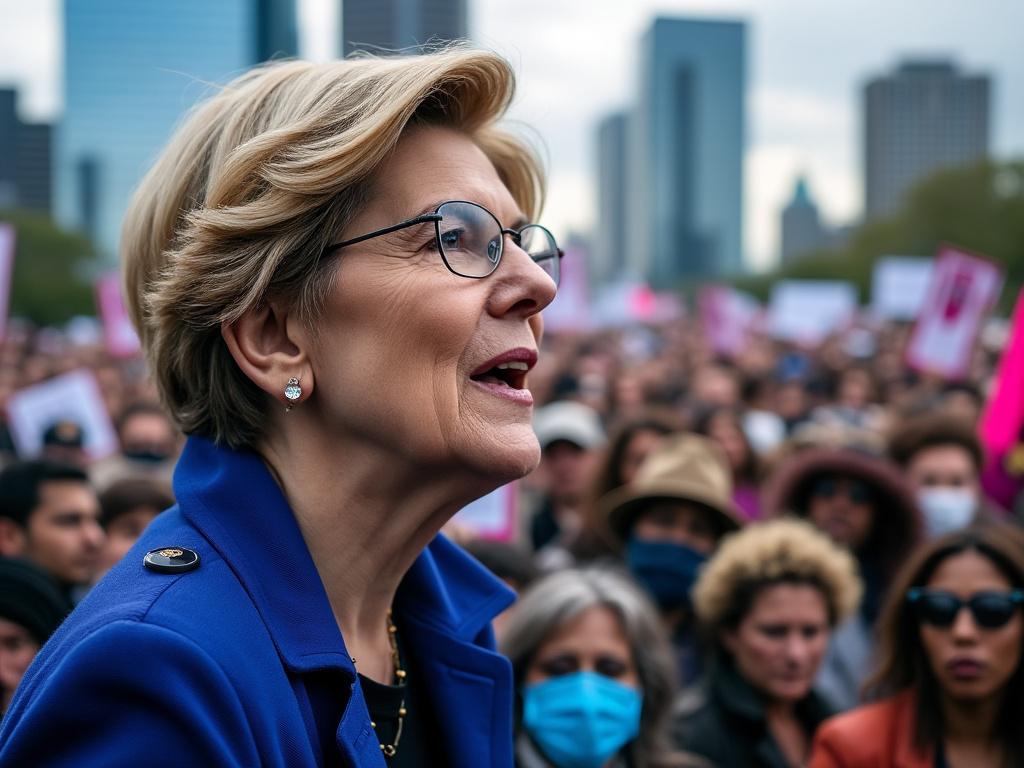
The NYC mayoral race becomes a battleground for economic principles as Senator Elizabeth Warren defends Zohran Mamdani’s progressive tax initiatives. This article dives into the ideological clash and its broader implications on wealth and democracy.
Warren’s Public Endorsement
In a pivotal moment during her CNBC interview, Senator Elizabeth Warren’s public endorsement of Zohran Mamdani for New York City mayor underscored her staunch advocacy for economic justice. Warren’s rhetorical flair was on full display when she posed a sarcastic question, “Are you worried that billionaires are going to go hungry?” This query not only highlighted the absurdity of protecting the ultra-wealthy at the expense of broader societal welfare but also emphasized the negligible impact of higher taxes on their immense wealth. By positioning Mamdani as a staunch ally of the working class, Warren critiqued the outsized influence of billionaire donations in politics, arguing that such practices hinder democratic equity and governance, and shift focus away from crucial issues like public health, education, and housing security.
The CNBC Interview Dynamics
During the CNBC interview, Senator Elizabeth Warren’s exchange with Dan Faber showcased her steadfast defense of progressive taxation, mirroring the themes endorsed by Zohran Mamdani. When Faber raised concerns about affluent residents fleeing due to higher taxes, Warren swiftly countered, asking rhetorically if the billionaires were worried about their next meal—an illustration championing the realignment of fiscal priorities towards foundational societal needs such as childcare. This moment underscored a paradigm of economic justice that fiercely prioritizes public welfare over wealthy comfort. Warren’s remarks also hinted at a broader political narrative, challenging the systemic safeguarding of wealthy interests at the expense of broader societal gain, setting the stage for Mamdani’s detailed economic vision aimed at transforming New York City’s landscape.
Mamdani’s Economic Vision for NYC
Zohran Mamdani’s economic platform, fully backed by Elizabeth Warren, includes transformative proposals like city-owned grocery stores aimed at reducing food costs, and universal childcare to ease working families’ burdens. These initiatives are crucial in addressing New York City’s soaring cost of living while improving overall quality of life. By redistributing economic power from the affluent to the general populace, these policies are expected to alleviate wealth inequality. Warren’s defense emphasizes that the fear of billionaires losing wealth is overshadowed by the benefits these policies offer to the majority, painting a picture of a more equitable economic landscape in NYC.
Impact on New York’s Richest and Middle Class
The proposed economic measures championed by Zohran Mamdani and backed by Elizabeth Warren arguably present a pivotal shift for New York City’s socio-economic canvas. Critics argue that heavier taxation and heightened regulation could drive an exodus of the city’s wealthiest. However, examining regions like California after similar tax increases reveals a more nuanced outcome. While some high earners relocated, overall tax revenue actually stabilized or grew due to expanded tax bases and spending attributable to the middle and lower classes. Additionally, the economists at the CUNY Fiscal Policy Institute suggest such progressive policies could diminish wealth disparities and bolster economic stability. This chapter argues that instead of crippling New York City, these progressive policies might rebalance it, providing a scaffolding for a more resilient middle class and a safer net for the lower economic strata.
National Relevance and Future Implications
The Warren-Mamdani narrative offers a compelling glimpse into the burgeoning national debate over wealth distribution and tax reform. This political standoff accentuates a pivotal shift towards progressive policies which challenge the traditional paradigms of American economics. The prospect of implementing similar fiscal policies in other cosmopolitan regions looms large, suggesting a potential domino effect across diverse American landscapes. As cities and states observe New York City’s experiments with progressive taxation, the implications ripple outwards, stirring debates and possibly encouraging similar referendums across the country. Not merely confined to tax policy, the approach proposed by Warren and Mamdani may herald a broader ideological reorientation towards economic equity, influencing future legislative agendas at both state and national levels. As these conversations gain traction, they ignite a critical reassessment of America’s commitment to addressing economic disparities through public policy, proposing an era of more aggressive governmental intervention in economic justice.
Conclusions
The debate in New York’s mayoral race encapsulates a critical national discourse on wealth inequality and tax justice. This clash not only highlights a stark political divide but also foreshadows possible shifts in policies and priorities. The resolutions from this debate could dictate the balance of economic power and democracy’s true scope in addressing communal needs over individual wealth.