
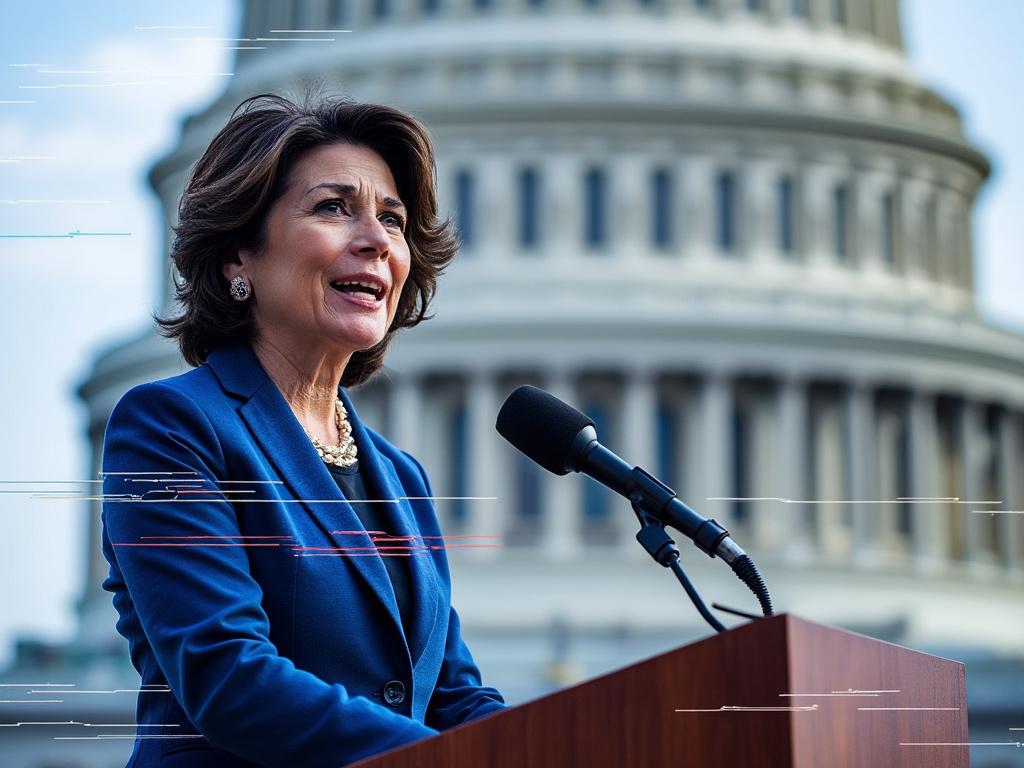
In a bold departure from previous Democratic rhetoric, New York Governor Kathy Hochul has urged her party to adopt aggressive partisan tactics, including gerrymandering, to counteract Republican strategies before the 2026 midterm elections. This article delves into the implications and reactions to her controversial stance.
Hochul’s Call to “Fight Fire with Fire”
On August 4, 2025, Governor Kathy Hochul’s stark declaration marked a pivotal shift in Democratic strategy. Accusing Republicans of a ‘legal insurrection,’ Hochul’s words echoed across the political landscape, pinpointing overtly partisan redistricting tactics used to bolster GOP majorities in states such as Texas. Emphasizing the imperative for Democrats to engage in reciprocal tactics, Hochul’s directive, “we must do the same,” brazenly stakes the claim that political survival necessitates mirroring these contentious strategies. Her assertive stance not only confronts the current Republican playbook but also signals a readiness among Democrats to engage more aggressively in the redistricting arena, setting a transformative tone for upcoming electoral battles.
Context: The Republican Push for Redistricting
Amidst a landscape where Republican strongholds like Texas have wielded redistricting as a recurrent strategy, Governor Kathy Hochul’s directive to Democratic ranks does not merely echo a defensive strike but propounds a bold tactical shift. Evoking frequent Republican-led special sessions aimed at configuring partisan district maps, Hochul explicitly summons Democrats to sanction and apply similar maneuvers. The essence of her message underscores a pivotal transformation: if political rivals exploit gerrymandering to perpetuate their influence, Democrats must adeptly counterbalance this by recalibrating their strategies to effectively safeguard democratic principles and electoral equitability. This strategic pivot disturbingly reflects a broader acceptance that operational ethics in politics may necessitate a proactive and equally aggressive response to gerrymandering, shifting away from previous more principled stances.
Abandoning “We Go High”
In response to the aggressive redistricting strategies employed by Republican counterparts, Governor Kathy Hochul of New York has openly encouraged Democrats to adopt a similar tactical hardness in map-drawing efforts. This marks a clear departure from the famously ethical “We go high” doctrine championed during the Obama era. Hochul asserts that a fierce stance is essential for countering Republican maneuvers effectively. This pivot reflects an emerging consensus among Democratic leaders that adhering strictly to lofty principles in the face of asymmetric political warfare may result in tangible losses. Hochul’s advocacy for hardline gerrymandering has ignited both support for pragmatic policy production and concern over the potential erosion of democratic norms within the party.
Practical Obstacles and Potential Impact
Governor Hochul’s directive to the Democratic party to engage in aggressive redistricting efforts, knowingly shifting from passive strategies, propels a range of practical challenges, notably legal hurdles. In states like New York, where courts have previously invalidated partisan gerrymanders, anticipated legal battles could stymie rapid advancements. Despite this, proponents argue the necessity of tough responses to counterbalance Republican strategies that have shifted the political middle ground. Such pivotal moves, while risky, aim to secure pivotal wins in critical regions by 2026, potentially reshaping Congress’s composition in favor of Democratic control. This tactical pivot responds directly to a broader strategic overhaul within the party, motivated by a pressing need to recalibrate tools and tactics in today’s high-stakes political arena.
Democratic Base and Internal Debate
Governor Hochul’s urging for Democrats to adopt more aggressive redistricting tactics has ignited a significant ethical debate within the party. Some Democratic operatives argue that such tactics are vital to counterbalance Republican strategies that have seen GOP-favoring districts cemented in key states. However, this approach has not sat well with all party members. A faction within the Democrats holds that integrity in political mapping should prevail, fearing that compromising on ethical standards could damage the party’s image as proponents of fair democracy. These dissenting voices worry that engaging in similar tactics as the Republicans could blur the lines between the parties, undermining voter trust and loyalty.
Conclusions
Governor Hochul’s strategy marks a pivotal shift in Democratic tactics, suggesting a rugged path ahead in American politics where the ends may justify the means. As both parties now openly engage in power-maximizing strategies, the essence and ethical boundaries of democracy are tested, revealing a stark transformation in the fight for electoral dominance.