
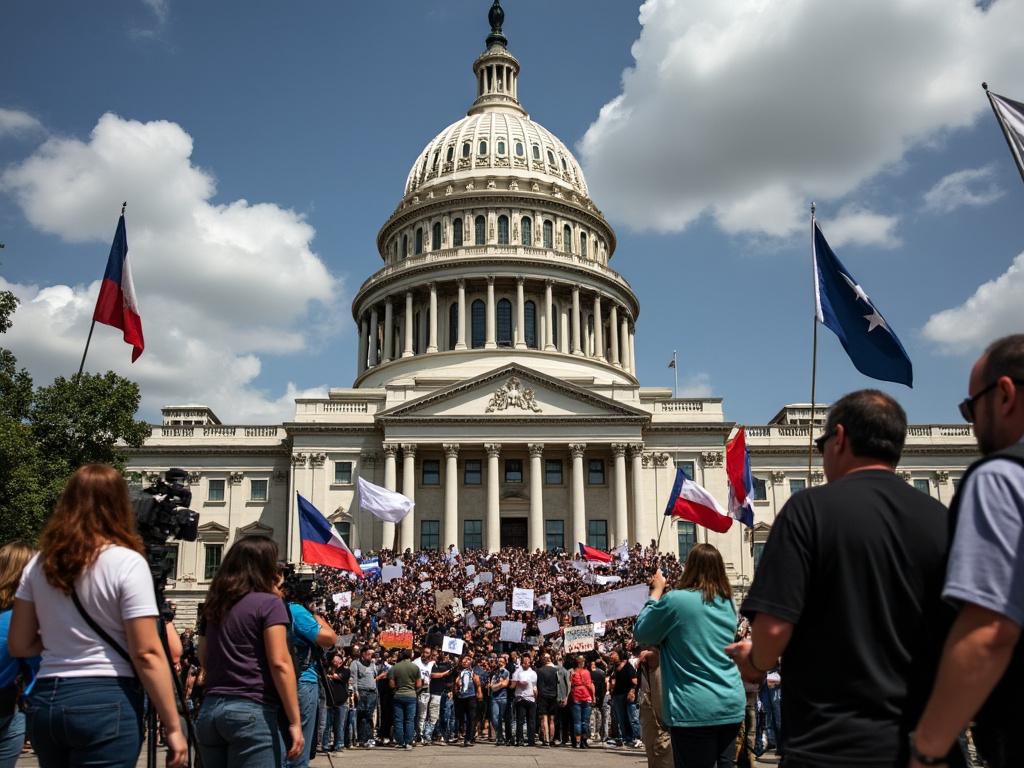
Texas House Democrats’ dramatic flight in August 2025 to block a Republican-led redistricting has ignited a fierce political and legal debate. Faced with $500 daily fines, their action questions the balance of power and democratic processes in Texas.
Why Democrats Left and What the Rule Requires
In August 2025, a significant exodus of over 50 Texas Democrats occurred as they left the state to prevent a quorum, thus stalling a critical vote on a GOP-favored redistricting plan. This strategic withdrawal can be attributed to the Democrats’ attempt to block legislation they viewed as detrimental to fair electoral representation. Their decision was significantly influenced by a controversial House rule enacted in 2023, specially designed to curb quorum breaks by imposing a stiff penalty. This rule levied a $500 daily fine on any member engaged in an unauthorized absence meant to disrupt legislative proceedings. The rule was a direct response to previous tactics adopted in 2021 when Democrats similarly absconded to block legislation, seeking to leverage the temporary interruption as an urgent call for revising proposed electoral laws deemed as biased.
How the Fines Work and Why Payments Are Controversial
The imposition of a $500 daily fine on Texas House Democrats has sparked considerable debate, especially concerning the payment method. Under the Texas House rules, legislators are prohibited from using campaign funds to settle these fines, compelling them to pay out of personal resources. This stipulation intensifies the financial strain on the lawmakers and raises questions about the accessibility of political resistance for those without substantial personal wealth. Governor Greg Abbott has further escalated the situation by threatening legal action against any individuals or entities attempting to financially support the Democrats, thereby circumventing this rule. Critics argue that these measures are not just punitive but also aimed at stifolding political dissent by leveraging financial repercussions, thus deepening the partisan divide and complicating the conflict. This complex scenario underscores the intertwining of financial capability and political expression, highlighting a significant and controversial aspect of the standoff.
Consequences and Governor Abbott’s Threats
In a high-stakes escalation of the redistricting standoff, Governor Greg Abbott threatened to declare the seats of absent Democrats forfeited. This drastic move would not only deepen the political crisis but also pave the way for unprecedented legal challenges. Legal experts argue such actions could breach Texas laws and House rules, which do not typically allow for unilateral declarations of forfeiture without due process. The national spotlight intensifies as observers and constitutional scholars debate the legality and implications of such threats. Abbott’s approach signals a potentially transformative period in Texas legislative history, highlighting the dire consequences of political deadlock in the state.
Historical Context and Implications
The $500 daily fines facing Texas Democrats mark a stark escalation in the long-standing tradition of political battle within the state. Historically, such punitive measures are not unprecedented but bring to light the intense strategies utilized to enforce party loyalty and attendance during pivotal legislative decisions. Comparable to the 2021 walkout, where Democrats left the state to deny quorum over voting bills, the current standoff underscores the gravity of redistricting debates. These redistricting efforts, predominantly spearheaded by the Republican majority, could profoundly reshape Texas’ congressional representation. As districts are redrawn, potentially diminishing Democratic influence, the balance could tilt significantly, affecting national political dynamics as Texas holds substantial electoral power. This echoes broader themes in U.S. politics where gerrymandering has increasingly become a tool for entrenching power, raising questions about the fairness and integrity of electoral processes.
Public and Political Fallout
Imposing a $500 daily fine on Texas Democrats who resisted participation represents a significant escalation in inter-party conflict. Crucially, this measure places intense pressure on the personal finances of dissenting lawmakers, potentially affecting their capability to serve effectively. The fines raise grave concerns about the use of financial penalties as a tool to enforce party conformity and attendance. Moreover, these financial penalties might deter future political dissent, posing challenges to the democratic principle of robust debate and minority rights within legislative processes. The introduction of such fines not only underscores the severity of polarization in Texas politics but also signals a problematic shift towards monetarily punitive measures against political opposition, which might inadvertently influence the ethical landscape of state politics. These actions reflect and could further stimulate the nationalization of state-level conflicts, as they attract nationwide attention and provoke debates about democratic norms and minority party rights across the U.S.
Conclusions
The $500 daily fines for Texas House Democrats signify a critical juncture in state politics, emphasizing the intense struggle over congressional redistricting and democratic governance. The eventual outcomes of this confrontation will likely reshape political power structures and legal precedents in Texas.