
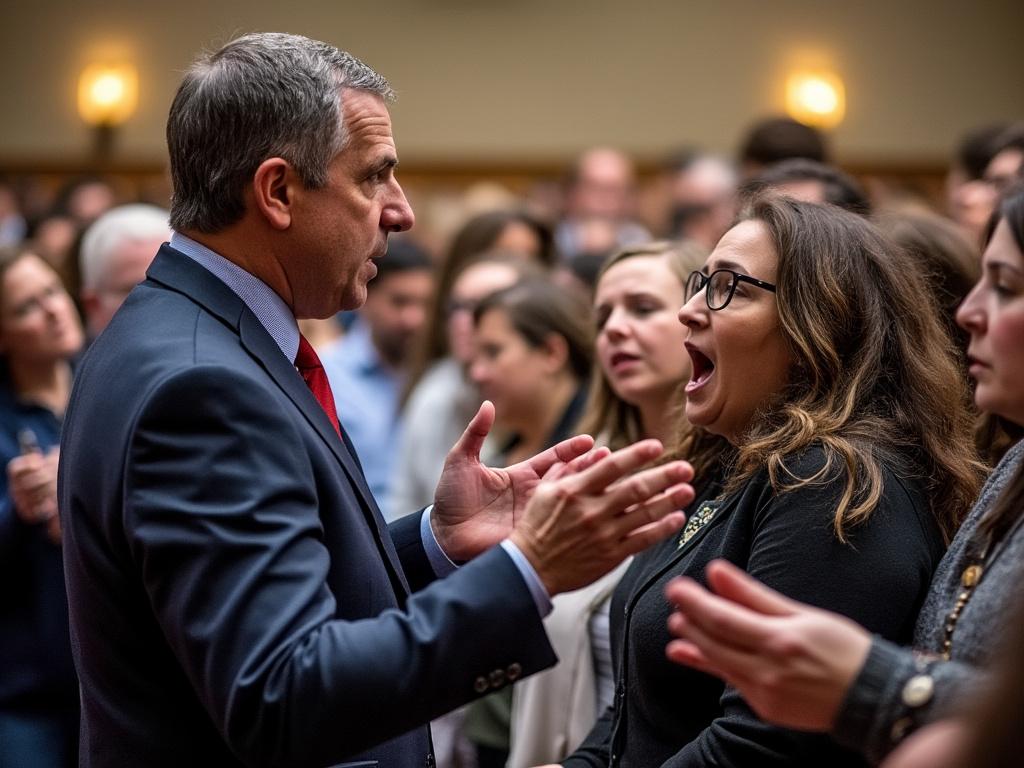
In early August 2025, Nebraska Republican Rep. Mike Flood encountered fierce opposition during a town hall in Lincoln. The event highlighted intense constituent concerns over Medicaid reforms and social spending cuts central to the controversial ‘One Big Beautiful Bill Act’.
The Lincoln Town Hall: A Stormy Event
At the Lincoln town hall, Rep. Mike Flood was met with vehement opposition as he attempted to discuss the proposed Medicaid reforms. The mood was thick with anxiety and anger, palpable in the loud chorus of boos and chants that erupted as Flood outlined the cuts. One poignant moment captured the intensity of the night: a woman, trembling with emotion, shouted, “You are cutting our lifelines!” Her words seemed to echo the sentiments of many, reflecting a deep-seated fear and frustration among the audience. The crowd’s fervent responses underscored the perceived threat these reforms posed to their well-being and healthcare security.
Explaining One Big Beautiful Bill Act
At the center of the town hall’s controversy was Rep. Mike Flood’s championing of the “One Big Beautiful Bill Act,” which sought to overhaul Medicaid and SNAP by introducing stringent work requirements for certain recipients. The bill posited that such mandates would cut costs and encourage self-sufficiency. Beyond economic ambition, Rep. Flood argued that the proposed reforms would ultimately benefit the system by alleviating its financial burdens and redirecting resources to those deemed most in need. However, opponents called attention to the immediate human cost, highlighting that vulnerable populations would face greater hurdles to accessing essential services. The clash between these economic efficiencies and human implications animated much of the town hall, with arguments from both sides steeped in deeply held beliefs about the role of government in providing welfare.
Constituent Reactions and Public Sentiment
At the town hall, heated emotions were palpable as Rep. Mike Flood faced a crowd of constituents who vocally opposed the Medicaid cuts. One attendee, a middle-aged nurse named Sarah Thompson, shared a tearful account of her diabetic son who relies on Medicaid for insulin. She exclaimed, “This isn’t just budget numbers; it’s about whether my son can afford to live.” Her story, like many others shared, highlighted a stark contrast to the fiscal savings Flood emphasized. The crowd’s reaction grew increasingly boisterous, with boos overshadowing Flood’s attempts to justify the reforms as necessary for budget control. This tension underscored a deep divide between the economic justifications presented by Flood and the urgent healthcare needs expressed by the community, indicating a significant challenge in reconciling policy with public welfare.
Broader Implications for Party and Policy
The Nebraska town hall, resonating beyond local precincts, signals a tremble in the usually solid Republican fiscal stance that Rep. Mike Flood represents. National analyses paint a stark picture: Voter disillusionment, particularly among those impacted by Medicaid cuts, may pivot crucial swing votes. Political consultant Helen Yi warns, “Governing by tightening the belt might resonate in theory, but actual service cuts awaken a visceral voter response.” Speculation abounds on ramifications for the GOP’s broader strategy and Flood’s re-election prospects. Given the heated exchange at the town hall, a realignment within Nebraska’s legislative support may loom, potentially influencing Republican stances nationwide. Moreover, the scenario might catalyze deeper structural reassessments of healthcare policy ahead of next electoral cycles, suggesting a possible retreat from hardline fiscal conservatism if public outcry sustains its intensity.
Public Policy and America’s Social Contract
In Nebraska’s fiery town hall, Rep. Mike Flood was met with vehement opposition as he attempted to justify the controversial “One Big Beautiful Bill Act,” which proposes significant cutbacks in Medicaid and other social services. This legislative push stirs a profound debate about America’s social contract, particularly the government’s role in ensuring public welfare. The boos from the crowd reflect a deep-seated ideological rift: on one side, proponents of fiscal conservatism advocate for minimized government spending and increased personal responsibility; on the other, defenders of a robust social safety net argue that it is imperative for the government to provide essential healthcare and support services, especially to the most vulnerable populations. The historical roots of this debate trace back to New Deal policies, which ingrained a perspective of government as a protector and provider. The opposition at the town hall can be seen as a modern continuation of this long-standing national discourse on how best to balance economic stewardship with moral obligation.
Conclusions
Rep. Mike Flood’s town hall in Lincoln became a flashpoint embodying the deep divides within Nebraska and across the nation regarding Medicaid and social spending. The vociferous opposition from constituents signals a critical moment in U.S. politics, questioning the balance between fiscal policy and social responsibility in governing America’s social safety net.