
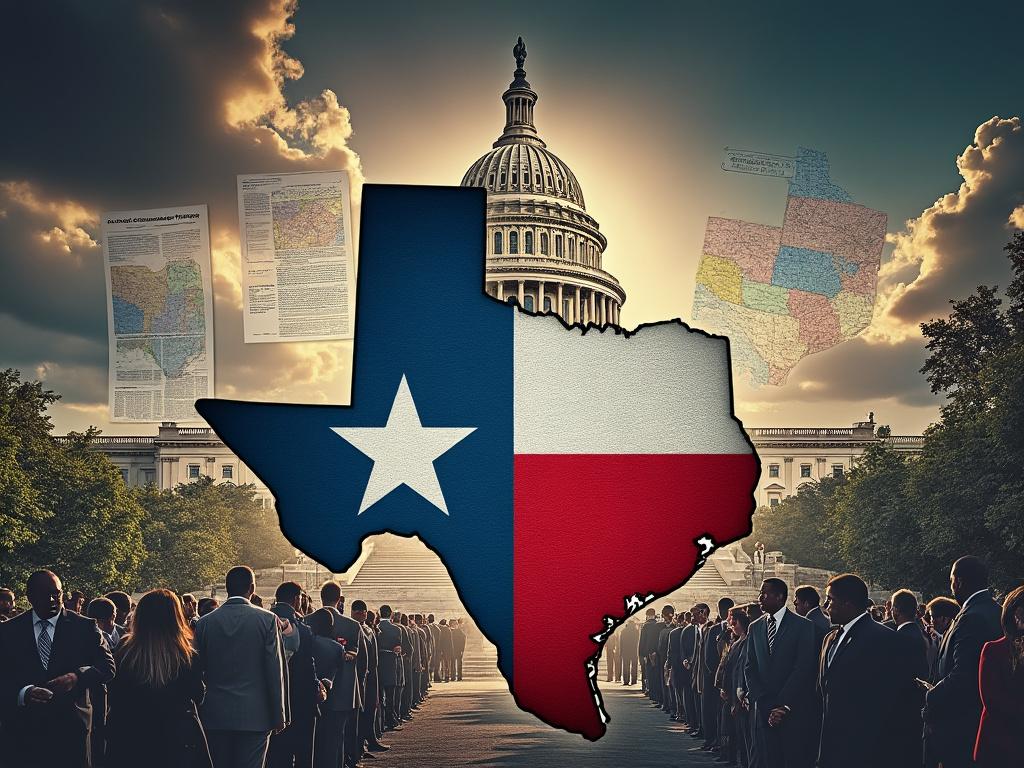
In August 2025, a dramatic chapter in Texas politics unfolded as Democrats fled the state to block a Republican-led redistricting plan. This standoff has not only stalled legislative activity but has also highlighted the intense partisan battles shaping the future of U.S. electoral politics.
The Trigger: Texas Democrats’ Quorum Break
In a dramatic move, Texas Democrats departed the state to break the legislative quorum, blocking a vote on a Republican-sponsored redistricting plan designed to secure additional Congressional seats. This strategy underscored deep divisions over redistricting processes perceived to bolster Republican stronghold at the expense of minority representation. Historically, Texas has seen similar quorum breaks, but the scale of this departure was unprecedented. The immediate effect stalled multiple legislative priorities, prompting Republicans to decry the move as a dereliction of democratic duties, while Democrats framed it as a necessary stand against gerrymandering. The fallout intensified partisan tensions, setting the stage for significant legal and political battles.
Legal Framework and the Arrest Warrants
In the heated standoff over redistricting in Texas, Republicans utilized the legislative tool known as the “call of the House” to compel absent Democrats back to the chamber. This procedural move, rooted in the Texas Constitution, legally mandates members’ attendance during a legislative session to maintain a quorum. Following the Democrats’ departure, Republicans escalated actions by issuing civil arrest warrants. Under Texas law, the warrants empower the sergeant-at-arms to detain and bring the legislators back to the Texas Capitol, though only within state boundaries.
Crucially, the enforceability of these warrants presents legal complexities, especially as Texas authorities possess no jurisdiction outside state lines. Hence, warrants lose their power at the Texas border, complicating efforts to retrieve lawmakers who had fled to Washington D.C. Legal opinions remain divided, with some experts arguing that compelling lawmakers to attend violates democratic principles, while others assert it as a necessary enforcement of legislative rules. The interplay between state mandate and individual legislative rights continues to fuel ongoing legal debates.
National Reaction and Interstate Dynamics
The issuance of civil arrest warrants by Texas Republicans has drawn vehement reactions from across the national political landscape, intensifying the debate on state authority and partisan legal strategies. Governors of other states have voiced their support for the Texas Democrats. Illinois Governor JB Pritzker criticized the move as an “attempt to undermine democratic principles,” while New York’s Kathy Hochul expressed solidarity, affirming her state’s commitment to “protecting democratic processes.” California Governor Gavin Newsom highlighted the episode as reflective of broader national tensions over voting rights and democratic governance.
Republican leaders at both the Texas and federal levels have defended the actions as necessary to maintain legislative order and integrity. Statements from these leaders often frame the Democrats’ quorum break as an abandonment of democratic obligations, posing serious questions about the boundary of states’ rights and interstate protections when dealing with legislative stonewalling.
This standoff not only exacerbates partisan divides but also raises significant concerns regarding the nature of interstate cooperation in resolving political disputes. The contrasting responses underscore the deep ideological divides influencing governance and the interpretation of democratic accountability and state autonomy. This is occurring against the backdrop of broader discussions on voting rights and gerrymandering, pointing to a critical juncture in U.S. political dynamics.
Implications for Voting Rights and Gerrymandering
The redistricting proposals in Texas carry significant implications for voting rights and have sparked accusations of gerrymandering, particularly with respect to the dilution of minority voting power. By reshaping district lines, there is a substantial risk that minority communities could be fragmented or condensed into fewer districts, effectively weakening their impact on elections. This method, known as “packing and cracking,” has been a contentious strategy often employed to secure political advantage.
Amidst this backdrop, the actions in Texas reflect a broader national struggle over voting rights. Historical efforts by various states, predominantly under GOP leadership, have seen similar attempts to manipulate district boundaries to favor certain electoral outcomes. These maneuvers highlight ongoing issues related to equal representation and the integrity of the electoral process, aligning with past litigation at the Supreme Court level, such as the pivotal Shelby v. Holder, which removed crucial oversight provisions of the Voting Rights Act.
This scenario in Texas thus not only tests the resilience of minority voting rights at the state level but also poses questions about federal oversight and the continuing evolution of redistricting jurisprudence in the United States. The resulting legal battles and political strategies emerging from this fray could potentially recalibrate the mechanisms of power, setting precedents that extend well beyond the Texan borders and influencing the legislative and electoral landscapes at the national scale.
Looking Ahead: What This Means for U.S. Politics
The standoff in Texas, marked by Democrats’ quorum break and subsequent arrest warrants issued by the GOP, possibly heralds a new threshold in partisan conflict over redistricting, one that could ripple outward to affect national politics profoundly. As other states watch Texas, they may consider similar hardline tactics, thereby reshaping legislative behaviors and norms throughout the country. The Texas case might spur further legal challenges where minority groups or opposite parties feel disenfranchised. Moreover, legislative procedures could gradually evolve, perhaps becoming either strictly partisan or, conversely, driving demand for bipartisan fairness in redistricting. This ongoing conflict could significantly impact the 2026 midterms and beyond as parties may begin to construct their strategies not only around voter preferences but also on anticipated legal challenges and procedural defenses. As this standoff might set precedents, it behooves political strategists to rethink the balance between aggressive tactics and the long-term health of democratic processes.
Conclusions
The standoff over redistricting in Texas underscores a critical juncture in U.S. politics, where partisan strategies and legal boundaries are tested. The outcome could significantly influence national legislation, reshape electoral districts, and affect the balance of power in Congress, setting a precedent for political conflicts across the country.