
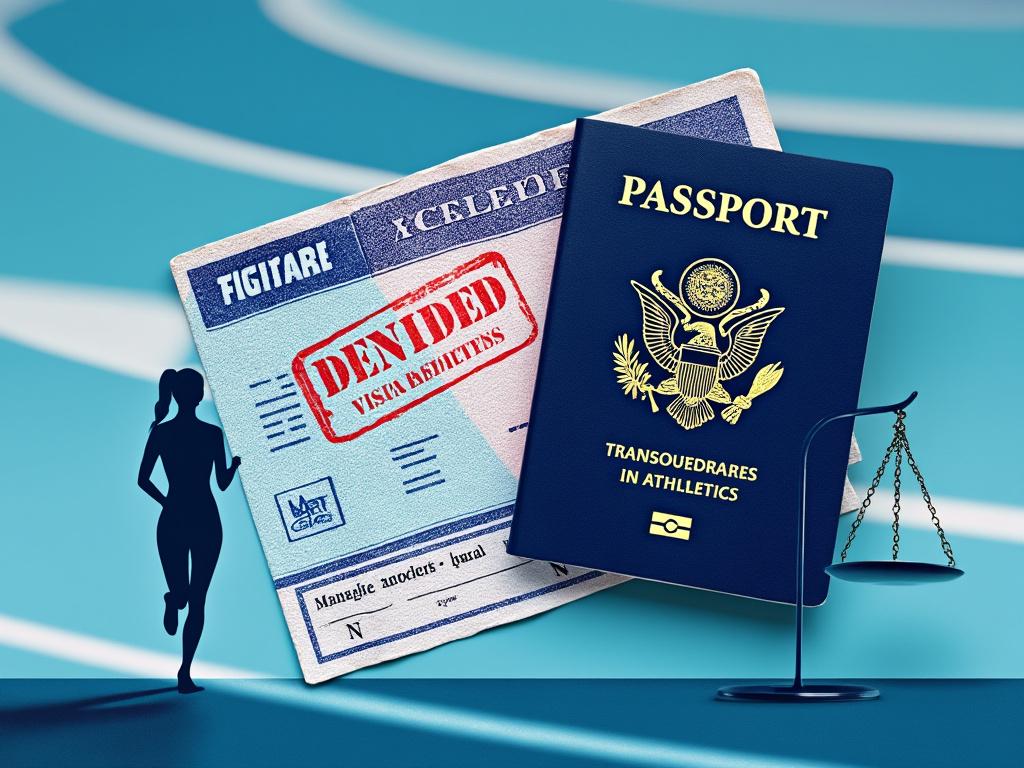
In a controversial move, the Trump administration has implemented strict sports visa restrictions for transgender women. This article delves into the origins, enforcement, and impacts of these policies, revealing how they reshape the U.S. and international athletic landscapes.
Origins and Executive Order
The Trump administration’s Executive Order 14201 enacted a pivotal reinterpretation of Title IX, which historically prohibited gender-based discrimination in education programs receiving federal financial assistance. Under the new policy framework, Title IX’s protections were redefined to exclude transgender women from participating in women’s sports categories, arguing that their inclusion would disadvantage cisgender female athletes. This move mandated federal agencies to rigorously enforce these definitions, curtailing the eligibility of transgender women for sports-related visas. The administration claimed this was necessary to preserve fair competition and opportunities for cisgender women, drawing mixed responses from various federal entities. Some bodies showed resistance, expressing concerns about the implications for human rights and discrimination, while others aligned strictly with the directive, swiftly implementing the new criteria.
Visa Restrictions and Enforcement
Following the implementation of Executive Order 14201, the U.S. State Department and the Department of Homeland Security swiftly outlined direct enforcement mechanisms to restrict sports visa eligibility for transgender women. Consular and immigration officers were empowered to leverage revised criteria, focusing on the biological sex at birth rather than the athlete’s current gender identity. This shift led to an increased incidence of visa denials at U.S. embassies and consulates globally. Additionally, new visa scrutiny practices were introduced, requiring applicants to undergo more rigorous interviews and provide extensive personal and medical history documentation. Over the ensuing months, these guidelines gradually evolved into more comprehensive and stringent controls, making the visa application process significantly more challenging for transgender women athletes. The increased complexity not only added to the bureaucratic burden but also heightened the uncertainty and stress experienced by potential participants in U.S. sports events.
Impact on U.S. Sports Institutions
The Trump administration’s restrictions on sports visas for transgender women have put significant pressure on U.S. sports institutions like the NCAA, which are caught between adhering to federal regulations and maintaining their inclusive policies. This dichotomy forces these bodies to navigate a complex landscape where they must reassess eligibility criteria and participation guidelines to ensure compliance without undermining their commitments to inclusivity. Specifically, collegiate and elite sports organizations have had to modify their event programming and athlete selection processes, which in some cases has led to the exclusion of transgender athletes from international competitions hosted on U.S. soil. These adjustments have not only logistical implications but also affect the reputation and inclusivity ethos of these institutions. For instance, the NCAA has faced backlash for potentially marginalizing transgender athletes, which contradicts their long-standing advocacy for diversity and equality in sports. This scenario underscores a broader ramification where U.S. sports bodies risk alienating athletes, sponsors, and international sports communities, thereby impacting their global standing and operational ethos.
Legal, Title IX, and Global Repercussions
The Trump administration’s restrictions on sports visa eligibility for transgender women have triggered a labyrinth of legal challenges, particularly intersecting with Title IX, which mandates nondiscrimination based on sex in any education program receiving federal financial assistance. Legal experts argue that these visa policies may violate civil rights by unilaterally discriminating against transgender individuals, potentially sparking litigation aimed at establishing whether these visa restrictions align with or infringe upon protected civil liberties. The juxtaposition against state laws varies widely, as some states have more progressive stances on transgender rights relative to federal mandates.
Internationally, the response has been predominantly critical, especially from global sports governing bodies like the International Olympic Committee (IOC), which has adapted more inclusive guidelines concerning transgender athletes. These restrictions not only clash with such policies but also impede the participation of transgender athletes in international competitions hosted in the U.S., thus impacting the global sports community. As legal battles unfold and international sports organizations push back against the restrictions, the intersection of U.S. visa policies and global sports diplomacy grows increasingly fraught, reflecting broader tensions in gender, legal rights, and international sports administration.
Criticism and Support
The Trump administration’s restrictions on sports visas for transgender women have garnered a spectrum of responses. Advocacy groups like the Human Rights Campaign vehemently oppose these measures, stating they undermine the rights and dignity of transgender athletes by imposing unnecessary and discriminatory barriers. Conversely, some politicians and advocacy organizations argue that these policies ensure a level playing field in women’s sports, claiming biological differences might provide transgender women an unfair advantage.
Medical professionals are divided; while some concur with the physiological competitive advantage argument, others emphasize the psychological and social importance of inclusive sports practices. Athletes, too, reflect this divide, with figures like tennis icon Martina Navratilova advocating for competitive fairness, and others like Olympic gold medalist Caster Semenya criticizing the policy as discriminatory.
These conflicting viewpoints highlight a fundamental clash between interpretations of fairness and equality, further intensifying the debate around transgender athletes’ participation in competitive sports. Such division underscores the ongoing struggle to balance equity and competitive integrity within the international athletic community.
Conclusions
The Trump administration’s visa restrictions for transgender women athletes have stirred significant controversy and pushback. This policy not only reshapes U.S. sports institutions but also influences international sports protocols, urging a reevaluation of fairness, safety, and inclusivity in women’s athletics globally.