
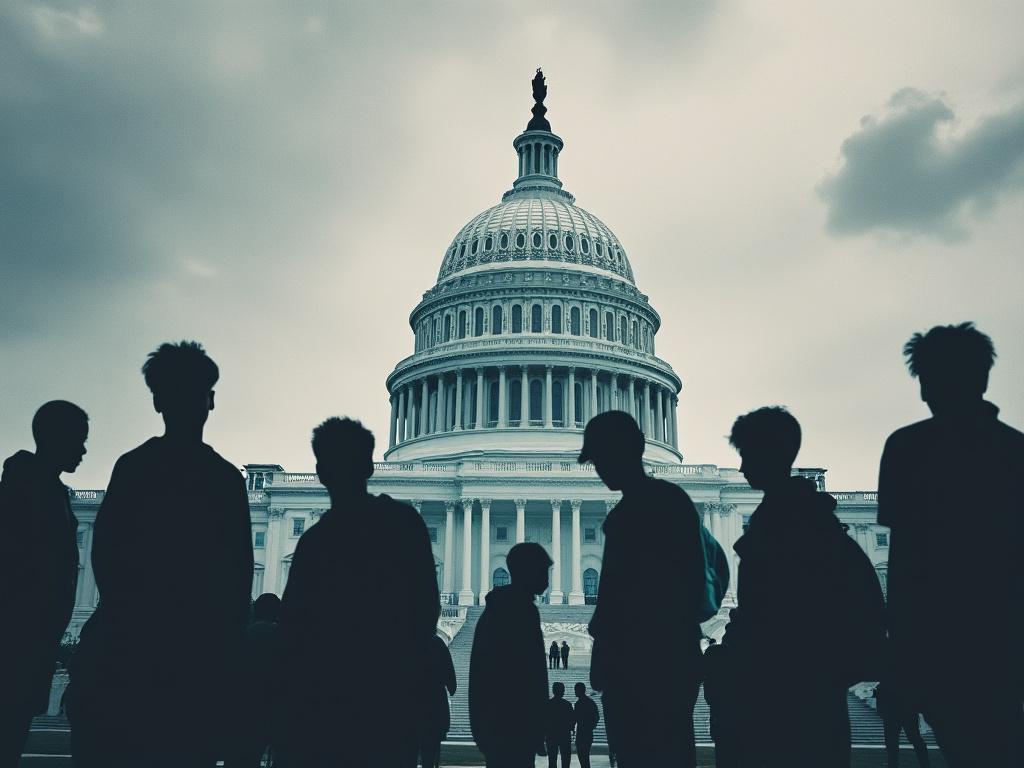
In a recent surge of declarations, former President Donald Trump has threatened to federalize Washington D.C. if local authorities do not amend laws to prosecute violent minors as adults. This controversial stance follows a high-profile assault, igniting a national debate on juvenile justice and federal oversight.
Trump’s Position and Threats
In response to the unsettling escalation of youth-related violence in Washington D.C., and particularly highlighted by the high-profile assault on a government employee, former President Donald Trump has vocally criticized the current penal practices regarding juvenile offenders. Trump argued vehemently for a legal overhaul that would permit the prosecution of teens as adults, positing that such measures would act as a stronger deterrent against crime. His proposition stems from a belief that the existing juvenile system is overly lenient, thus ineffective at curbing violence. Moreover, Trump has issued a stark ultimatum: alter local laws accordingly, or he would advocate for the federalization of the District’s law enforcement. This assertion by Trump introduces a contentious debate over federal overreach versus local governance, laying bare a profound disagreement on handling juvenile justice within the bounds of constitutional rights and community safety.
Incident Details and Public Reaction
In the wake of the brutal assault on Edward Coristine, a public outcry ensued, amplifying the debate around youth crime in Washington D.C. The public was polarized, with one faction advocating for harsher penalties as deterrence, while others called for a more rehabilitative approach, highlighting systemic failures affecting the youth. Notably, Elon Musk commented on the incident, criticizing the current juvenile justice system for not adequately preventing such tragedies. His involvement propelled the issue into a larger national dialogue, pressuring policymakers to reconsider the balance between punitive measures and rehabilitation. The diverse reactions underscored the complexity of juvenile crime in modern urban settings, demonstrating a profound disconnect between public sentiment and existing legal frameworks.
Broader Context: Crime and Juvenile Justice in D.C.
Analyzing the broader context of crime rates and juvenile justice in Washington D.C., it becomes evident that Trump’s urgent portrayal of youth-related crime may not fully align with the available data. Historically, D.C. has grappled with fluctuations in crime rates, but recent statistics show a nuanced picture. D.C. officials, employing a combination of rehabilitation and prevention strategies, aim to address the root causes of juvenile delinquency. These approaches focus on community-based interventions and support systems rather than solely on stringent legal consequences. This preventative model contrasts sharply with Trump’s push for harsher measures like prosecuting minors as adults, suggesting a pivotal discord between federal perspectives and local policies. The effectiveness of D.C.’s methods, which emphasize rehabilitation, is supported by research indicating lower recidivism rates among youth who undergo comprehensive social and psychological support, compared to those processed through adult judicial systems.
Legal and Political Ramifications
Donald Trump’s proposition to prosecute minors as adults in Washington D.C. and his threat to federalize the city’s law enforcement has ignited significant legal and political controversy. This approach raises profound constitutional concerns, particularly regarding the separation of powers and federal overreach. Trump’s plan may face stiff opposition from civil rights advocates who argue that such measures could violate the Eighth Amendment’s prohibition against cruel and unusual punishment and conflict with established juvenile justice principles. Furthermore, local leaders are likely to challenge the federalization of law enforcement, viewing it as an infringement on the city’s autonomy and an undermining of local governance. The disputes these initiatives might provoke could lead to protracted legal battles, potentially reaching as high as the Supreme Court. This tension underscores the complexities of addressing crime while respecting the delicate balance between federal authority and local jurisdiction.
Trump’s Longstanding Impact on National Policy
Donald Trump’s influence on national policy, particularly in law enforcement and juvenile justice, marks a significant shift towards a tougher stance on crime. His advocacy for prosecuting teens as adults in D.C. reflects his broader agenda to implement stricter legal penalties and enhance federal oversight. This approach potentially sets a precedent that might encourage other states to adopt harsher legal frameworks for juveniles. Such policies could have lasting repercussions on civil liberties, risking the erosion of juvenile rights and increasing the potential for life-altering sentences for young offenders. These shifts in the legal landscape underscore a deepening polarisation regarding the management of juvenile justice across America.
Conclusions
Donald Trump’s radical proposals to combat youth violence in D.C., including prosecuting minors as adults and federalizing local law enforcement, underline a critical debate on juvenile justice and constitutional rights. These potential changes could redefine federal and local dynamics and have enduring implications on the nation’s legal and social frameworks.