
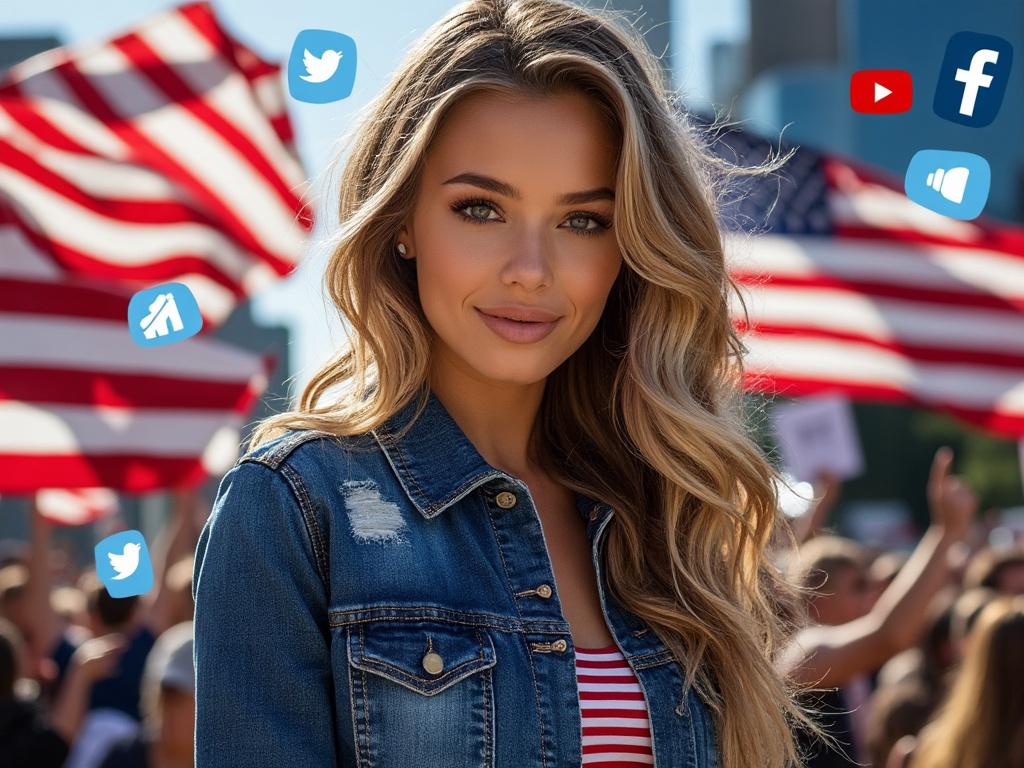
In a recent advertising campaign, American Eagle featured actress Sydney Sweeney, sparking backlash over perceived messages intertwining beauty standards with racial narratives. This controversy has drawn commentary from U.S. Vice President J.D. Vance and others, becoming a symbolic battleground in America’s ongoing culture wars.
The Spark of Controversy
The spark that ignited the debate was the wordplay in American Eagle’s ad with Sydney Sweeney, which cleverly used “great jeans” to imply “great genes.” This double entendre quickly stirred contention, as it was interpreted by some as a nod to genetic superiority. Critics on social platforms, particularly Instagram and X, rapidly voiced concerns. One user tweeted, “This is not just about jeans. It’s about implying superior genetics linked to appearance!” Meanwhile, defenders argued the ad was a simple play on words, saying, “People are reading too much into a harmless pun.” This dichotomy in interpretation showcases the broader societal sensitivities around language and representation in advertising.
Backlash and Accusations
The criticisms of the American Eagle campaign centered around the dual interpretation of “great jeans,” referring potentially to both denim and genetics, which many took as promoting a singular, exclusionary beauty ideal embodied by Sydney Sweeney. Critics argued that the imagery and text subtly aligned with eugenic concepts, celebrating specific physical traits as desirable or superior. Cultural analysts and social media influencers fiercely debated these implications, pointing out how such messages could reinforce harmful stereotypes about beauty and worth.
Different user demographics on Instagram and X showcased a broad spectrum of reactions. Some saw the play on words as harmless and clever marketing, while others felt it was a dangerous perpetuation of a narrow beauty standard. These mixed reactions exemplify the complex layers of modern advertising and the varied interpretations they evoke, reflecting broader societal issues related to body image, inclusivity, and the ethical responsibilities of advertising.
J.D. Vance’s Defiant Stance
In the wake of the backlash against the American Eagle ad featuring Sydney Sweeney, U.S. Vice President J.D. Vance emerged as a pivotal defender, casting the outrages as mere “overreactions” stirred by the political left. Vance argued that the criticism was symptomatic of a broader intolerance for traditional beauty and femininity, indicative of a constricting cultural dialogue that threatens free expression. His statements echoed a narrative of cultural warfare particularly resonant with his supporters. Aligning himself with the preservation of “American values,” Vance’s critique extended beyond the ad itself to challenge the electoral repercussions faced by conservatives emphasizing similar themes. Notably, figures like commentator Tomi Lahren echoed this sentiment, suggesting that the backlash hinted at a leftist attack on free enterprise and beauty standards, rather than a pursuit for genuine inclusivity. This positioning of the debate within a wider political discourse indicated the increasingly partisan interpretation of cultural touchpoints in modern America.
Cultural and Commercial Repercussions
American Eagle’s steadfast support for the Sydney Sweeney campaign, despite contentious feedback, underscores its commitment to modern, bold branding aligned with a younger, more socially attuned demographic. Analysts suggest that this controversy may have inadvertently reinforced the brand’s image amongst its primary audience, who often value authenticity and corporate bravery in addressing or dismissing societal critiques. Marketing expert Jane Thompson notes, “By standing their ground, American Eagle not only stays relevant but resonates more deeply with a demographic that sees traditional outrage as increasingly disconnected from their values.” This alignment with youthful ideals seems reflective in their sustained market performance during the period, suggesting that the brand’s understanding of their consumer base and societal trends is both nuanced and strategically sound. However, this stance also poses risks by potentially alienating more conservative customer segments, highlighting the tightrope that brands must walk in an era of intense social media scrutiny and cultural divisiveness.
Sydney Sweeney’s Broader Career and Public Image
Sydney Sweeney’s involvement in the American Eagle campaign significantly intersects with her broader public persona and acting career. Known for her roles in critically acclaimed series where she often portrays complex characters, Sweeney’s venture into endorsements like American Eagle suggests a tactical expansion of her brand into mainstream and youthful markets. The backlash faced and her response revealed a consistent character—an understanding of the influence wielded by public figures in shaping perceptions. Her handling of the controversy, where she articulated the importance of body positivity, aligns with a modern celebrity’s role as a catalyst for societal conversations. This stance not only bolsters her image as a thoughtful influencer but also underscores the evolving responsibilities celebrities shoulder in cultural debates, reminding the audience of the broader implications of their endorsements.
Conclusions
The American Eagle ad featuring Sydney Sweeney has hence become a touchstone for examining how commercial campaigns intersect with cultural and political dialogues in the U.S. Vice President Vance’s involvement and the resultant debate underscore the volatile interaction between celebrity, commerce, and ideology in the modern media environment.