
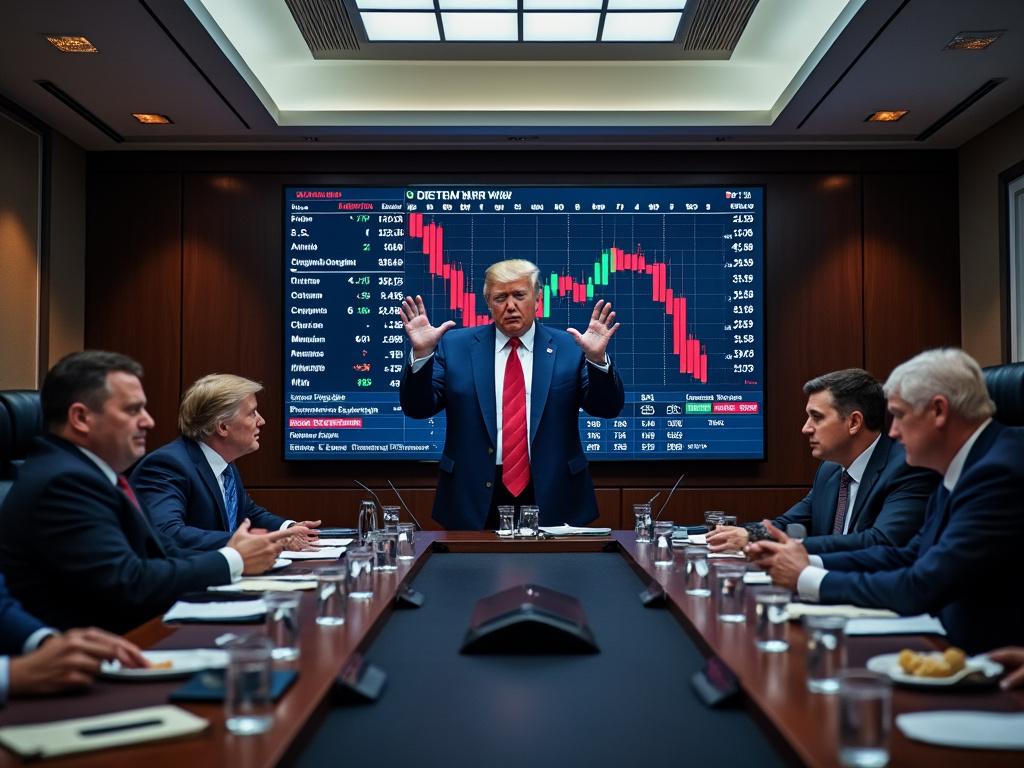
When President Donald Trump labeled the July jobs report as ‘rigged,’ it sparked not only media uproar but deeper discussions about trust in governmental economic reports. This article examines the surrounding controversies, responses, and political maneuvers in the wake of the allegations.
The Start of the Controversy
The Start of the Controversy: Initial Allegations: Amid a particularly disappointing jobs report, former President Donald Trump vehemently attacked the data’s validity, suggesting a conspiracy orchestrated by bureaucrats. Trump claimed these officials manipulated figures to undermine his presidential tenure and favor Democratic agendas. He labeled the report as “fake” and part of the “greatest political scam” but didn’t provide any substantial evidence to back his assertions. His accusations fueled a significant outcry, with his supporters rallying behind the claims, creating a politically charged atmosphere around what is typically a non-partisan discussion of economic statistics.
The Revisions and Reactions
Statistical Analysis: The Bureau of Labor Statistics (BLS) routinely revises its job growth figures, a normal part of refining data as more complete information becomes available. These revisions are essential for accurate economic assessment and are openly articulated through methodologies like seasonal adjustment and benchmarking. Despite Trump’s vociferous reactions to what he perceived as unfavorable revisions, economic experts highlighted the BLS’s adherence to transparent, rigorous procedures devoid of political influence. These regular updates ensure that job reports reflect the most accurate data possible, reinforcing the system’s integrity against allegations of manipulation. Expert economists frequently reaffirmed the reliability of these processes, countering Trump’s claims with evidence of the BLS’s longstanding reputation for precision and impartiality in its statistical analyses.
Political Dynamics and Responses
In response to the contentious jobs report and subsequent criticisms, Trump’s administration, spearheaded by National Economic Council director Kevin Hassett, swiftly defended the abrupt dismissal of the Bureau of Labor Statistics (BLS) commissioner. Hassett articulated that the firing was crucial for initiating overdue reforms within the BLS. He emphasized the administration’s commitment to modernizing the labor data processes to reflect more accurately the real-time dynamics of the job market. This defense attempted to frame the dismissal not as a retaliatory act but as a step towards enhancing the accuracy and relevance of labor statistics, promising that these changes would yield a more robust economic metric system. Despite this justification, many economists and statisticians viewed the move with skepticism concerning its timing and the potential undermining of data integrity.
Impact on Public Trust and BLS Independence
President Trump’s vocal skepticism and actions regarding the jobs report have profound implications for the Bureau of Labor Statistics (BLS) and overall public trust in government data. Experts express concerns that the perceived politicization might lead to lasting damage to the BLS’s reputation as an independent statistical agency. Such sentiments could foster distrust not only in job statistics but more broadly in how government economic indicators are perceived. This erosion of confidence might then seep into the wider realms of public interaction with governmental agencies, affecting core aspects like policy making and political engagement. Aligning more with partisan interests rather than empirical data, the administration’s approach sets a precarious precedent, potentially inviting skepticism and cynicism among citizens about official statistics that play pivotal roles in economic and social planning.
Media Coverage and Election Context
The reactions to Trump’s vocal disapproval of unfavorable job reports became a major talking point in media outlets, especially as the election neared. *Media scrutiny* intensified, with various channels dissecting the impact of Trump’s statements on public perception and market reactions. As accusations circulated about potential manipulation of economic data for political gain, the role of the media became critical in maintaining a balance between reporting and inadvertently amplifying unverified claims. This scrutiny underscored not only the immediate political stakes but also the longer-term consequences on public trust in economic reporting. The campaign environment thus turned every job report into a high-stakes media event, fueling both political discourse and public speculation about the integrity of economic data under Trump’s administration.
Conclusions
As Trump’s administration navigated controversial waters with accusations of ‘rigged’ jobs data, the incident not only highlighted the political tensions surrounding economic statistics but also underscored the crucial need for maintaining public trust in statistical agencies. The saga reflects ongoing challenges in the politicization of supposedly objective data.