
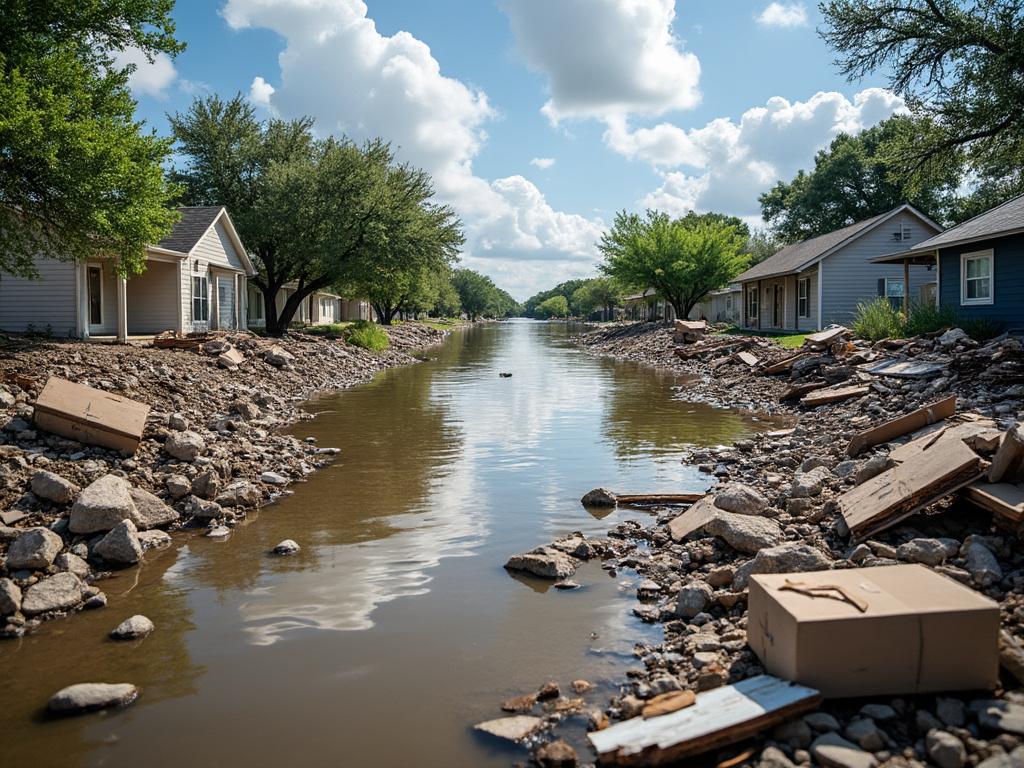
In July 2025, Central Texas experienced catastrophic flooding, claiming lives and homes. Survivors tell their stories of loss, resilience, and hope, giving insight into the devastating impact and challenging recovery process.
The Flood Speed, Devastation, and Shock
In July 2025, the Hill Country of Texas experienced an unprecedented natural disaster as the Guadalupe River swollen by relentless rains burst its banks with devastating speed. Within hours, the serene landscape transformed into a dangerous torrent, sweeping away everything in its path. Homes nestled along the river were submerged or completely swept away, leaving countless residents grappling with the immediate loss of shelter and belongings. Summer camps, brimming with children excited for adventures, faced chaos as campgrounds became inundated, forcing hurried evacuations. The community, accustomed to seasonal rises but unprepared for such severity, found themselves in a state of shock as the familiar turned frighteningly foreign. The floodwaters rose so swiftly that many had only moments to react, underscoring the merciless force of nature that would mark their lives indelibly.
Survivors Personal Accounts Fear and Moments of Hope
Judy Dale, a retired schoolteacher, recalls the night when the riverbanks burst, her voice trembling as she recounts the harrowing hours. She had mere minutes to decide what to save; her choice was her photo albums and her late husband’s war medals. As water seeped through the door cracks, Judy climbed to the second floor, where she waved a flashlight as a signal for help, a beacon of despair in the engulfing darkness. The sight of her neighbor, John, in a small boat, brought an overwhelming sense of relief and underscores the spontaneous acts of bravery that marked that grim night.
The Sell family, residents of a normally tranquil subdivision, faced similar trials but as a collective force. Locked arm-in-arm, they watched as the floodwaters swallowed their yard, inching relentlessly towards the home they had known for decades. Fear choked their senses, yet a knock at the door heralded unexpected hope. Community members, some they had never spoken to before, arrived with sandbags and strong backs, rallying to fortify their home against the onslaught. In that moment, amid panic, there emerged a tapestry of unity and resilience, a poignant reminder of human strength when faced with nature’s furies.
Aftermath Emotional Toll, Uncertainty, and Community Response
The floodwaters receded, leaving behind not just physical destruction but deep emotional scars. For Bill Schiller, the immediate loss was palpable—his home, memories enshrined in family photos, all submerged under muddy waters. Each item salvaged was a reminder of what was gone. Uncertainty hovered; the delay in aid and insurance assessments only fueled his anxiety and grief. Guillen, on the other side of town, faced displacement, her family scattered among temporary shelters, the future uncertain. Amidst this turmoil, the community’s spirit began to shine. Volunteers from organizations like Team Rubicon, armed with hope and hammers, arrived to reckon with the ruins. They extended not just their hands but their hearts, helping survivors navigate through bureaucracy, mental strains, and the daunting task of rebuilding lives. Their presence was the cradle of new hope, a testament to the resilience embedding in the heart of Texas.
Memorials, Grief, and Moving Forward
In the heart of the community, rows of candles flicker at twilight, each light representing a soul lost to the devastating Texas floods of 2025. These vigils, intimate yet overwhelmingly communal, allow survivors to channel their grief through shared silence and whispered prayers. In these gatherings, the stories of the departed weave into a tapestry of collective memory and resilience.
Local camps, often comprising survivors and displaced families, organize similar remembrances. Here, personal anecdotes and public declarations blend, reaffirming the identity and solidarity of a community in mourning. These acts of remembrance play a critical role in the grieving process, providing a space for emotional expression amidst the rubble of loss.
Physically, the community undertakes rebuilding with a newfound vigor for improved disaster preparedness. Emotionally, there’s a palpable shift towards fostering stronger communal ties and a shared responsibility for safety and resilience. This transformation is not just about rebuilding structures, but rekindling hope and ensuring the memory of the lost inspires a safer, more united community framework. Such solidarity is crucial as discussions turn towards sustainable recovery and preparedness, setting the stage for the strategic shifts discussed in the following chapter.
Lessons Learned and the Path Ahead
The Texas floods of 2025 have imparted crucial lessons, particularly in enhancing emergency response strategies. A significant shift towards preemptive evacuation plans and improved weather forecasting models has been noted, aiding in earlier and more accurate alerts. Community resilience has been fortified by fostering stronger neighborhood networks that facilitate mutual aid and share critical resources swiftly during crises. Furthermore, infrastructure improvements are notably underway, with the elevation of roads and the strengthening of levees. Continuous efforts in recovery spotlight the integration of these strategies into the broader disaster management framework in Texas, ensuring that resilience isn’t just rebuilt but redefined.
Conclusions
The harrowing experiences of the Texas flood survivors highlight a tragic event marked by immense loss yet countered by remarkable human resilience. As the community reflects and rebuilds, their stories stand as powerful reminders of the strength found in unity and the enduring spirit of hope.