
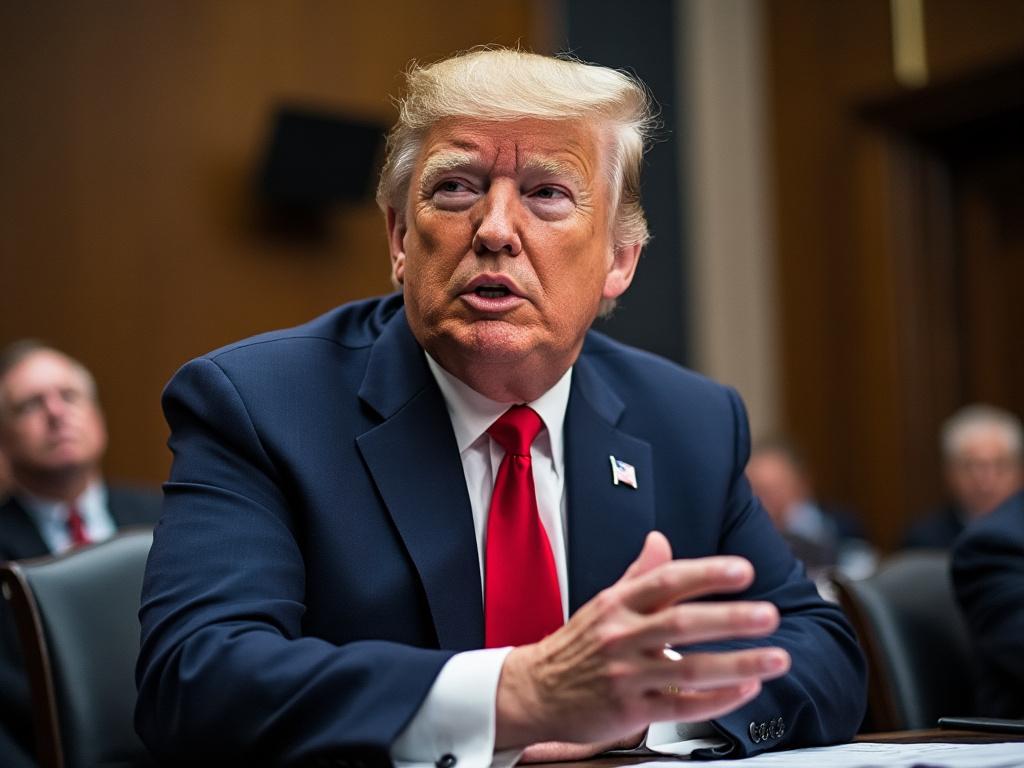
Recently, the U.S. Senate passed groundbreaking legislation granting President Donald Trump extensive powers to manage sanctions against Russia, sparking intense debates and uncertainties within US foreign policy circles.
Background and Legislative Trajectory
In the legislative journey of the Sanctioning Russia Act of 2025, a pivotal moment came when the Senate decided to leave the power to enforce sanctions squarely in President Trump’s hands. This shift manifested during the Senate debates, where amendments aiming to restrict the President’s waiver authority were fiercely contested but ultimately failed to pass. Proponents of giving the President full discretion argued that such flexibility was crucial for diplomatic maneuverability and effective response to the fluid international landscape. This development marked a significant departure from the previously more rigid frameworks, such as the Countering America’s Adversaries Through Sanctions Act (CAATSA), which mandated congressional review of any attempts to ease or lift sanctions. The Senate’s decision underscored a trust in the executive’s judgment and responsiveness, prioritizing a potentially faster adaptation to geopolitical changes over the traditional checks and balances.
The Key Change Presidential Waiver Authority
In a significant shift from the norms established by the Countering America’s Adversaries Through Sanctions Act (CAATSA), the Sanctioning Russia Act of 2025 has conferred unprecedented powers on the Presidency, particularly through the inclusion of a presidential waiver authority. This amendment permits President Trump to unilaterally waive sanctions against Russian entities if deemed to serve national interests, a discretion previously curtailed by stringent congressional oversight. The evolution of this bill, strongly influenced by negotiations within Congress, illustrates a marked transition toward executive autonomy in foreign policy matters. This development raises questions about the balance of power, as it appears to dilute the legislative checks that were hallmark features of prior sanctions regimes like CAATSA, which required Congress to review any attempts by the President to ease or end sanctions. Here, the shift clearly repositions the locus of control, giving the executive branch a potentially decisive edge over the legislative in shaping U.S.-Russia relations.
Trump’s Approach and Its Controversy
The Senate’s decision to leave Russia sanctions authority fully in the hands of President Trump elicited a spectrum of reactions within the political landscape. Notably, several Republicans and centrist Democrats supported the move, arguing that the President’s direct control could lead to more flexible and rapid responses to the evolving geopolitical dynamics involving Russia. However, this perspective was starkly contrasted by significant concerns from other Democratic lawmakers who worried about the potential for inconsistency in Trump’s foreign policy tactics. Foreign policy experts joined this chorus of dissent, cautioning that personalizing such critical decisions in the Oval Office risks undermining longstanding international allegiance and strategies. Their fears were underscored by apprehensions that rapid shifts in U.S. stance might destabilize established multilateral agreements or embolden adverse moves by adversaries, particularly in scenarios involving intricate negotiations like those in Ukraine or related to China’s global stance.
International and Strategic Implications
In the scenario where President Trump regains full control over US sanctions against Russia, the strategic and international landscape could shift dramatically. This unilateral move could strain alliances, particularly with European partners who have historically coordinated with the US on Russia sanctions, responding collectively to Russia’s actions in Ukraine. These partners might view Trump’s decisions with skepticism, fearing that inconsistent US policies could undermine broader strategic goals, like maintaining a united front against Russian aggression and balancing China’s rising influence. A vital challenge will be navigating these diplomatic waters without alienating allies, requiring a careful balance between assertive policymaking and collaborative strategy. This delicate situation necessitates a nuanced approach to bridge gaps between unilateral US actions and multilateral expectations to ensure global security and cooperation.
Broader Context Historical Precedents and Concerns
In the intricate saga of US-Russia relations under President Trump’s first administration, bipartisan concerns about his handling of Russia galvanized legislative attempts to limit presidential sanction powers. Historically, Congress’s unease culminated in the 2017 Countering America’s Adversaries Through Sanctions Act (CAATSA), which mandated congressional review if the president sought to lift sanctions on Russia. This legislative stride was emblematic of broader anxieties about perceived leniencies towards the Kremlin. Comparatively, the current full reversal, leaving sanctions authority squarely in Trump’s hands, marks a significant shift. This evolution stirs old fears about the undermining of diplomatic balances and raises poignant questions about the coherence of US foreign policy, particularly in the context of maintaining global alliances against aggressive Russian postures in Eastern Europe and beyond.
Conclusions
The U.S. Senate’s decision to centralize sanction authority under President Trump marks a pivotal shift in the balance of power, emphasizing speed and flexibility over checks and balances. How this will affect the U.S.’s stance on Russia and its global diplomatic relations remains a key area of focus and concern.