
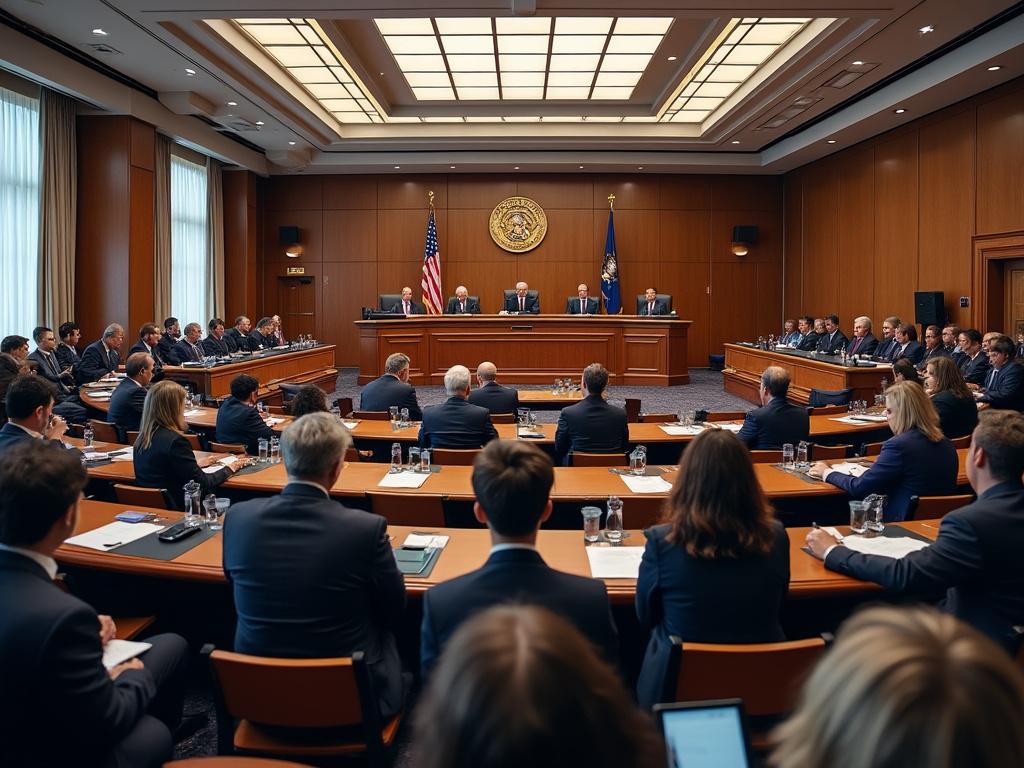
A significant shift in federal labor relations unfolded as the Trump administration received judicial approval to revoke collective bargaining rights from over a million federal workers. This development, deemed a national security measure, could redefine union power in the U.S. government.
Background of the Executive Order
In March 2025, President Trump’s Executive Order 14,251 invoked national security to justify removing certain federal agencies from the scope of collective bargaining, as previously upheld under the Federal Service-Labor Management Relations Statute. The administration argued that this measure was essential to streamline operations and enhance the performance of federal agencies, particularly those pivotal to security and public safety. This move was met with staunch opposition from labor unions and advocates, who saw it as an unprecedented encroachment on workers’ rights. This outcry emphasized the potential impacts on worker morale and the erosion of checks and balances on managerial powers.
The Legal Controversy and Initial Court Responses
Upon the rollout of Executive Order 14,251, its legality was swiftly challenged in federal court. The unions found a temporary ally in Judge James Donato, who on June 24, 2025, granted an injunction against the implementation of the order. His decision argued that the sweeping removal of bargaining rights without clear evidence of its necessity for national security breached the statutory rights established for federal labor relations.
Yet, this victory was short-lived. The Trump administration appealed to the 9th Circuit Court of Appeals, which sided with the government on August 2, 2025. This court emphasized the broad discretionary powers of the executive in matters of national security and administrative efficiency, ruling that the executive order was a permissible exercise of presidential authority. The 9th Circuit’s decision not only overturned the lower court’s injunction but also set a significant precedent regarding executive power and labor rights, teeing up an escalated legal struggle over the constitutional limits of executive orders.
The Ninth Circuit’s Decision and Rationale
The Ninth Circuit’s ruling was primarily grounded on the interpretation of the First Amendment and due process rights. The court posited that the executive order did not infringe on federal employees’ First Amendment rights, asserting that the government maintained the prerogative to restrict bargaining to ensure operational efficiency and efficacy. The judges further articulated that due process was not violated, as the order did not deprive employees of a property or liberty interest without proper legal procedure. Consequently, the court deemed the executive order a permissible exercise of presidential authority aimed at enhancing the federal administration’s functionality, thereby siding with the government despite robust dissent from labor advocates. This judicial backing crucially bolstered the administration’s stance, allowing it to enforce significant modifications in federal labor relations while the broader legal battles unfolded.
Broader Implications for Federal Employment
With the Ninth Circuit’s decision paving the way, federal agencies are poised for transformative shifts in labor relations. Union representatives express concerns that without collective bargaining, negotiations over wages, working conditions, and job security will dramatically shift to the disadvantage of federal employees. Officials, conversely, highlight potential for streamlined operations and reduced administrative overhead. The anticipated changes could lead to a more centralized management structure, potentially enhancing decision-making processes but also raising questions about employee morale and retention. Understanding these dynamics is crucial as they could fundamentally alter not only the fabric of federal employment but also the effectiveness of governmental service delivery. This evolving scenario underscores a significant recalibration of power within federal workplaces.
Future Outlook and Ongoing Resistance
Labor organizations, in response to the judicial decision siding with the Trump administration on ending union bargaining rights for federal workers, have not stood still. Ingeniously, they have begun to intensify their efforts by exploring new legal strategies, rallying public support, and seeking sympathetic legislative ears. The ongoing resistance is palpable, as unions are now focusing on possible appeals and looking for opportunities to challenge the constitutionality of the executive order in different judicial circuits. Public reactions have similarly been strong, with large-scale protests and campaigns aimed at raising awareness about the implications of such policy changes for federal workers and public services.
Simultaneously, on the legislative front, advocates are pushing for bills that would restore bargaining rights and protect public sector workers more broadly. This approach underscores the larger political battle brewing over labor rights in the federal sector, situated within a national conversation about the balance of power between employers and employees, and the role of government in labor relations. The evolving strategies reflect a deep commitment to overturning or mitigating the effects of the executive order, hinting at a protracted struggle that will likely spill over into future administrations.
Conclusions
The federal judiciary’s decision to uphold President Trump’s controversial executive order marks a significant moment in U.S. labor history. Stripping collective bargaining rights from over a million federal workers poses profound questions on executive power, constitutional rights, and the future of public sector labor relations in America.