
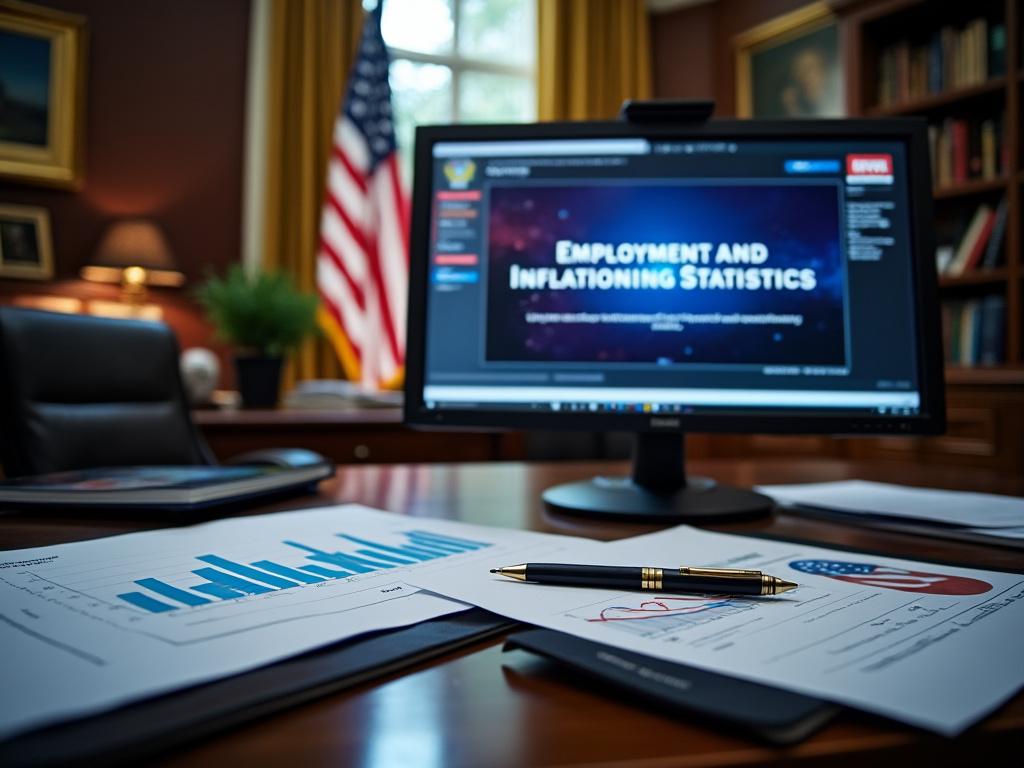
In August 2025, the unexpected firing of Dr. Erika McEntarfer, Commissioner of the Bureau of Labor Statistics (BLS), by former President Donald Trump sparked nationwide controversy. This article delves into the critical role of the BLS and the potential ramifications of undermining such a pivotal institution.
The Role and Importance of the Bureau of Labor Statistics
The Bureau of Labor Statistics (BLS) is pivotal in guiding economic policy and market expectations through its meticulously gathered data. Monthly reports on employment, inflation, and wages influence Federal interest rate decisions, corporate planning, and governmental budget forecasts. The BLS’s integrity hinges on its adherence to stringent protocols in data collection and analysis, ensuring figures reflect true economic conditions sans partisan bias. This objectivity is safeguarded by transparent methodologies, peer reviews, and strict confidentiality rules, all designed to maintain data purity despite external pressures or political influences. This foundational reliability makes the BLS an indispensable resource in the landscape of U.S. economic policy and planning.
The Unprecedented Dismissal of Commissioner McEntarfer
Dr. Erika McEntarfer’s firing by President Trump from the Bureau of Labor Statistics (BLS) was a significant event, muddling public trust in statistical agencies built to stand apolitical. With dim views on the latest job statistics, which highlighted economic challenges under his administration, Trump blamed McEntarfer, hinting at manipulation. Statisticians, however, have countered this, pointing out the rigorous, transparent methodologies used by BLS which prevent any single individual’s influence over the output. This dismissal not only disrupts established norms but signals dangerous encroachments into the realm of statistical objectivity necessary for sound policymaking. Such political intrusions risk not only the accuracy of vital economic data but also the decision-making processes relying on this data across all levels of government and business.
Consequences of Political Interference on Economic Policy
The egregious dismissal of BLS Commissioner McEntarfer for reasons stemming from political biases rather than performance issues set a troubling tone for economic policy formulation. Economists and statisticians foresee an inherently perilous path where economic data could be selectively interpreted or manipulated to fit partisan agendas. This interference risks eroding public trust and hampers the ability of policy makers to make well-informed decisions that would otherwise stem from objective and reliable data. The sectors most vulnerable include employment statistics, which guide Federal Reserve’s monetary policies, and inflation figures that impact everything from social security benefits to wage negotiations. A culture where data integrity is compromised for political gain disrupts these essential functions, leading potentially to erratic economic policies and prolonged damage to both national and global markets. As this chapter links to broader pressures on statistical integrity discussed in following sections, it highlights a critical juncture between maintaining professional independence in public agencies and the encroaching influence of political agendas.
Rising Political Pressures on Statistical Agencies
The increasing trend of underfunding and governmental interference in statistical agencies, particularly the Bureau of Labor Statistics (BLS), has raised concerns among statisticians and economists about the robustness and autonomy of these essential institutions. The firing of the BLS Commissioner over political differences, seen as a manipulation of economic data for political gain, sets a dangerous precedent. This incident has underscored the fragile nature of statistical independence, prompting a wave of criticism from various professional communities. Such interference not only tarnishes the credibility of critical economic measures like inflation rates but also can lead to skewed data which could misinform public policy and economic decision-making. The fundamental role of agencies like the BLS in collecting and publishing accurate economic data is pivotal in policy formulation and maintaining economic stability, making their independence critical.
Defending Democratic Institutions and Market Integrity
The dismissal of the BLS Commissioner has illuminated the sharp conflicts between political motives and the operational integrity of nonpartisan agencies. Prominent statisticians and ex-government officials have voiced severe reservations, labeling the firing a ‘dangerous precedent’ that threatens democratic norms. These experts emphasize that safeguarding the autonomy of institutions like the BLS is not just about protecting data integrity but also about ensuring that the economic signals remain unbiased and genuine. Concern arises particularly because such interference might signal to investors and policy planners that key economic metrics are subject to political winds, undermining market trust and potentially destabilizing financial systems already beset by uncertainty. Comparisons have been drawn to instances in other democracies where similar governmental intrusions have led to economic misjudgments and investor retreats, illustrating a broader trend of undermining institutional trust. This affirms the critical need for maintaining the principled independence of agencies that are foundational to economic forecasting and analysis.
Conclusions
The firing of BLS Commissioner Dr. Erika McEntarfer by former President Trump has ignited serious concerns about the politicization of key democratic institutions. Such actions compromise the integrity of essential economic data, risking long-term damage to economic policy and market stability. It is imperative to uphold the independence of these agencies to ensure sound, reliable decision-making.