
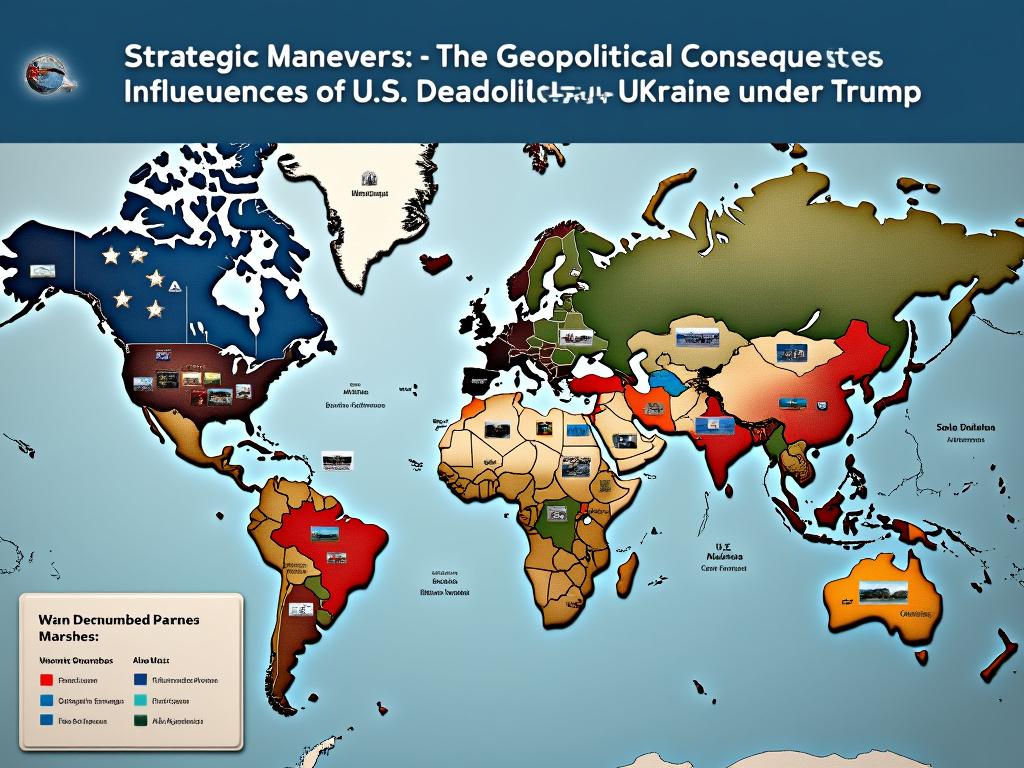
This article delves into the Trump administration’s notable shift in U.S. foreign policy regarding Ukraine from 2025, critically analyzing its impact on global diplomacy and defense strategies. We explore how specific deadlines and negotiation changes have unexpectedly empowered Russia’s Putin and China’s Xi Jinping, altering the international landscape.
Trump’s Deadlines and Policy Shift: An Overview
Upon re-assuming the presidency in 2025, Donald Trump implemented a series of inflexible deadlines for the resolution of U.S. involvement in Ukraine, fundamentally altering the previous administration’s policy stance. These deadlines mandated rapid progress in negotiations, which due to their unyielding nature lacked the flexibility typically advantageous in diplomatic discussions. This approach inevitably favored more autocratic leaders like Vladimir Putin and Xi Jinping, who benefit from decisive, swift outcomes that consolidate their positions without the protracted scrutiny or resistance often associated with democratic processes. Moreover, the imposed timelines pressured Ukrainian leaders into a weaker negotiating position, hastening decisions without the strategic depth of longer-term diplomatic support from allies like the U.S. This strategic haste not only compromised Ukraine’s defensive posture but also subtly shifted the balance of power, enhancing Russian and Chinese influence in the region.
Concessions as a ‘Gift’ to Putin
President Trump’s policy of reduced sanctions and diminished public condemnation of Russia served as an inadvertent endorsement of Putin’s broader strategic ambitions. By softening the stance on key issues like Crimea and military aggression in eastern Ukraine, U.S. actions under Trump’s administration have inadvertently bolstered Putin’s image on the international stage. This geopolitical gift freed Russia to extend its influence beyond borders without as much fear of repercussion, effectively galvanizing its position in global politics. Consequently, Western alliances and diplomatic leverage experienced a weakening, eroding the collective capacity to counterbalance Russian expansionism, and undermining efforts to uphold international law standards. These moves have not only empowered Putin but also reshaped perceptions of U.S. commitment to European security frameworks.
Xi Jinping’s Strategic Gains
As the U.S. recalibrated its focus towards Ukraine under Trump’s presidency, China saw an opportunity to deepen its alliance with Russia, significantly enhancing both their economic and defense sectors. This Sino-Russian cooperation fostered initiatives aimed at creating a multipolar world order, strategically positioned to challenge the U.S.’s dominance. The profound alignment included joint military exercises and increased bilateral trade agreements, particularly in energy resources, which not only solidified their partnership but also extended their influence over Central Asia and Europe. This cooperative stance between Beijing and Moscow starkly contrasted with the growing fissures within Western alliances, notably impacting U.S. global standing and shaping a geopolitical landscape increasingly unfavorable to American interests.
Western Disunity and the Weakening of Deterrence
Examination: Under Trump, the oscillation of U.S. policy deadlines regarding Ukraine has precipitated more than a mere bilateral strain; it has subtly fractured long-standing alliances across Europe. Consequences: This reduced commitment signals to European nations a possible diminishment in U.S. reliability as a security guarantor. Consequentially, individual European states have begun to recalibrate their defense postures independently of each other, circumventing traditional NATO frameworks. This shift not only fosters a piecemeal approach to collective security but also erodes the uniform front against Russian territorial ambitions, inadvertently aiding Putin’s broader strategy of sowing discord within Western alliances.
Ukrainian Vulnerability and Forced Accommodation
Under Trump’s rigid deadlines in Ukraine, the imbalance of power starkly favored aggressors like Putin and Xi, ushering in an era of Ukrainian vulnerability. The pressure to adhere to U.S. timelines eroded Ukraine’s capacity to resist, forcing them into a position where the concession of territories, particularly in the Eastern regions, became a less avoidable outcome. These concessions have not only reshaped Ukraine’s international stature but have also set a precarious precedent for regional autonomy under external pressure. This adaptation to a new geopolitical reality under Trump’s foreign policy may continue to constrain Ukraine’s strategic options and sovereignty, reshaping the broader landscape of international relations in Eastern Europe and beyond.
Conclusions
The U.S.’s strategic approach under Trump, characterized by strict deadlines and significant concessions, has unintentionally empowered global adversaries. This shift has facilitated deeper Russo-Chinese cooperation, challenging the integrity of Western alliances and leaving Ukraine in a precarious position.