
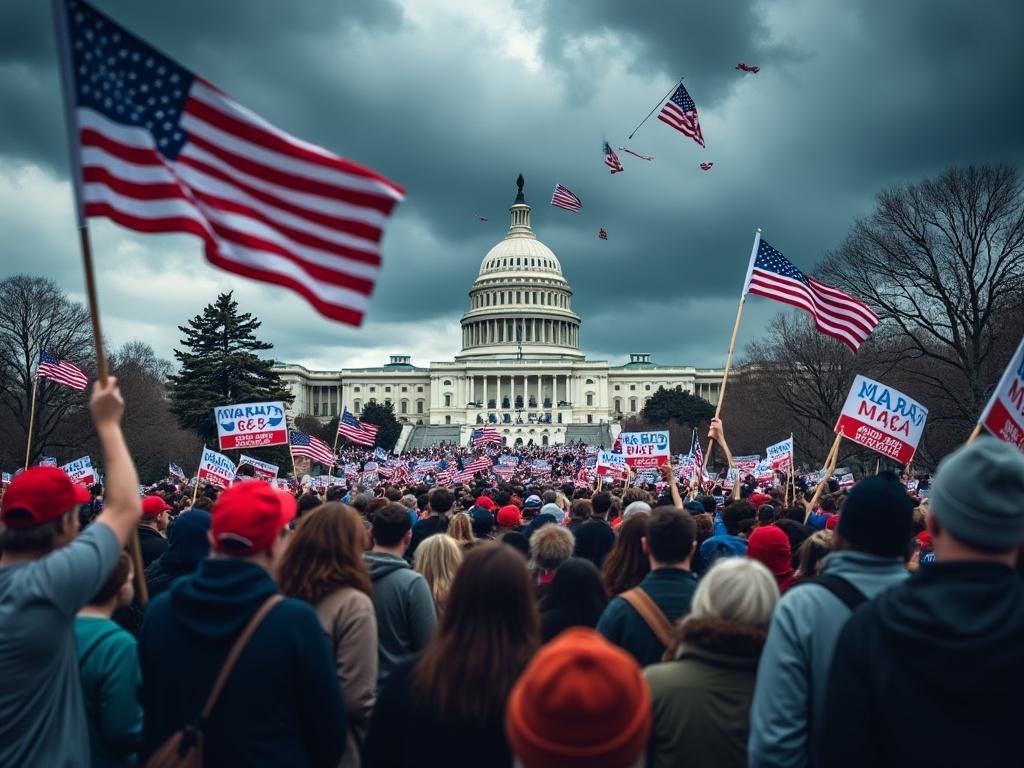
Sean Spicer recently voiced concerns that the Trump administration risks losing the support of its key MAGA base by not addressing claims of wrongdoing by the Obama administration in the so-called ‘Russia hoax’. This article delves into these allegations and the potential political consequences of inaction.
The Genesis of the Russia Hoax Claims
The accusations of a hoax began during the contentious 2016 U.S. presidential election, with then-candidate Donald Trump asserting that the Obama administration had orchestrated claims of Russian meddling to undermine his electoral prospects. Central to these allegations was the role of Hillary Clinton, who, according to Trump and several of his key aides, was purportedly involved in initiating a smear campaign linking Trump to Russian operatives. This narrative found fertile ground among Trump’s base, coalescing under the banner of “MAGA” and being continuously fueled by Trump’s frequent allegations on various public platforms. The political impact of these claims resonated deeply within this community, often being perceived not merely as political rhetoric but as evidence of a deep-seated conspiracy against the conservative movement in America. This spawned numerous subsequent investigations and discussions that bolstered the persistent skepticism towards traditional media and government institutions among Trump’s staunchest supporters. The Russia hoax claims thus not only shaped the political discourse but entrenched a narrative of us-versus-them that continues to influence the MAGA base.
Sean Spicer’s Warnings and Their Significance
Sean Spicer’s recent admonitions underscore a critical tension within the MAGA community: the demand for assertive action on longstanding grievances. His statements on social media, warning that the Trump administration risks alienating its base by not aggressively pursuing the allegations of a Russian collusion hoax, reflect a broader sentiment of betrayal among supporters. This demand for loyalty and accountability is a litmus test for MAGA adherents, who see inaction as a breach of the foundational promises of Trump’s presidency. Spicer’s pointed critique not only articulates these frustrations but also acts as a barometer for the growing impatience among loyalists, emphasizing the administration’s need to uphold its combative ethos against perceived injustices to maintain its core support.
The Expectations of Trump’s Base
The MAGA base, galvanized by Trump’s pledge to drain the swamp, harbors deep expectations for punitive measures against Democrats implicated in the alleged Russia hoax. These staunch supporters see accountability as essential, tied not just to Trump’s anti-establishment mantra but to a broader quest for perceived justice against political adversaries. Failure to aggressively pursue these allegations could lead to disillusionment within this cohort, potentially weakening fervent grassroots support. Perceived inaction may be interpreted as a betrayal of Trump’s campaign rhetoric about battling political corruption, risking an erosion of trust and enthusiasm among his most loyal followers. The political implications of ignoring these expectations are significant, risking a fracturing of the base that might impact voter turnout and enthusiasm in upcoming elections.
Political Risks and Rewards
In evaluating the political risks and rewards of pursuing or ignoring allegations made against Democrats, the Republican Party stands at a critical juncture. Pursuing these allegations might solidify loyalty within the MAGA base, which expects a frontal assault on perceived injustices and corruption. However, this route carries significant risks with moderate and swing voters, who may view such measures as divisive or indicative of a party preoccupied with political vendettas rather than governance. Ignoring the allegations could alienate the core MAGA supporters, potentially leading to a dampened voter turnout from this crucial base in future elections. The party’s decision could therefore crucially sway its electoral prospects, balancing the intense scrutiny from its base against the broader appeal needed to secure swing states and districts. Such strategic choices will inevitably shape the Republican narrative in the run-up to upcoming electoral cycles.
The Wider Impact on American Politics
The narrative of political persecution that has emerged in American politics, particularly surrounding claims like those communicated by Sean Spicer about President Obama, reflects deeply on the state of public trust. When political figures allege misconduct that goes unaddressed, it breeds suspicion among citizens, making them question the integrity and effectiveness of their democratic institutions. Furthermore, such allegations and the manner in which they are handled impact the rule of law. When the MAGA base feels disillusioned by inaction, it does not only alienate them, but it can also polarize further the already tense political divisions, thereby straining bipartisan cooperation. Public perception of collusion or corruption within these inquiries erodes faith in political processes, leaving democracy wounded in the crossfire of partisan warfare.
Conclusions
Sean Spicer’s recent conments highlight a precarious situation for the Trump administration as it navigates the demands of its MAGA base against broader political considerations. Addressing or ignoring the ‘Russia hoax’ allegations could significantly influence its political fortunes, underscoring critical decisions ahead.