
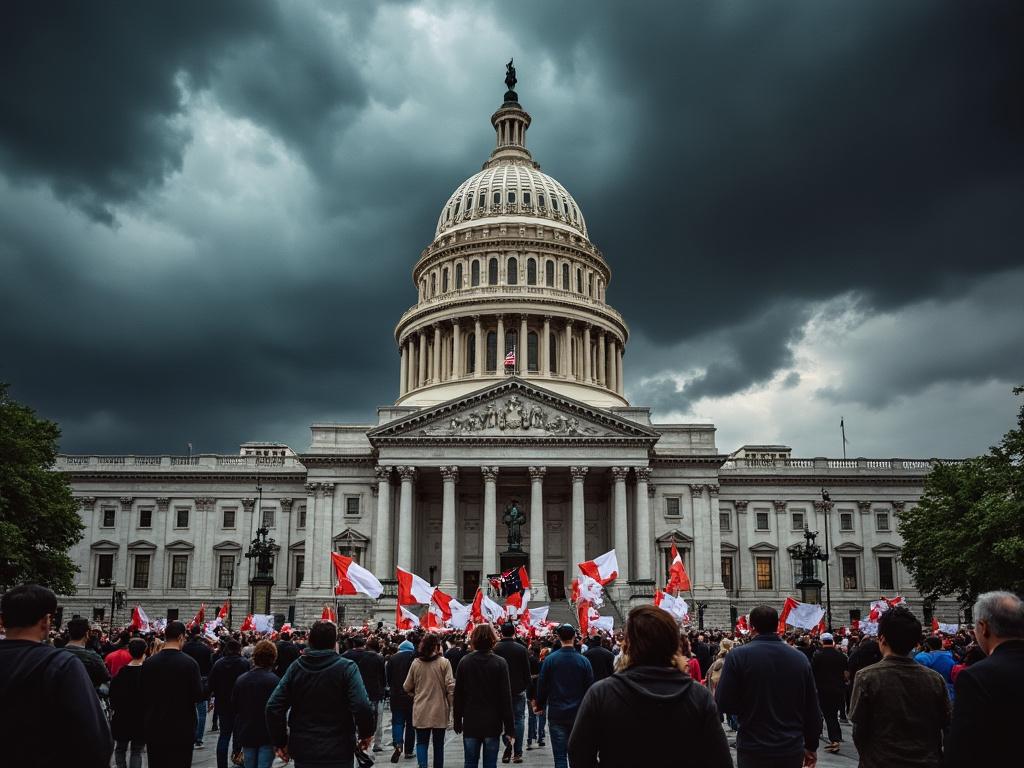
In a bold move, over fifty Texas Democrats have staged a walkout from the state legislature, halting proceedings and sparking a fierce political standoff. This dramatic action aims to block a Republican-backed redistricting plan seen as pivotal for future electoral landscapes.
Background: The Redistricting Fight
As the specter of a new electoral map loomed, Texas Democrats faced a critical juncture. The planned redistricting, perceived as a direct attack on fair democratic processes, spurred discussions among the caucus on possible responses. Deliberations about a walkout intensified as legislators weighed the ramifications of leaving the chamber versus remaining in opposition within traditional debate structures. Advocates for the walkout argued it was the only palpable measure left to underscore the gravity of their concerns and prevent the passage of a plan that could potentially reshape Texas politics for a generation.
The Mechanics and Motives of the Walkout
By vacating the Texas House, Democrats effectively dropped below the two-thirds quorum required for legislative actions, stalling all governmental operations. This strategic decision was aimed not just at blocking this particular bill but also at drawing national attention to broader issues of gerrymandering and voter suppression. The walkout underscores a protest against what is perceived as an ongoing assault on democratic principles and fair representation in Texas.
Republican Response: Legal and Political Countermeasures
Governor Greg Abbott’s immediate response to the Texas Democrats’ walkout entailed issuing arrest orders, a testament to the severe legal repercussions he was prepared to enforce. Labeling the walkout as an evasion of their legislative responsibilities, Abbott’s actions polarized opinions and highlighted the fraught political climate. The potential for expelling lawmakers, although a rare and extreme measure, loomed as a possible outcome. Historically, such political tactics have had profound legal and ethical implications, reshaping the way legislative dissent is perceived and managed. This confrontational approach by the Governor towards the Democrats not only intensified the standoff but also set a contentious legal precedent for handling political protest within state legislatures.
A Long Tradition of Quorum Busting
As Texas Democrats contemplated a walkout to oppose redistricting plans, they followed a storied tradition of quorum busting, a tactic ingrained in Texas’s political heritage. Noteworthy is the 1979 episode where the “Killer Bees,” 12 Democratic senators, hid to block bills they perceived as manipulative. Similarly, in 2003, over 50 House Democrats fled to Oklahoma and Albuquerque to thwart a redistricting bill backed by Republicans. These historical precedents, while temporarily delaying legislative agendas, underscore the stark measures minority parties will undertake when they view majority actions as threats to fair representation. Each instance of quorum busting throughout Texas’s history not only highlights the tactical use of this political weapon but also reflects the ongoing struggles around legislative power and voter representation.
Implications: High Stakes in State and National Politics
The Texas Democrats’ walkout transcends the state’s borders, intensifying a national discourse on electoral policies and democracy. Should the protest successfully block the redistricting efforts, it could serve as a beacon for similar resistance movements across other states, potentially invigorating a nationwide push for more equitable electoral reforms. Conversely, failure could embolden majority parties to leverage legislative advantages without restraint, risking a dilution of minority voices in political arenas. This dual possibility places immense pressure on the Texas standoff, highlighting its potential to recalibrate national strategies around voter suppression and electoral fairness as upcoming elections approach.
Conclusions
The Texas Democrats’ walkout represents more than a temporary legislative hurdle; it signifies a crucial battle in the ongoing war over voting rights and fair representation. As both sides stand firm, the nation watches closely. The resolution of this standoff could set precedents affecting future political strategies and democratic engagement across the country.