
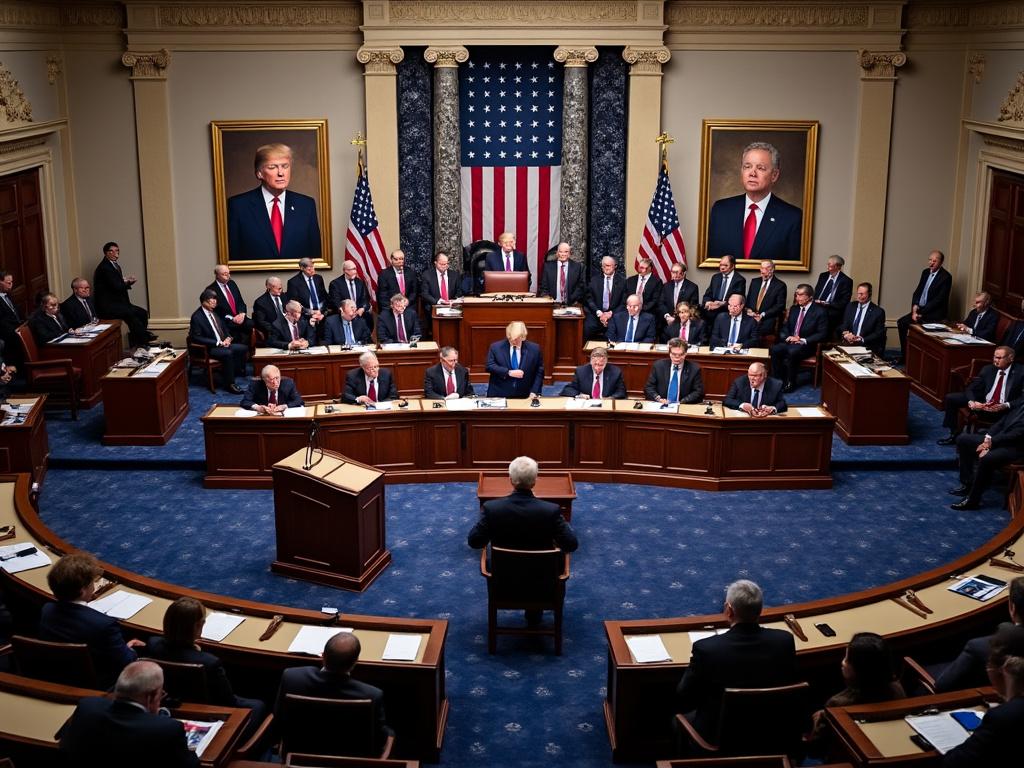
The U.S. Senate’s August recess in 2025 marked the height of a contentious battle over the confirmation of presidential nominations. This standoff, featuring a direct confrontation between Donald Trump and Senate Democrats, underscores deeper issues in American legislative processes.
The Role and Duties of the U.S. Senate in Confirmations
The U.S. Senate holds significant constitutional responsibility in the federal appointment process, tasked primarily with the confirmation of the President’s nominees. This pivotal duty ensures that key positions across various branches of government are filled by individuals who have undergone rigorous scrutiny. Positions requiring such confirmations range widely from Cabinet members and federal judges to heads of numerous administrative agencies. Typically, the process begins with the President’s nomination, followed by hearings conducted by the relevant Senate committees. These hearings serve to assess the nominee’s qualifications and suitability for the role. Successful committee reviews lead to a Senate-wide vote. This structured approach underscores the Senate’s crucial role in maintaining governmental integrity and operational readiness.
Partisan Tactics and Confirmation Delays
In the intricate dance of power that defines Congressional conduct, the confirmation delays have highlighted stark partisan tacticianism. Democrats emboldened by their numerical strength, have leveraged procedural tools to stall confirmations, purportedly hampering government efficacy. Meanwhile, Republicans express outrage, claiming these delays transcend mere political rivalry to disrupt essential governmental operations. This perceived weaponization of confirmation processes not only stalls pivotal departmental leadership but also deepens the chasm in bipartisan relationships. The impasse demonstrates how legislative frameworks can be subjected to partisan manipulation, casting long shadows over future cooperation and governance efficiency, and setting the stage for explosive interactions epitomized by Donald Trump’s fiery rhetoric against opposition leaders.
Trump’s Heated Rhetoric and the Political Fallout
Former President Donald Trump’s fiery rhetoric and targeted attacks on Senate leaders, especially on social media platforms like Truth Social, significantly exacerbated the tensions surrounding the presidential nomination process. His public directive for Senate Minority Leader Chuck Schumer to “go to hell” epitomized his confrontational style, which diverted attention from substantive dialogue and problem-solving. Trump’s frequent lambasting of “Democrat obstruction” not only ignited his base but also deepened the partisan divide, complicating any potential pathways to compromise. His aggressive communication style hindered rather than helped the functional aspects of governance, adding layers of difficulty to the already strained negotiations over nominations. As Trump’s commentary escalated, so did the polarized responses from both parties, setting the stage for continued legislative gridlock.
Potential Solutions and Continuing Stalemate
Amid the nomination standoff, solutions have emerged from Republican circles, notably from Senator John Thune who proposed using recess appointments and altering Senate confirmation proceedings. Thune suggests that granting the President power to fill vacancies during Senate recesses might bypass immediate blockages, albeit raising concerns about bypassing traditional Senate oversight. Moreover, adjusting rule thresholds for confirming appointments could expedite the process but threatens to diminish bipartisan dialogues. While these measures could mitigate short-term impasses, their potential to incite further polarization casts a shadow over their enactment, hinting that they may merely be temporary palliatives rather than fostering enduring Senate functionality and cooperation. The balance between expediting confirmations and maintaining a thorough check remains intricate, hinting at continued procedural and partisan quagmires.
The Broader Implications for American Democracy
As the Senate deadlock on presidential nominations persists, deeper concerns about the erosion of democratic trust proliferate. This recurrent impasse not only hampers administrative efficiency but also fundamentally challenges the Senate’s constitutional role of advice and consent. Escalating partisanship diminishes opportunities for cross-party consensus, fostering a political climate where strategic obstructionism overshadows collaborative governance. This undermines public confidence in political processes and could potentially destabilize the very framework of American democracy. Long-term, this ongoing standoff threatens to transform the Senate from a deliberative body into one marked by perpetual conflict, eroding its ability to effectively serve the public interest.
Conclusions
The standoff in the Senate over presidential nominations has not only delayed essential appointments but has also highlighted significant partisan divides and potential abuses of legislative power. Moving forward, it is crucial for both parties to find ground for compromise to restore functionality and public trust in democratic institutions.