
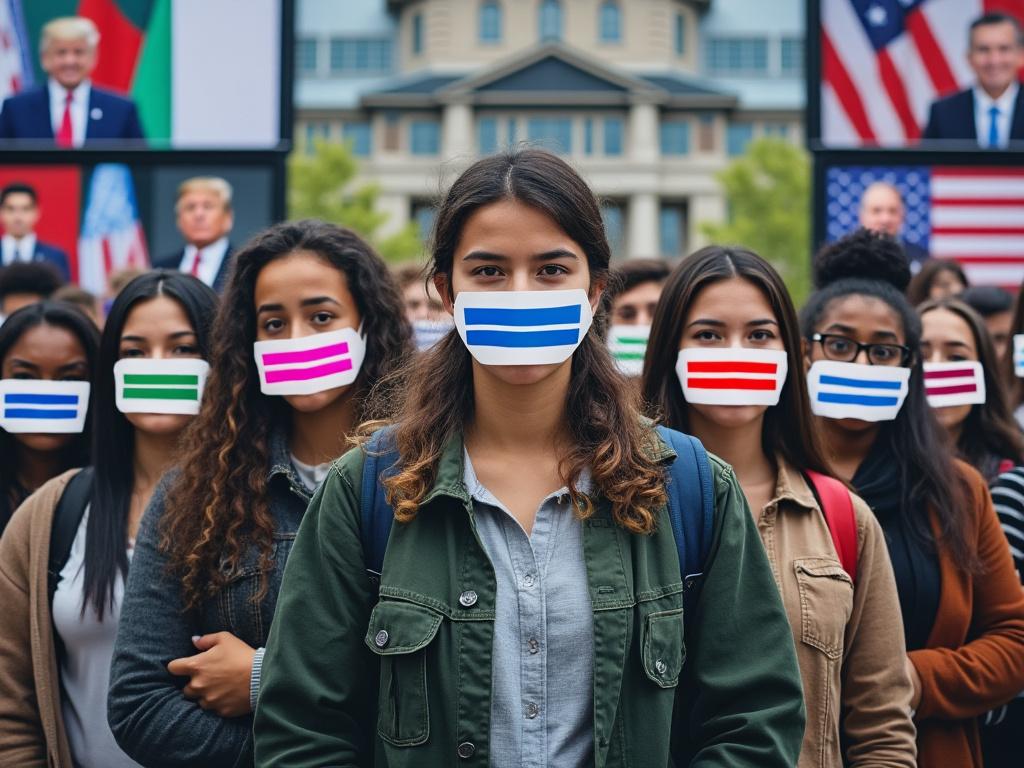
As the bastion of free speech, universities are facing an unprecedented wave of challenges. Domestic pressures intertwine with global authoritarian threats, creating a complex landscape that stifles open debate and erodes academic freedom.
Domestic Authoritarianism: A Closer Look at Campus Control
In the sphere of American higher education, university administrations are increasingly perceived as agents of domestic authoritarianism, often influenced by internal political and social pressures. Some institutions have implemented policies that effectively restrain discourse by policing both student and faculty expressions on digital platforms. A notorious practice is the punitive response to controversial social media posts which, while deemed necessary for maintaining campus decorum, often stifles legitimate academic debate. Furthermore, the establishment of bias reporting systems has created an atmosphere where students and faculty may feel surveilled and deterred from expressing views that could be interpreted as contentious. Simultaneously, the introduction of speech codes and the designation of “free speech zones” paradoxically isolate free speech rather than promoting it. These zones, meant to offer a haven for open dialogue, ironically confine the expression of thoughts to specific campus areas, subtly implying that the rest of the campus is not a place for free speech. Through such measures, what emerges is a controlled environment where conformity is encouraged, and deviation from the norm is often penalized, leading to a chilling effect on the vibrancy and diversity of discourse that is fundamental to academic life.
Transnational Repression: Authoritarian Reach Beyond Borders
Authoritarian threats to campus speech frequently cross national borders, impacting the free expression of both domestic and international students within supposedly liberal democratic settings. Particularly concerning is the influence of authoritarian states like China, which have extended their surveillance and control to campuses abroad through mechanisms like Confucius Institutes. These institutes, ostensibly cultural exchange hubs, have been criticized for promoting censorship and stifling discussions on sensitive topics like Tibet or the Tiananmen Square Massacre through financial and academic leverage.
Moreover, the advent of online education platforms has expanded the reach of such authoritarian oversight. Digital classes allow for the monitoring and reporting of dissent back to student’s home countries, risking severe repercussions for those involved. The intricate web of digital surveillance poses profound questions about the sovereignty of educational institutions and the protection of their members against extraterritorial controls, suggesting a dire need for robust measures to shield academic freedom from the encroaching shadows of global authoritarianism.
The Digital Campus and the New Frontiers of Surveillance
The transition to online learning environments during the COVID-19 pandemic not only altered educational methodologies but also introduced nuanced channels through which surveillance and censorship could manifest. Digital platforms, ostensibly tools for expansive learning, have also been co-opted as instruments of control. The ubiquitous presence of technology on these platforms allows for continuous monitoring, affecting how students express themselves. Being constantly under watch, students have reported a palpable sense of restraint in their academic discussions, leading to a dilution of genuine intellectual engagement. This form of surveillance extends beyond domestic oversight, encompassing global actors who seek to steer or stifle discourse to align with their ideological stances. Universities, entwined in networks of international partnerships, find themselves in a precarious position, needing to navigate between fostering a free academic environment and adhering to the digital dictates of foreign and domestic entities which could potentially leverage technological infrastructure to their authoritarian ends. This fosters a climate where academic freedom is at risk of becoming subordinate to surveillance-induced conformity.
Recent Legal Challenges and Political Developments
Recent legal challenges and political developments have intensified the controversies surrounding free speech on campuses. Among these, executive orders and threats of funding cuts have emerged as critical tools, wielded often by political leaders to shape discourse within universities. For example, legislation demanding “free speech audits” and bills that penalize institutions for perceived anti-free speech sentiments exemplify this trend. Furthermore, the phenomenon of “cancel culture” has escalated, with both scholars and speakers facing backlash for controversial opinions, leading to rescinded invitations and protests. These instances highlight a disturbing trajectory where dissenting voices, instead of being debated academically, are often silenced or punished. This polarizing environment not only stifles traditional academic freedom but also places institutions at the turbulent intersection of political activism and educational mandates, requiring them to navigate these pressures delicately.
Building Strategies for Resistance and Dialogue
In the face of mounting pressures on free speech on campus, strategies for resistance and dialogue are critically needed. By fostering an environment that encourages open dialogue, institutions can become bulwarks against censorship. Inclusive forums that bring diverse viewpoints together are crucial. Encouraging faculty and students to engage with perspectives foreign to their own not only strengthens academic freedom but also prepares them to operate in diverse global contexts. Lessons from successful resistance efforts, such as those involving collaborations between international academic networks and civil society, demonstrate the effectiveness of collective action in defending free speech. Strengthening legal protections, including clearly defined policies that safeguard academic discourse, is essential. These steps, both proactive and reactive, ensure that academia remains a space for free and fruitful exploration of ideas.
Conclusions
The defense of free speech on campuses is more crucial than ever in an era marked by both domestic and global threats. A culture of fear and retaliation is not inevitable; through awareness, resistance, and proactive strategies, academia can uphold its mission as a forum for free and diverse expressions.