
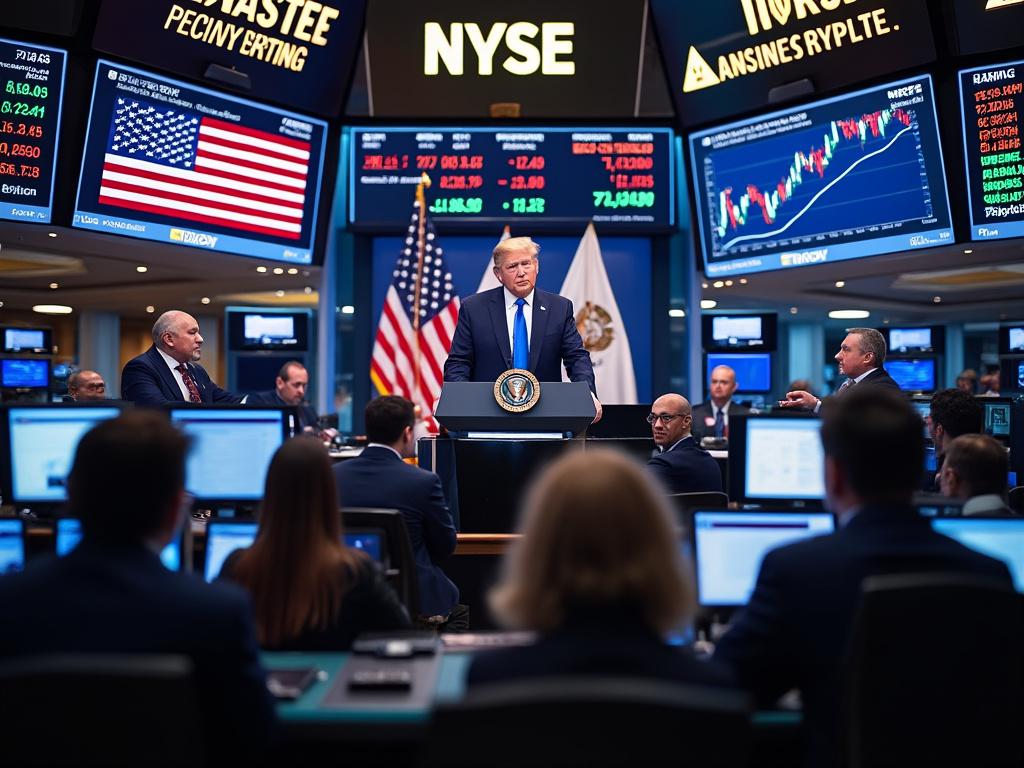
Last week’s economic policies under President Trump signaled a bold yet contentious approach. With new jobs data and sweeping tariffs, the administration’s actions have sparked debates about potential long-term effects on the U.S. economy.
The Economic Signals and Job Report Revelations
The disconcerting job report, indicating a mere 73,000 new jobs created, raised eyebrows across the nation, questioning the robustness of economic growth under Trump’s administration. This sluggish job growth, compounded by downward revisions of prior months, instigated a palpable unease, both politically and economically. The timing of Dr. Erika McEntarfer’s dismissal, post-release of such critical data, fueled speculations about the possibly tumultuous relationship between economic reporting and political maneuvering. Observers argue that this weak performance may steer the administration to intensify trade protectionism, thus linking to the forthcoming tariff expansions. There’s a concern that continued dismal job growth could prompt a cycle where tariffs are used not just as a negotiation tool but rather as a default economic stimulus, despite the potential backlash from global trade partners.
Expansion of Trade Tariffs
In response to the unsettling employment data, President Trump intensified his tariff strategy, notably imposing heightened tariffs, averaging an effective rate of 18.3%, on goods imported from approximately 70 countries. This marks the most substantial tariff elevation since the year 1934. The immediate fallout was evident in the stock market, which saw significant fluctuations as investors grappled with the implications of these sweeping increases. Industry experts warn that such aggressive trade barriers could destabilize international trade relationships further and potentially prompt retaliatory measures. Analyses suggest that while certain domestic industries may gain a temporary protective boost, the overarching effect could drive up costs for consumers and businesses, complicating the already fragile economic scenario precipitated by poor job growth figures. These policies introduce a high-risk gamble into an already volatile economic equation, with potential repercussions that could extend well beyond immediate market reactions.
Economic and Political Implications
The introduction of heightened tariffs and a disheartening jobs report have sent ripples through the U.S. economy, setting the stage for potential stagflation—a scenario characterized by slow economic growth coupled with inflation. Experts express concern as these conditions place the Federal Reserve in a precarious position, forced to balance the need to curb inflation with the imperative to support economic growth. Economists warn that ongoing tariff policies may continue to dampen consumer spending and business investment. This combination threatens to slow economic expansion while inflationary pressures—from tariffs and other factors—erode purchasing power, particularly affecting lower and middle-income families. Such economic turbulence could lead to restrictive monetary policies that may further challenge the economic outlook for the average American, potentially leading to increased living costs without corresponding wage growth.
International Relations and Trade
The imposition of elevated tariffs on Canadian goods under the justification of a public health emergency has significantly tested the traditionally amicable US-Canada relations. Particularly, the tariffs on lumber and dairy products have provoked strong criticism from Canadian officials, who argue that these measures violate existing trade agreements. The discord extends to India as well, where the US has threatened aggressive tariffs in response to India’s continued oil trade with Russia, a measure aimed at dissuading energy transactions that indirectly benefit Moscow. India’s foreign ministry has signaled potential retaliatory measures, emphasizing the country’s right to secure its national energy needs. Both cases illustrate a complex weave where national interests, global commerce, and political strategies intersect, potentially reshaping longstanding trade alliances and affecting global trade dynamics in profound ways. These tactical maneuvers in trade might compel affected countries to seek new trade alignments or strengthen existing ones, such as the Canada-European Union Comprehensive Economic and Trade Agreement (CETA) or India’s engagement with the Shanghai Cooperation Organisation (SCO), as strategic counters.
Looking Ahead: Economic Policies and Political Strategy
As new tariffs loom and political tensions rise, this final chapter scrutinizes the future of Trump’s economic strategies and their potential impact on his political fortunes. We will explore how these moves might play into the upcoming campaign cycle and the broader goals of the administration, considering both domestic and international factors that could shape the near future of American economic policy. Prospective policies could ignite debates on national sovereignty in economic decisions, influencing voter bases concerned about job security and market stability against the backdrop of global engagement. The administration’s push towards reshoring manufacturing might play well with certain electorates, but risks alienation in global trade networks, potentially escalating trade wars. The intricate balance between fostering domestic industries and maintaining vital international trade relations could be a central theme in shaping the political narratives leading up to the next election cycle.
Conclusions
President Trump’s tumultuous week of economic policy-making has stirred significant debate. As the U.S. nears a potential stagflation scenario amid intense political maneuvers, the ramifications for the national and global economy are profound. Assessing the implications of these moves will be crucial as we head towards the next election cycle.