
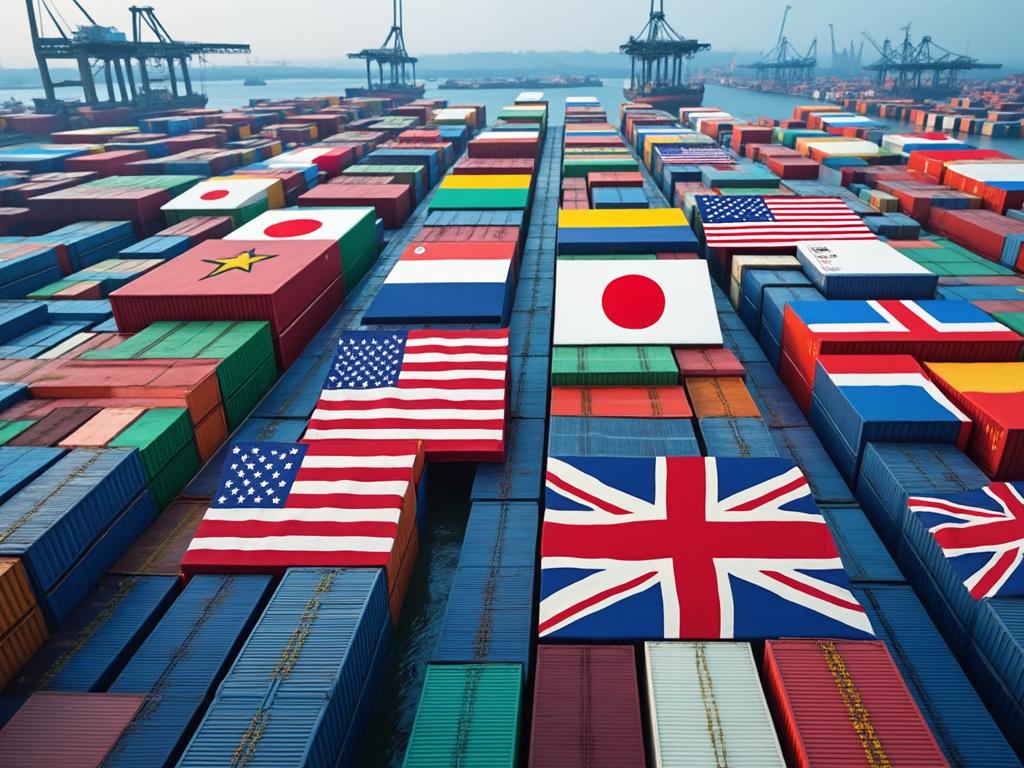
Kevin Hassett, a White House economic adviser, recently announced a firm stance on the new tariff regime. This article will explore the details and impacts of these unchanging tariffs instituted by President Trump’s administration, challenging the fluctuations of global market dynamics.
The Impetus Behind the New Tariff Regime
The Trump administration’s steadfast approach to its revised tariff policy is deeply rooted in a strategic bid to reshape and fortify America’s global economic standing. By instituting fixed tariffs, the administration intends to protect domestic industries from unfair foreign competition, incentivizing domestic production and preserving manufacturing jobs. This move also serves as a tactical response to countries that have engaged in trade practices deemed exploitative or disadvantageous to U.S. economic interests. Kevin Hassett’s assertion that market reactions would not sway the administration’s decision underlines a commitment to these goals, signaling a significant pivot from previous policies that were more susceptible to external influences and market fluctuations. Through this bold and unilateral approach, the administration aims to assert its sovereignty in trade matters and recalibrate the balance of trade to favor American economic interests.
Negotiation Dynamics and Bilateral Deals
In the wake of the Trump administration’s broad tariff implementation, several countries quickly engaged in bilateral discussions to negotiate more favorable terms. Japan and South Korea, leveraging historical security alliances with the U.S., successfully negotiated reduced tariff rates, illustrating the interplay of geopolitical relationships in trade negotiations. In contrast, countries with less strategic importance to U.S. interests, such as Syria and Brazil, found themselves grappling with stringent tariffs, showcasing how trade policies are often employed as instruments of broader foreign policy objectives. The United Kingdom, amid Brexit negotiations, secured a transitional deal, reflecting its urgent need to stabilize trade ties. Meanwhile, Indonesia used its growing market potential as leverage, achieving moderate concessions. These differentiated outcomes underscore the complexity and strategic nature of bilateral negotiations under the Trump tariff regime, where economic interests are deeply intertwined with diplomatic considerations.
Market Reactions and Economic Impact
Despite the market’s volatile response to the Trump administration’s tariffs, Kevin Hassett’s announcement that these tariffs are definitive underscores a stark departure from traditional economic policy, where market feedback often guides adjustments. The swift downturn in equity markets following the tariff announcements did not sway the administration’s strategies. This unyielding stance not only defies historical precedents but also emphasizes a broader ideological commitment to reshaping global trade dynamics without deference to immediate market consequences. Such rigidity suggests a pivotal shift in policy-making, focusing on long-term strategic goals over short-term economic indicators, potentially setting the stage for sustained market unease.
Legal Controversies and Future Prospects
The legality of President Trump’s tariffs, largely grounded on national security claims under Section 232 of the Trade Expansion Act of 1962, has spurred numerous lawsuits challenging their constitutional basis. Critics argue that these tariffs stretch the intent of national security provisions, traditionally reserved for wartime exigencies, and have prompted discussions on the separation of powers. Key legal confrontations focus on whether the executive branch has overstepped its bounds, usurping congressional trade authority. Legal experts predict that these challenges might culminate in a landmark Supreme Court decision that could redefine the scope of executive power in trade matters. Furthermore, if the Court rules against the current administration, this could lead to significant shifts in future U.S. trade policy, potentially curtailing the unilateral imposition of tariffs and restoring greater congressional oversight. This scenario not only implicates domestic legal precedents but also serves to reassure international trade partners wary of the unpredictability in U.S. trade relations.
Strategic Implications and Global Reactions
Despite potential legal challenges as discussed previously, the fixed tariff regime under President Trump seems definitively set. With Kevin Hassett affirming that these tariffs represent ‘final deals’, their strategic implications stretch across global trade landscapes. Major trading partners like China and the EU have responded with countermeasures, escalating into a tit-for-tat trade war. This scenario disrupts traditional trade patterns, compelling countries to seek new alliances and trade partners, potentially realigning global economic power structures. Moreover, these tariffs could permanently alter long-standing political alliances as nations reassess their strategic interests in light of America’s inward-looking trade policies.
Conclusions
Kevin Hassett’s definitive assertion that the Trump administration’s tariff policies are here to stay underscores a major shift in U.S. trade strategy. Despite potential market downturns and international challenges, these tariffs are likely to shape global economic landscapes and political frameworks for years to come.