
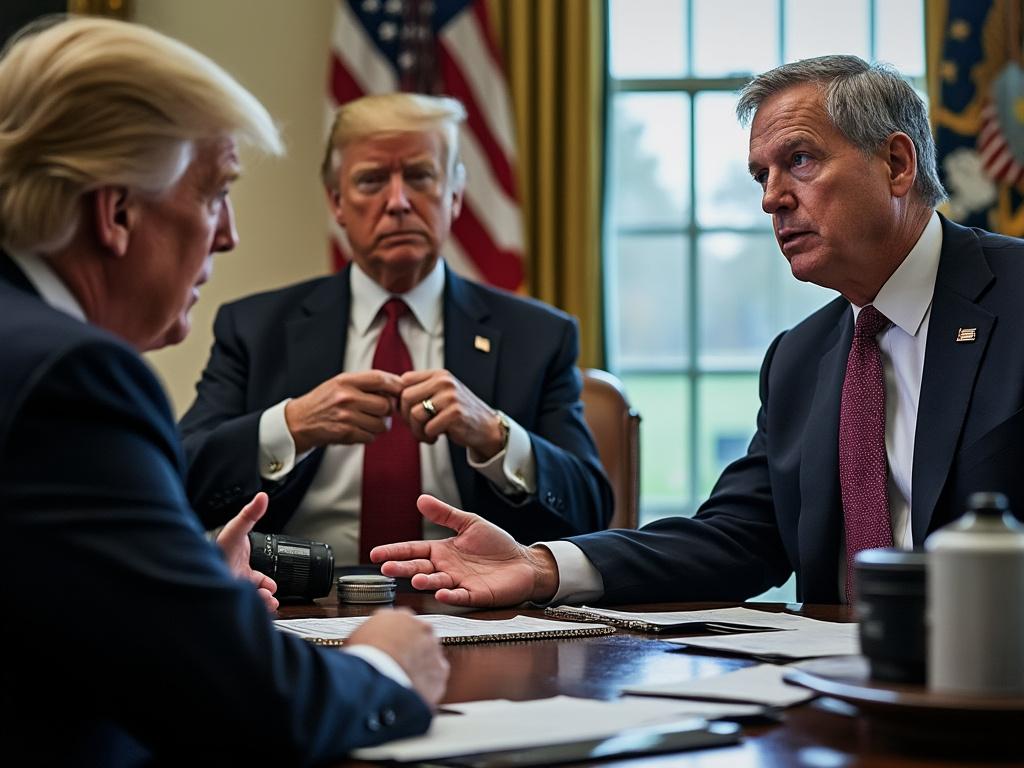
As Trump’s administration seeks to influence the Federal Reserve’s leadership, Kevin Hassett emerges as a potential successor to Jerome Powell. This development poses essential questions about the independence and future direction of U.S. monetary policy.
Trump’s Critique of Jerome Powell
President Donald Trump’s vocal dissatisfaction with Federal Reserve Chairman Jerome Powell has been a recurrent theme throughout his administration. Appointed by Trump in 2017, Powell’s moderate approach to monetary policy often clashed with Trump’s preference for lower interest rates. Trump’s critique centered on his belief that reduced rates were necessary to stimulate economic growth. He publicly lamented Powell’s decisions, describing them at times as “too slow” and “not aggressive” enough in cutting rates. Trump’s comments aimed to pressure the Federal Reserve for more drastic measures, illustrating the tension between the White House’s economic objectives and the Fed’s independence.
The Search for Powell’s Successor
In the search for Jerome Powell’s successor, Treasury Secretary Scott Bessent, aligned closely with Trump’s economic priorities, spearheaded the selection process. Their strategy prioritized candidates who supported Trump’s vision for more aggressive economic stimulation, primarily through lower interest rates. This focus was embedded in the broader administration effort to ensure the Federal Reserve aligned more closely with the White House’s economic approach. The vacancy left by Adriana Kugler added another dimension to the search, providing an opportunity to subtly reshape the board’s philosophical balance towards Trump’s economic strategies. The selection process, therefore, not only aimed at finding a suitable chair but also at filling board seats with figures sympathetic to these goals, ensuring a cohesive and supportive Federal Reserve.
Kevin Hassett’s Consideration for Fed Chair
Kevin Hassett, amidst speculations about his potential candidacy for Fed Chair, has maintained a cautious demeanor. His responses, often cloaked in ambiguity, like when he remarked, “We’ll have to see if he chooses me,” reveal a strategic reserve common in such high-stakes appointments. Having previously served as the Chairman of the White House Council of Economic Advisers, Hassett brings a blend of academically grounded insight and policy experience. His economic orientation, grounded in supply-side economics, could tilt Fed policies towards pro-growth measures, possibly prioritizing tax cuts and deregulation. However, transitioning into the Fed chair role, traditionally insulated from overt political pressures, Hassett’s previous alignment with Trump’s economic policies may raise eyebrows about the central bank’s independence, seamlessly connecting to concerns about the politicization of the Federal Reserve.
Implications of Politicizing the Federal Reserve
Politicizing the Federal Reserve, particularly through the appointment of figures closely aligned with presidential policies, could significantly impact its core functions, particularly market confidence and inflation control. When market participants anticipate that monetary policy might be swayed by political considerations rather than economic data, uncertainty can increase, potentially leading to volatile financial markets and investment hesitancy. Furthermore, the essential task of inflation control could be undermined if policy shifts towards short-term political gains rather than long-term economic stability. Experts like former Fed chair Janet Yellen have emphasized the importance of the Fed’s independence, arguing that any perceived erosion could trigger investor anxieties, affecting everything from stock prices to bond yields. In this light, the consideration of political figures for the Fed chair, such as Kevin Hassett, necessitates a careful evaluation of the long-term risks to institutional credibility and economic governance.
Looking Ahead: The Future of U.S. Monetary Policy
As the 2026 election looms, President Trump’s potential reappointment decisions for the Federal Reserve’s leadership become a pivotal factor in shaping U.S. economic policies. If Kevin Hassett emerges as a nominee, the orientation toward growth-focused and possibly inflation-tolerant policies could intensify. This move could signal a further shift towards a preferential, possibly more politicized alignment in Federal Reserve strategies, directly impacting monetary stability and economic predictions. The broader economic context, still rebounding from previous fiscal challenges and facing new global economic uncertainties, magnifies the high stakes of these appointments. Decisions made now could either anchor a steady economic environment or provoke volatility, influencing not only domestic financial markets but also international economic relations. The balance between promoting economic growth and controlling inflation could be particularly challenged if the Federal Reserve’s leadership tilts towards overt political sympathies.
Conclusions
The potential nomination of Kevin Hassett as Fed Chair underlines the tension between political desires and economic stability in the U.S. His possible leadership represents a pivotal shift that could affect the independent nature of the Federal Reserve and U.S. monetary policy at large.