
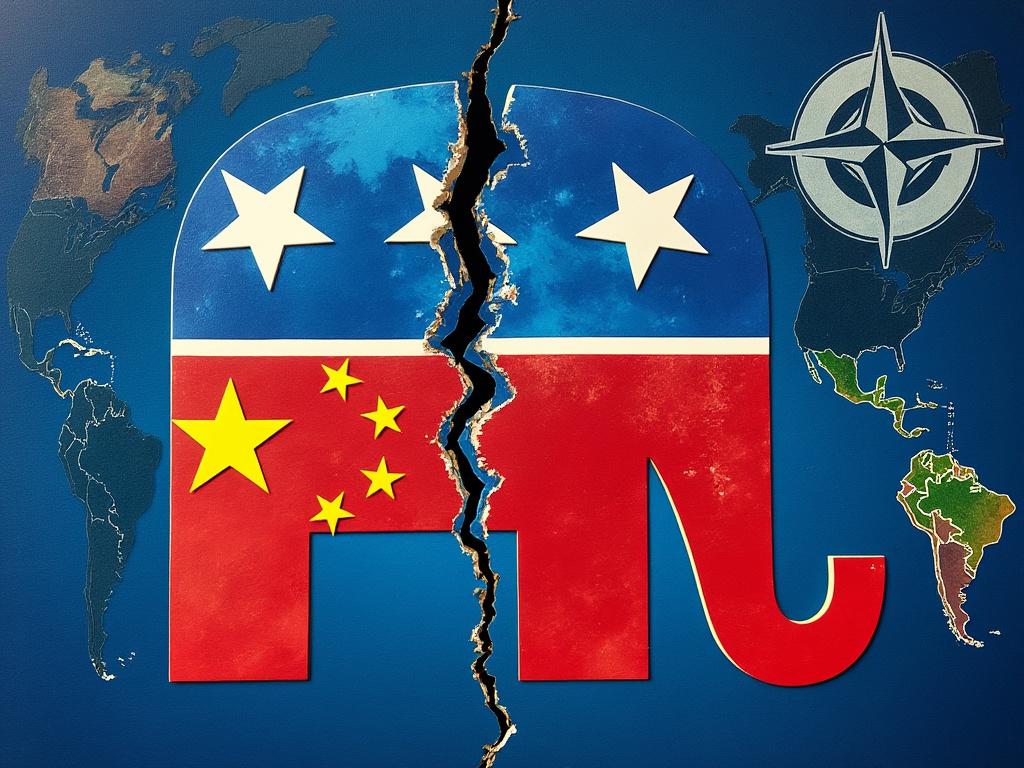
As the midterm elections approach, the Republican Party faces intense scrutiny over its foreign policy, revealing stark divisions that could impact their electoral prospects. This article explores these critical dynamics and their implications for the party’s future.
Republican Foreign Policy Divisions
The Republican Party is currently navigating through a tumultuous sea of internal divisions concerning its foreign policy approach. At the heart of this split lie two distinct factions: the traditional internationalists who advocate for robust global alliances and international engagement, and the “America First” proponents, who prioritize national interests and often favor a more isolationist stance. This rift is not merely ideological but has practical implications for electoral politics. With the midterm elections looming, the party’s inability to present a unified foreign policy could alienate segments of voters who either view global engagement as essential for security and economic growth, or conversely, those who believe that American resources should be focused domestically. The lack of coherence in foreign policy threatens to undermine the Republican Party’s appeal to both its base and swing voters, potentially jeopardizing its overall performance in the upcoming elections. As debates and discussions continue, the Republican electorate remains divided, with each group championing differing priorities that reflect their ideological underpinnings. This schism is evident not just in verbal declarations but also in policy advocations and voting patterns within the party, predicting a challenging electoral landscape influenced significantly by these internal conflicts.
China Strategies and Uncertainties
Under the influence of former President Trump, the Republican Party adopted an aggressively hawkish stance towards China, marked by tough rhetoric and policies aimed at reducing U.S. dependency on Chinese manufacturing and countering Beijing’s military assertiveness in the South China Sea. However, the practical implementation of these policies revealed significant uncertainties and inconsistencies. Tariffs introduced on Chinese goods intended to bolster American industry instead raised costs for U.S. consumers and disrupted global supply chains, illustrating the complex interdependencies that challenge a simplistic aggressive approach.
Within the party, this approach to China has not been universally accepted, exposing rifts between traditionalists who favor engagement and diplomacy, and the populist wing that supports a more confrontational posture. This division complicates the party’s ability to present a unified foreign policy platform, potentially alienating moderate voters who prefer stable international relations, while energizing the base that favors decisive action. As these internal conflicts coincide with an increasingly competitive global environment, the Republicans’ stance on China could significantly influence their performance in the midterm elections, especially as foreign policy becomes a critical arena of voter concern.
NATO and Ukraine Relations
In recent times, the Republican approach to NATO and Ukraine has seen a shift, potentially signaling a disengagement from long-standing alliances. While traditionally, the GOP upheld NATO as a cornerstone of Euro-Atlantic security, the emergence of a more isolationist wing within the party suggests a reduction in support. This realignment could distress U.S. allies who rely on robust American backing against threats like Russian aggression. The growing skepticism about funding and military support for Ukraine further exasperates this strain. This transformation might not only undermine the foundational pillars of Republican foreign policy but could also disillusion domestic voters who value international stability and leadership. Simultaneously, it risks damaging America’s global standing, giving room for adversaries to exploit these perceived rifts in Western alliances. International audiences and allies might view this shift as a retreat from the U.S.’s roles as a global leader and reliable partner, potentially reconfiguring global power dynamics unfavorably towards the U.S.
Dealing with Russia
Under Trump’s administration, Republican viewpoints towards Russia noticeably softened, diverging significantly from their traditionally hawkish stance. Trump’s ambiguous responses to Russian electoral interference and global aggression raised concerns. This shift was a stark contrast to past Republican policies that championed strong opposition to Russian authoritarianism. Such discrepancies could erode voter trust, particularly among those who value consistency in foreign policy and national security. AS Republicans reevaluate their commitment to NATO and Ukraine, their equivocal attitude towards Russia further complicates their foreign strategy, potentially alienating a portion of the voter base that could fear diminishing U.S. influence under Republican governance. This evolution in stance is challenging for a party historically characterized by its firm opposition to Russian influence, posing substantial risks in upcoming midterm elections.
Impact on Latin America
While the Republican approach to Russia might paint a picture of ambiguous alignments, Trump’s prospective policies towards Latin America are more conclusively hardline. Prioritizing trade renegotiations, stringent migration controls, and countering Chinese influence underscores his agenda. However, these measures may strain U.S.-Latin America relationships, undermining regional cooperation. The potential alienation of Hispanic voters, critical in swing states, could jeopardize Republican prospects. Trump’s assertion that hardline policies will protect American interests might not resonate with the demographic trends shifting in these pivotal areas, reflecting a potentially significant electoral backlash against perceived aggressive foreign policy stances.
Conclusions
The Republican Party’s contemporary foreign policy challenges shape a complex electoral landscape, where internal divisions and controversial international stances may alienate crucial voters. If not addressed, these issues might severely thwart their midterm success, marking a pivotal moment in party history.