
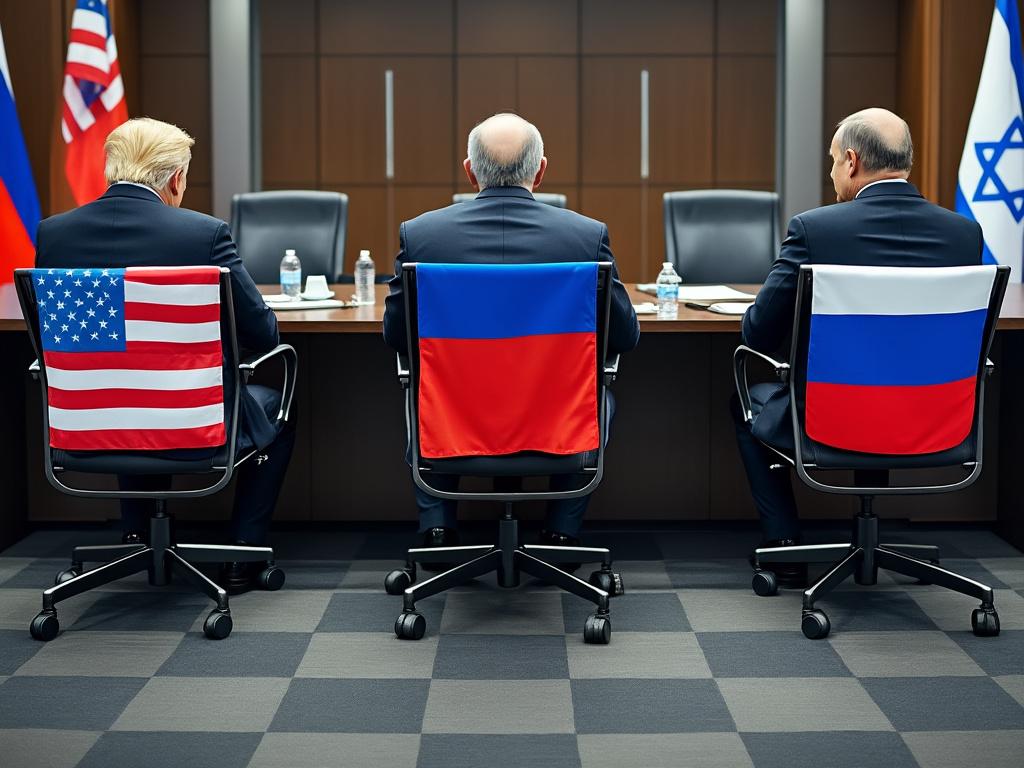
As global crises intensify, the interplay of U.S., Russian, and Israeli foreign policies under Donald Trump, Vladimir Putin, and Benjamin Netanyahu poses significant challenges. Each leader pursues distinct, often conflicting agendas, shaping a complex diplomatic landscape that transcends continental boundaries.
Netanyahu’s Mediation Between Superpowers
In the complex web of global diplomacy, Benjamin Netanyahu has positioned himself as an intermediary in the escalating friction between Donald Trump and Vladimir Putin, focusing significantly on the Ukraine crisis. Behind closed doors, Netanyahu facilitated crucial discussions, leveraging Israel’s unique diplomatic standpoints and his personal rapport with both leaders. His intervention, characterized by strategic dialogues and consultative meetings, not only underscored Israel’s diplomatic maturity but also aimed to temper the rising geopolitical tensions. By navigating these delicate interactions, Netanyahu not only sought to stabilize the region but also to assert Israel’s influence, framing it as an indispensable broker on the international stage. This delicate mediation highlighted the intricate dance of aligning interests with global stability, demonstrating Netanyahu’s adept handling of the international pressure cooker.
Russia’s Strategic Moves in Ukraine
Despite Netanyahu’s attempts at mediation, Putin’s aggressive posture in Ukraine has persisted, exacerbating tensions with Trump’s administration. The Kremlin’s military escalation directly challenges the fragile peace efforts, illustrating a blatant disregard for Western diplomatic pressures. This defiance not only strains U.S.-Russian relations but also shakes the foundations of international security. By sidestepping negotiations led by Trump, Putin seems to convey Russian resilience and strategic autonomy, complicating the geopolitical landscape and hinting at the broader impacts these tensions may have on global stability.
Israel’s Delicate Balancing Act
Amid the backdrop of heightened tensions in Ukraine, Israel finds itself performing a high-wire act in its diplomatic engagements with Russia and the U.S. Central to Israel’s strategy is its need to maintain robust defense cooperation with Russia, particularly in orchestrating military operations in Syria—a region critical for Israel’s national security. Despite moral support for Ukraine, full alignment with the U.S. is tempered by the imperative to manage its strategic relationship with Moscow efficiently. This delicate balance is fraught with potential political quandaries, straining Israel’s long-standing alliance with the U.S. Moreover, the nuanced diplomacy illuminates the complexities of international relations where national interests often necessitate precarious trade-offs, a theme which gains further complexity in the upcoming discussion of Iran’s role in this tripartite relation, highlighting the intricate and often contentious dance on the global stage.
The Iran Factor in US-Russian-Israeli Relations
Iran’s role as a contentious pivot in US-Russian-Israeli dynamics deepens the strategic complexities. Following Israel’s cautious engagements, as highlighted in the volatile Syrian theater, Iran’s nuclear ambitions and regional militant support exasperate these tensions. Putin’s approach, advocating for diplomatic channels with Tehran, starkly contrasts with Trump’s “maximum pressure” strategy, compelling Netanyahu to maneuver diplomatically to harmonize these divergent views without jeopardizing crucial security interests associated with Israel’s aggressive posture towards Iran. Russia’s defense of Iran’s nuclear program in international forums and simultaneous military collaborations with Israel in Syria underline a multifaceted game of chess, with each player guarding their strategic interests fiercely while attempting to influence the volatile Middle Eastern geopolitical landscape.
Geopolitical Impacts and Future Directions
The interactions between Trump, Putin, and Netanyahu unfold on a complex global chessboard where each leader’s moves critically affect the others’. With Netanyahu’s tactical alignments with Trump over Middle Eastern policies, especially concerning Iran, there emerges a striking counterbalance in Putin’s approach, which often seems to strategically undercut Trump’s initiatives. These dynamics introduce uncertainties that ripple across global diplomatic relations, affecting both immediate geopolitical tensions and the broader international architectures of power. Looking forward, as each leader pursues national interests, we may see shifts in alliances. These changes could foster new diplomatic alignments or exacerbate existing conflicts, thereby influencing global peace and conflict resolution strategies. As these leaders continue to navigate the intersecting interests and regional sensitivities, their maneuvers will significantly shape the geopolitics of not just their respective regions but also the international community at large.
Conclusions
The intricate geopolitical dance between Donald Trump, Vladimir Putin, and Benjamin Netanyahu reflects a complex matrix of motivations and strategies. As they manoeuvre through crises involving Ukraine, Iran, and broader regional influences, each leader’s independent actions not only test existing alliances but also redefine the contours of global diplomacy and power politics.