
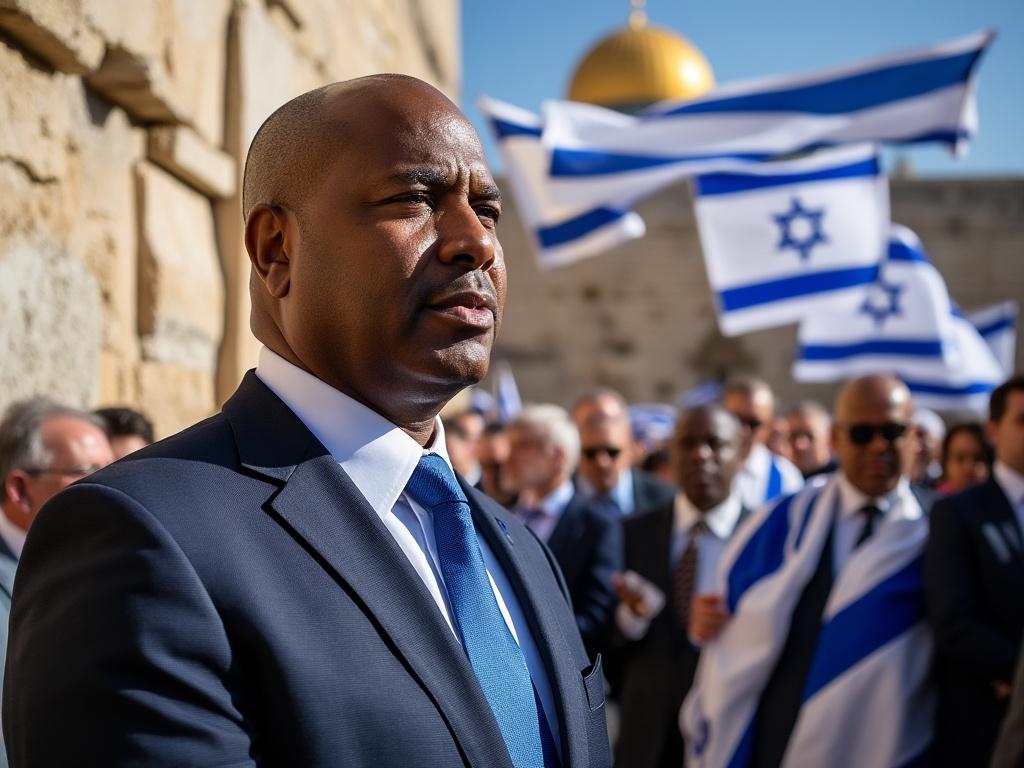
In a defining moment for US-Israel relations, House Speaker Mike Johnson led a Republican delegation to Jerusalem, landing amidst the recent echoes of the 12-Day War between Israel and Iran. This visit, charged with both symbolic and substantive implications, marks a pivotal chapter in the evolving diplomatic ties.
Background: Postponement and the Context of the Visit
In June 2025, amid escalations between Israel and Iran, Mike Johnson had to delay his visit to Israel, initially planned as a gesture of strategic partnership. The tensions involved not just military confrontations but also widespread cyberattacks and diplomatic isolations, highlighting the volatile nature of regional politics in the Middle East. As Speaker of the House, Johnson’s decision to postpone was also influenced by consultations with international security advisors, underscoring the complex interdependencies influencing U.S. foreign policy. The rescheduled visit came after a delicate ceasefire, during a rare period of stability, drawing global attention. It marked Johnson’s first significant international engagement since his election, signaling his priorities and the importance attached to U.S.-Israel relations, thereby setting the stage for a high-profile tour loaded with expectations and geopolitical undercurrents.
Delegation and Symbolic Significance
Speaker Mike Johnson’s choice of Jerusalem during the sorrowful observance of Tisha B’Av, a day marking various Jewish calamities, including the destruction of the First and Second Temples, was laden with profound religious and cultural symbolism. Johnson personally reflected on the deep spiritual resonance of this timing, considering it a moment to echo themes of resilience and reconciliation. At Jerusalem’s Western Wall, the delegation engaged in prayer, placing written petitions between the ancient stones—a gesture underscoring humility and reverence. These actions, captured widely in media, were not merely ceremonial. They bridged domestic political themes that resonate with Johnson’s conservative base, emphasizing tradition and religious connectivity. Internationally, this pilgrimage and the display of piety at such a sacrosanct site underlined a message of unwavering support for Israel, aiming to fortify U.S.-Israel relations amidst fresh geopolitical dynamics nurtured by recent regional tensions.
Meetings with Israeli Leadership and West Bank Remarks
In the whirlwind of diplomatic engagements, Speaker Mike Johnson’s visit to Israel included pivotal discussions with key Israeli leaders such as Defense Minister Israel Katz and Foreign Minister Gideon Sa’ar. These meetings primarily centered on post-war security arrangements and the long-term diplomatic strategies essential for regional stability. An acute emphasis was placed on collaborative defense technologies and intelligence sharing, elements critical in maintaining the qualitative military edge in a volatile Middle East.
Controversially, Speaker Johnson’s visit extended to Ariel University, located in the West Bank. His remarks there, underscoring support for the university’s research endeavors, inadvertently delved into the contentious politics of Israeli settlements. By referring to the West Bank as “disputed” rather than “occupied” territory, Johnson signaled a significant shift in tone from previous U.S. administrations. This statement not only reverberated through the halls of international diplomacy but also hinted at a potential recalibration of U.S. policy perspectives toward Israeli settlement policy, stirring both policy advocacy and criticism on a global scale.
Implications for US-Israel Relations
Implications for US-Israel Relations: Speaker Mike Johnson’s visit signifies a pivotal moment for US-Israel relations, particularly against a backdrop of shifting right-wing ideologies in both nations. His engagements underscored a mutual inclination towards robust national security policies and hardline stances against regional adversaries. This alignment may recalibrate US diplomatic focus, potentially deepening cooperation on defense and intelligence. Furthermore, Johnson’s reaffirmation of these policies during his visit not only mirrors but potentially accelerates transformative shifts in US-Israel diplomatic strategies, with far-reaching consequences for the geopolitical dynamics of the Middle East. The broader implication could be a fortified US-Israel axis, possibly influencing America’s interactions with other regional players and impacting overarching peace and stability strategies.
Conclusion
Speaker Mike Johnson’s visit to Israel represents a critical juncture in U.S.-Israel relations, symbolizing a renewed alignment under politically and ideologically similar governments. The timing of Johnson’s trip, amidst increasing regional tensions and significant religious dates, underscores its strategic importance. Johnson’s explicit support for Israel’s right-wing policies not only solidifies a political stance but also influences the U.S. domestic arena, reflecting and potentially intensifying partisan perspectives on foreign policy. Moreover, this visit, enveloping historical and religious nuances, projects a profound message internationally, suggesting potential shifts in how the U.S. may engage with other nations in the Middle East. The implications of these interactions extend beyond bilateral relations, possibly affecting global geopolitical dynamics and alignments in the foreseeable future.
Conclusions
Mike Johnson’s visit to Israel symbolizes not just a diplomatic routine but a significant shift in US-Israel relations, perhaps heralding a deeper alignment with right-leaning policies. This trip—laden with both religious symbolism and potent political statements—could potentially set the course for future American foreign policy in the Middle East.