
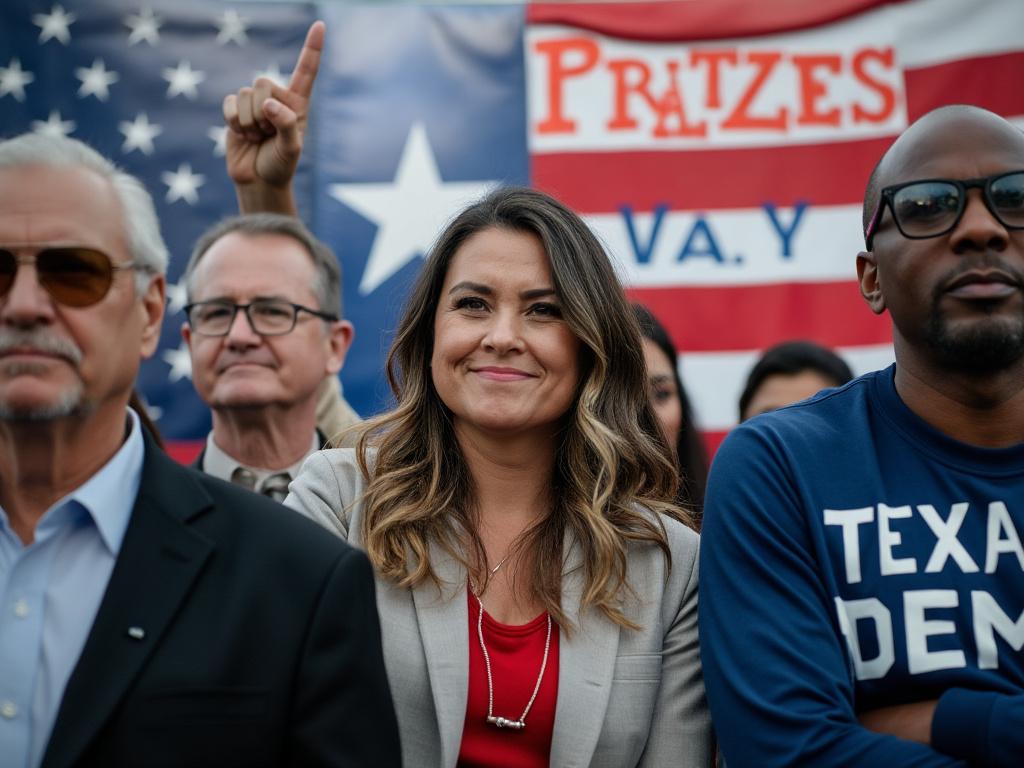
The political landscape is rattled as Illinois Governor J.B. Pritzker offers refuge to Texas Democrats fleeing their state to block a contentious redistricting proposal. This standoff raises critical questions about voting rights, state sovereignty, and the lengths to which political battles are fought in the current American context.
The Exodus of Texas Democrats
Over 50 Texas Democratic lawmakers took the dramatic step of leaving the state, a strategic move aimed at preventing the GOP-controlled legislature from reaching a quorum and thus passing a controversial redistricting bill. Viewing the proposed laws as facilitating voter suppression, they leveraged their absence as their only viable protest to block the legislation. Underpinning this tactic is the principle that a quorum, the minimum number of members required to conduct legislative business, is crucial for any law-making body. In Texas, two-thirds of legislators must be present to pass any legislation. The Democrats’ departure therefore froze legislative activity, highlighting the lengths to which they were prepared to go to prevent what they perceived as an undermining of electoral fairness. Facing arrest for this defiant exit, they signaled their profound opposition to a redistricting they argued would disproportionately affect voters of color and marginalized communities.
Illinois’ Offer of Sanctuary
Governor J.B. Pritzker’s decision to offer sanctuary to Texas Democrats symbolizes a bold stand on state rights and inter-state relations, setting a precedent in state-level protective measures against political persecution. Upholding the Democrats’ safety against Texas’s arrest threats not only emphasizes Illinois’ commitment to democratic processes but also underscores a deep political divide at the state level. Supporters argue that Pritzker’s action reinforces the importance of safeguarding legislators against coercive tactics that threaten democratic norms. On the contrary, critics claim that such inter-state sanctuary actions could destabilize federal unity, suggesting a potential misuse of power to harbor political figures from legal proceedings. This scenario consequently illustrates an intensifying rift in interstate political solidarity, raising crucial questions about the boundaries of state sovereignty and federal oversight in America’s deeply polarized political landscape.
The National Echo of Local Battles
The bold move by Illinois Governor J.B. Pritzker to offer sanctuary to fleeing Texas Democrats not only shields these legislators from immediate threats but resonates deeply across the U.S., emphasizing the gravity of state-level decisions on national political landscapes. This standoff between Texas and Illinois highlights the increasingly polarized nature of U.S. politics, where state actions can catalyze significant national discussions on voter rights and minority representation. The Illinois sanctuary offer, rooted in support for democratic processes and opposition to perceived disenfranchisement, thus serves as a microcosm of broader national debates. These include fierce talks at the federal level about how states conduct redistricting and their implications on weighing minority votes, pivotal in shaping the democratic ethos of the nation. Such actions underscore the growing divide and the battleground status of individual states in the larger fight for maintaining democratic integrity and fairness in electoral processes.
Strategies and Counterstrategies
In the throes of the Texas redistricting conflict, the strategies and counterstrategies employed by both Democrats and Republicans highlight a complex dance of legal, political, and public relations maneuvering. Texas Democrats, risking arrest, strategically fled to Illinois, seeking sanctuary to block a Republican-dominated redistricting bill, exploiting quorum rules to stall legislative proceedings. This bold step pushed Democrats nationally, including New York’s Governor Hochul, to vocalize robust support for protecting democratic processes. Republicans, countered with threats of arrest and legislative penalties, aiming to frame the Democrats’ move as a dereliction of duty. The use of sanctuary politics by states like Illinois under Governor Pritzker underscores a deepening inter-state ideological solidarity. This scenario crafts a narrative battle that extends beyond state lines, influencing public opinion and potentially recalibrating national political alignments. This high-stakes political theater not only influences immediate legislative outcomes but also sets a precedent for how partisan conflicts might play out in future, impacting the broader democratic ethos in America.
Future Implications and Outlook
The protection offered by Illinois Governor J.B. Pritzker to Texas Democrats signals a possible precedent in state-level sanctuary practices for political figures, which could reshape legal and political landscapes across the U.S. This unique form of sanctuary might inspire similar protective measures in future inter-state political conflicts, potentially leading to intricate legal battles over states’ rights and federal authority. Moreover, the incident might prompt legislative reconsiderations on the rules governing political asylum within state borders, effectively causing shifts in political power dynamics. These developments could influence electoral processes and redistricting efforts significantly, particularly if other states adopt similar stances, altering the fabric of inter-state relations and potentially necessitating federal intervention to resolve escalated disputes. Thus, this scenario not only underscores the evolving nature of political sanctuary but also hints at broader implications for governance, federalism, and democratic integrity in the U.S.
Conclusions
The dramatic flight of Texas Democrats and the sanctuary offered by Illinois represent a significant moment in U.S. politics, highlighting deep divisions and the lengths to which parties will go to assert their agenda. This event underscores the ongoing national debate over democracy, voter rights, and the power plays that shape our legislative landscape.