
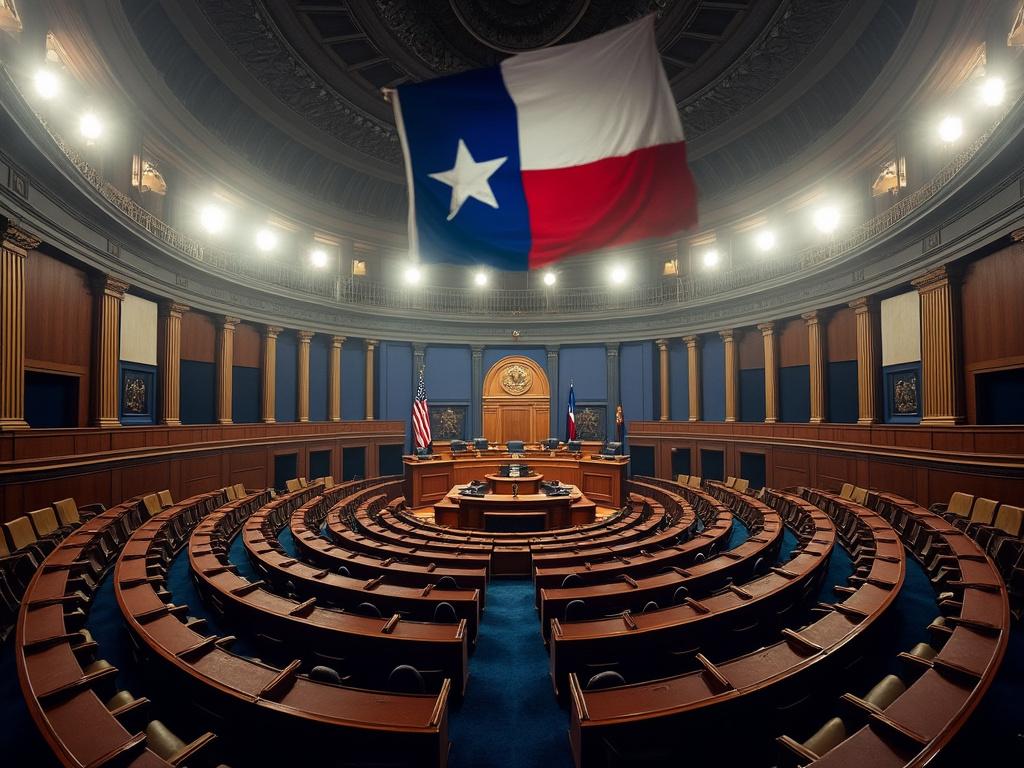
In a fiercely partisan move, Texas Governor Greg Abbott threatened legal action against Democratic lawmakers who fled the state to block a redistricting vote. This article explores the intricate legal situation, political repercussions, and broader implications of this controversial maneuver.
The Escape and Quorum Break
In 2021, escalating tensions in Texas politics reached a boiling point over the contentious issue of redistricting. Texas House Democrats, citing the GOP’s plan as inherently discriminatory, orchestrated a quorum break by leaving the state. This drastic measure halted legislative processes, preventing the passage of what they labeled as restrictive voting laws. The strategy underscored deep divisions on state and national electoral integrity concerns, effectively pausing the GOP-led agenda on several special legislative priorities during the session. The walkout not only questioned the legality of the redistricting maps but also highlighted the broader struggle for democratic equity in Texas governance.
Abbott’s Legal Strategies and Threats
After the Democratic walkout, Governor Greg Abbott responded with stark public statements, vowing harsh penalties for the absent lawmakers. He threatened to arrest and potentially unseat the lawmakers under the claim that such measures were necessary to uphold legislative integrity. In particular, Abbott leveraged Texas Attorney General Opinion No. KP-0382, which interprets that the state constitution allows for compelling attendance by use of arrest if necessary. This legal stance, rooted in Article III, Section 10 of the Texas Constitution, historically gives the legislature the power to dispatch for absent members to achieve a quorum in all but a few protected cases, aligning closely with previous court decisions from as early as 1979, which recognized the legislature’s procedural autonomy. Abbott’s assertive application of this opinion, and the framing of walkouts as a dereliction of democratic duty, aimed to solidify his stance amidst rising tensions. However, this hardline approach raised questions about the balance between legislative coercion and lawmakers’ rights to protest.
Democratic Counter-Moves and Public Statements
In response to Governor Abbott’s threats, Texas Democrats, spearheaded by figures like Representative Jolanda Jones, employed a defiant rhetoric steeped in historical significance. Jones, echoing the storied Texas Revolution slogan, declared, “Come and take it”, framing the conflict as a bold stand for democratic principles against perceived executive overreach. This emblematic defiance was not merely rhetorical; it was strategically designed to galvanize public support against Abbott’s punitive measures.
Simultaneously, Democrats launched a concerted effort to raise funds to combat potential fines and legal costs. Utilizing social media platforms and direct appeals, they drew national attention, framing their resistance as a critical bulwark against undemocratic actions. The strategic invocation of revolutionary imagery and active solicitation of financial support were calculated to bolster their legal standing and public image in the face of formidable gubernatorial opposition.
Legal and Procedural Constraints
The Texas Constitution and House rules establish substantial procedural and constitutional barriers to the removal of lawmakers, presenting a complex challenge to Governor Abbott’s threats against Democrats. Expert opinions underline that impeachment or expulsion within the Texas legislature is predominantly reserved for severe misconduct, and absent such misconduct, these avenues are not readily applicable to Democrats who participated in the quorum break. Legal scholar, Dr. Emily Santos, notes, “The constitution provides high thresholds for expulsion, necessitating a two-thirds vote from the House, a scenario highly unlikely given the current political distribution.” Furthermore, prosecuting legislators for breaking quorum would involve intricate legal battles across various districts, each with its judicial leanings and interpretations of state law, significantly complicating any uniform enforcement of Abbott’s threats.
The logistical feasibility of rounding up and prosecuting absent Democrats also presents several hurdles. As Dr. Andrew Pearson, a political scientist, points out, “Logistics of executing arrest warrants across state borders—where many Democrats had fled—would not only be a legal nightmare but could also spark significant interstate judicial disputes.” This interplay of constitutional protections, procedural requirements, and logistical limitations fundamentally restricts the practicality of Governor Abbott’s threats to impose legal repercussions on the Democrats for their quorum-breaking strategy.
Broader Political and Social Implications
The quorum break and subsequent threats of removal against Texas Democrats by Governor Abbott have not only highlighted legal ambiguities but have resonated far beyond the state’s borders, reflecting a national crisis in voting rights and democratic processes. This standoff in Texas mirrors the broader national tensions, where changes in electoral rules and legislative processes are being scrutinized and, in some cases, radically altered. The actions of Texas Democrats attracted support and attention from key national figures, which underscores the growing polarization and the exploitation of procedural tools for partisan gains. This scenario emphasizes the profound implications for the democratic principles of the United States, igniting debates and discussions on the preservation of democratic norms and the necessity for bipartisan cooperation to safeguard the electoral and legislative integrity nationwide.
Conclusions
The standoff in Texas has underscored the extent of partisan divisions and the complexities of enforcing legislative attendance. Despite Governor Abbott’s bold threats, legal and procedural hurdles render immediate actions unlikely. The episode remains a significant symbol of resistance and political strategy in the face of controversial redistricting efforts.