
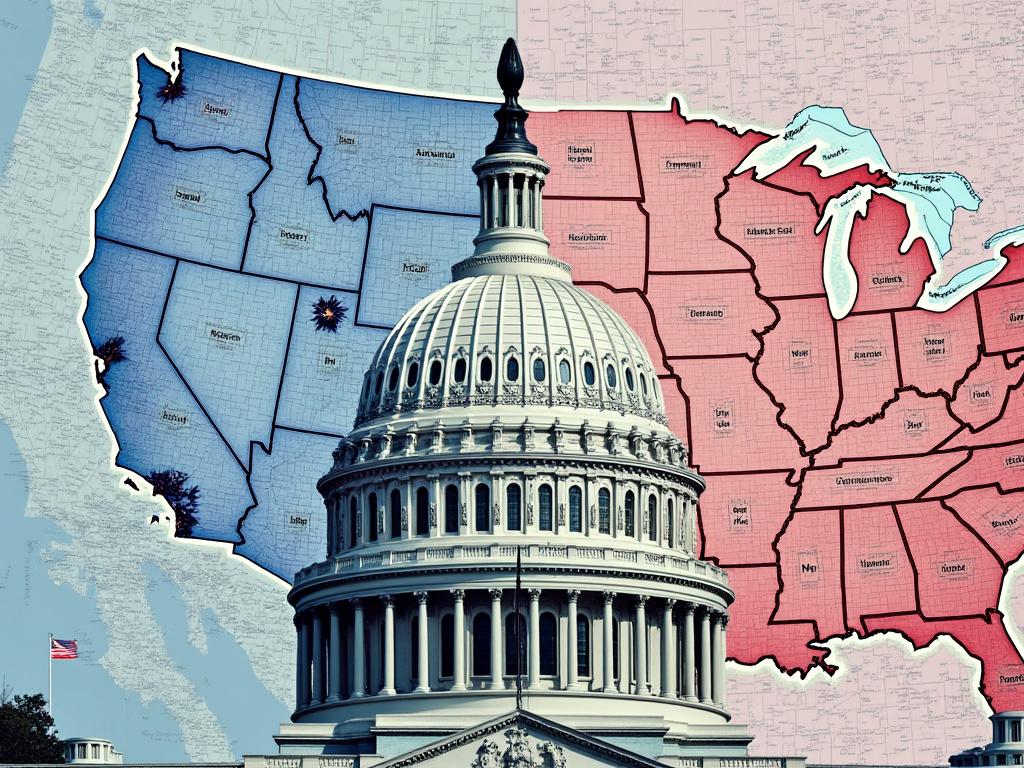
Amid rising partisan tensions, California Republican Rep. Kevin Kiley plans to introduce a bill banning middecade redistricting nationwide. This legislation aims to stabilize the electoral process and prevent political gerrymandering, ensuring fair representation and restoring trust in American democracy.
Understanding Redistricting and Its National Impact
In a significant legislative move, a California Republican plans to introduce a bill aimed at banning middecade redistricting. This initiative seeks to halt the practice of redrawing electoral district boundaries outside the regular ten-year census cycle, which many critics argue distorts electoral fairness and promotes gerrymandering. The proposal underscores a growing bipartisan consensus that the manipulation of district lines for partisan advantage undermines the democratic process. By anchoring redistricting firmly to the decennial timeline, the bill aims to foster a more predictable and equitable political landscape, ensuring that district lines reflect genuine demographic changes rather than shifting political whims. This move in California could set a precedent for other states grappling with similar issues, potentially leading to a more uniform approach to redistricting nationwide.
The Middecade Moves of Texas and California
In Texas, the Republican push for middecade redistricting has been a calculated strategy aimed at solidifying political control. Despite arguing for the necessity of reflecting population shifts, critics have labeled these moves as overt gerrymanders, undermining minority voting power. Contrarily, California, bound by rules mandating an independent redistricting commission, aimed to ensure more equitable redistricting. Yet, controversies arose, such as allegations of subtle partisan influences impacting the ostensibly neutral commission. Each state’s actions underscore the intricate balance between legitimate redistricting motivations and the potential for partisan exploitation, setting the stage for legislative challenges at a national level, as proposed by Rep. Kevin Kiley.
Rep. Kevin Kiley’s Legislative Proposal
In response to the varying strategies employed by states such as Texas and California, Rep. Kevin Kiley of California has proposed a legislative bill aimed at banning middecade redistricting nationally. This bill stipulates a strict prohibition on the adjustment of congressional district boundaries except in the decade following a census, effectively preventing any alterations outside the regular ten-year cycle. Kiley argues that this measure is crucial to curb the partisan gerrymandering that skews democratic representation and fuels political instability. His bill proposes stringent penalties for violations, including the invalidation of redrawn maps and potential federal oversight for states found in breach. According to Kiley, the motivation behind this legislation is to uphold electoral fairness and ensure that district lines serve public, not political, interests. By fostering a more predictable redistricting framework, Kiley believes that this bill will deter the manipulation of electoral boundaries for partisan advantage and promote a more equitable political landscape.
Political Reactions and Legislative Prospects
In the wake of Representative Kevin Kiley’s proposal to ban middecade redistricting, the political reaction spans a spectrum of supportive, critical, and complex responses. Many Republicans, particularly in more moderate or split constituencies, back Kiley’s move as a stride towards fairness and nonpartisan governance. Yet, a segment within his own party labels it as potentially jeopardizing GOP advantages in states they currently control.
On the Democratic side, the response also mixes caution with approval. Some leaders endorse the proposal seeing it as a path to stabilize electoral practices and enhance democracy. However, others suspect it as a strategic move to lock in currently favorable maps that benefit Republicans.
Internally, discussions in Republican circles reveal a divergence of opinion on whether this legislative act might serve long-term party interests or backfire, considering the evolving demographic and political trends that could shift power balances unpredictably.
The broader political implications are profound, suggesting a potential recalibration of strategies across parties. The outcome of the bill could either fortify the status quo or instigate a shift towards more drastic reform measures, impacting future legislative directives and the overall health of American electoral politics.
The Future of American Redistricting
If enacted, Kiley’s bill could dramatically alter the trajectory of American politics by stabilizing district boundaries for the entire decade. Potential outcomes hinge on the bill’s passage: should it succeed, strategic district manipulation opportunities might decrease, compelling parties to focus more on policy than on redistricting advantages. Failing, though, could perpetuate the current cycle of mid-decade redistricting, risking further erosion of public trust. Civil society could play a crucial role, either as watchdogs ensuring adherence to new legal frameworks or as challengers to the status quo. The judicial system, on its part, would need to address increasing lawsuits challenging the constitutionality and fairness of newly redrawn maps, guiding not only implementation but potentially shaping the very principles of fair redistricting practices across the future political landscape of the United States.
Conclusions
In an era marked by deep political divisions, Rep. Kevin Kiley’s bill emerges as a crucial proposal aiming to safeguard democratic norms through stabilizing redistricting practices. Although facing significant political hurdles, its consideration opens vital discussions about fairness and integrity in U.S elections, underscoring the ongoing struggle for a transparent and equitable democratic process.