
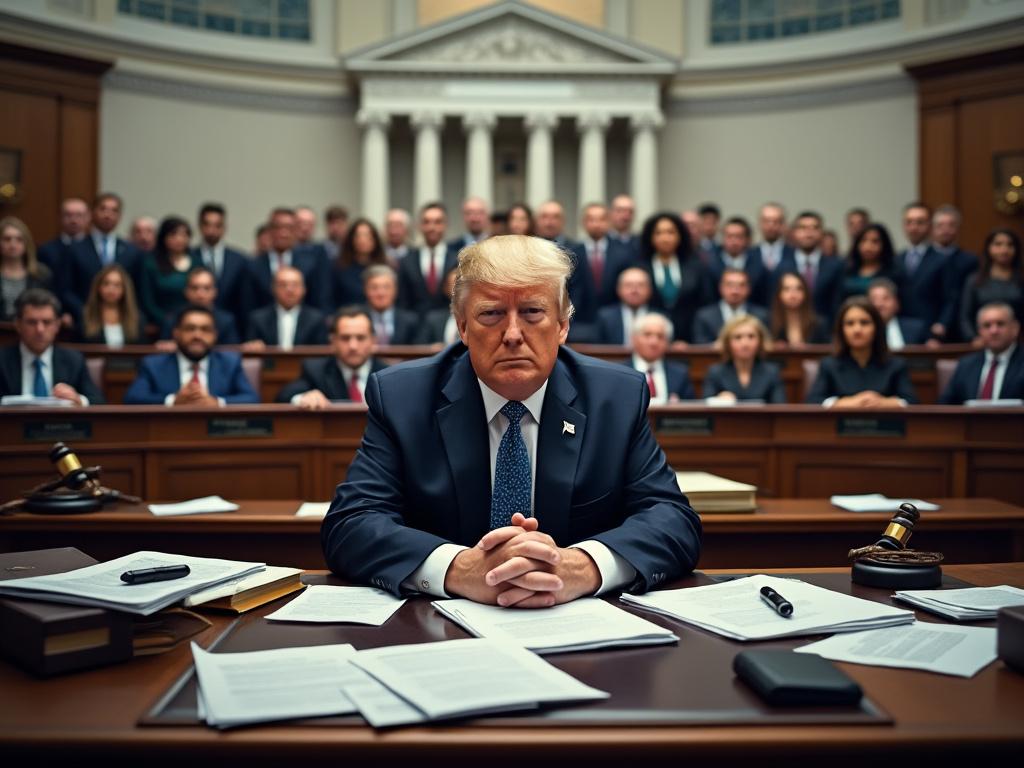
In 2025, Donald Trump faces a complex array of legal and political challenges that are shaped by legal precedent, state resistance, and shifting political alliances. This article delves deep into the factors influencing his odds of success or failure in these arenas.
Trump’s Lingering Legal Conflicts
Since regaining office, Trump’s administration has encountered extensive legal opposition, significantly influencing its policy execution strategies. In landmark cases like J.A.V. v. Trump, courts have not only invalidated orders but have also set stringent precedents that limit the scope of presidential directives. These judicial setbacks intensify as Trump navigates through over 100 lawsuits, reflecting a judiciary increasingly skeptical of his policy justifications. Moreover, the sheer volume and variety of these legal challenges distract from governance, diverting resources toward legal defense. Analyzing these dynamics, Trump’s administration must prioritize judicial interfacing and refine its legal strategies to mitigate losses and capitalize on narrow legal victories which increasingly shape its political agenda. This nuanced judicial landscape continuously tests Trump’s governance resilience as he maneuvers through intricate legal and political battlegrounds.
The Role of State Attorneys General
State attorneys general, particularly from Democrat-led states like California, have been pivotal in shaping the battleground against many Trump-era policies. By leveraging procedural law nuances and judicial avenues, states have initiated strategic lawsuits aimed at stymieing Trump’s policy directives, citing various constitutional and legal incongruities. The effectiveness of such litigations is underscored by their capability to elicit preliminary injunctions and protracted legal proceedings, thus impeding the policy implementation velocity.
The astute use of judicial engagement as seen in states filing voluminous lawsuits against Trump’s measures is not merely reactive but profoundly strategic. This is exemplified by cases where state attorneys general have successfully employed arguments centring on federal overreach and inadequacies in the regulatory processes to secure court judgements pivotal in delaying, if not outright quashing, Trump’s initiatives. These state-level movements not only serve as legal blockades but also reshape the federal policy landscape by fostering substantial public discourse and potentially influencing voter sentiment as observed in the 2024 election outcomes. Thus, state resistance through judicial means emerges as a significant counterforce in American politics, shaping not only immediate policy battles but also the broader governance narrative.
Electoral Shifts and Political Realignments
Trump’s unexpected victory in the 2024 elections, bolstered by diverse voter support, signified a critical realignment in political dynamics. This chapter investigates how Trump’s 2024 win, characterized by his increased support from Hispanic, Black, and Asian voters, influences his political strategies and legislative agenda. The broader implications of this electoral shift for party politics and Trump’s own governance style will be analyzed, emphasizing the interaction between voter coalition dynamics and policy making. The resulting legislative approach, likely focusing on issues pertinent to these communities, could institute shifts away from strictly partisan politics towards more broadly appealing policies. Furthermore, this may prompt a recalibration of Democratic strategies, historically reliant on these voter blocs, possibly leading to significant national policy pivots and reconfigured political alliances. This new coalition presents Trump with the opportunity to redefine Republican governance, potentially affecting how state resistance and judicial oversight interact with federal initiatives in the larger framework of U.S. governance.
Judicial Oversight and Constraints
Despite an electoral realignment underpinning Trump’s administration post-2024, judicial oversight has tightly regulated the ambit of his policy endeavors. The Supreme Court, alongside lower federal courts, has played a crucial part in adjudicating the constitutionality of Trump’s directives. Judicial challenges predominantly arise from state courts where partisan leanings influence rulings against some policies perceived as overreaches. The composition of these courts, increasingly diverse in its ideological standings, underscores a rigorous examination and ensuing hindrance to key legislative measures from Trump’s agenda. This dynamic judicial landscape implies that while Trump may navigate a supportive electoral base, the courts persist as pivotal battlegrounds that could critically delineate the trajectory of his administration’s actions.
Summary Assessment: Navigating the Complex Landscape
Donald Trump’s political trajectory in 2025 is heavily influenced by multiple layers of ongoing legal challenges and state-level opposition, creating a volatile environment for his governing ambitions. His strategy often pivots towards inciting his base through social media and public rallies, yet this approach can intensify legal scrutiny and political resistance. Despite this, Trump’s core support remains robust, suggesting a possible successful navigation through these tribulations if he manages to reframe the narrative to his advantage and mitigate the legal risks. To do so, Trump may leverage and expand his alliances within key states to circumvent or diminish the impact of judicial decisions against him. The upcoming months are critical, as any shift in the political alignment or judicial appointments could tip the scales either for or against his favor.
Conclusions
Donald Trump’s second term showcases an intricate interplay between his legal and political challenges. While his broad electoral base offers some political strength, ongoing legal struggles and persistent state resistance highlight significant hurdles. The future of Trump’s administration hinges on these dynamic and often contentious interactions.