
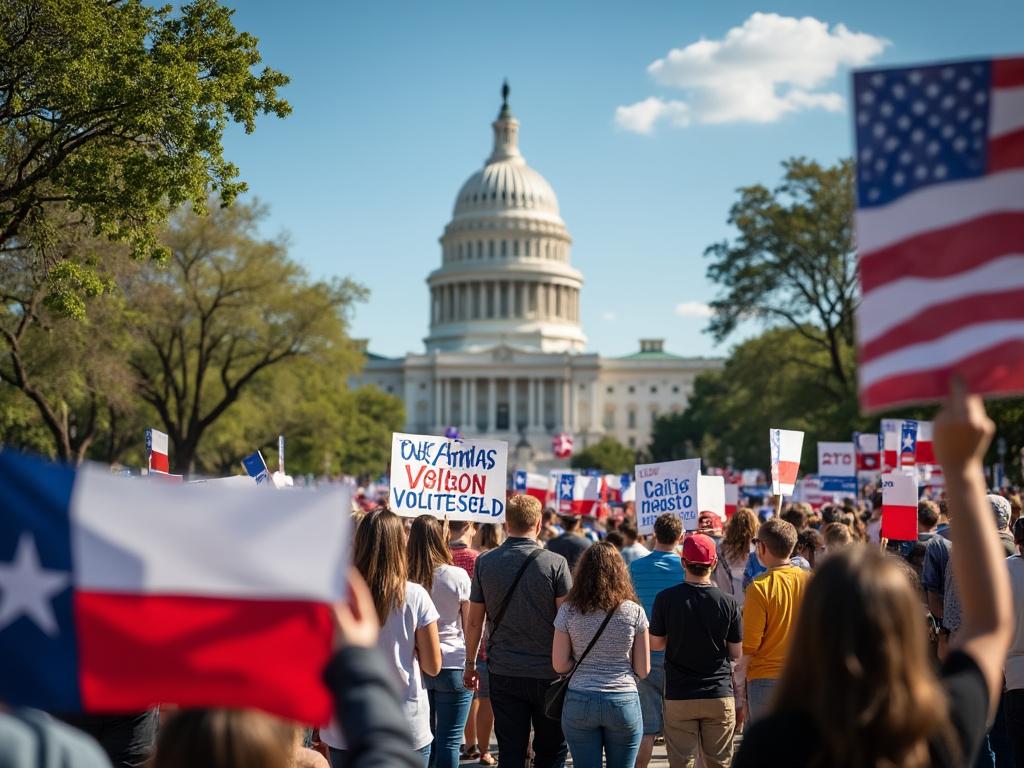
In August 2025, Texas Democrats made headlines by fleeing the state to block a controversial Republican redistricting plan. This high-stakes maneuver halted legislative actions and spotlighted the national debate over voting rights and gerrymandering.
Background and GOP Push for Redistricting
In the heart of the fiercely contested 2025 Texas redistricting battle, the Republican Party, buoyed by demographic shifts favoring their rural and suburban strongholds, embarked on a strategic overhaul of the congressional map. Supporters, echoing the sentiments of influential figures like former President Trump, argued that the redrawn districts were necessary to reflect significant population movements and ensure equitable representation. However, critics, predominantly Democrats and civil rights advocates, decried these moves as blatant gerrymandering intended to dilute the electoral strength of rapidly growing minority communities, thereby securing GOP dominance for the foreseeable future. This tug-of-war set the stage for a dramatic confrontation, pulling in national attention and underscoring the deeply partisan battle lines around voting rights and representation in one of America’s most politically influential states.
The Walkout: Fleeing to Break Quorum
In the days leading up to the dramatic walkout of 2025, the atmosphere in Texas was charged with political tension. The decision by Texas Democrats to flee the state was precipitated by the GOP’s aggressive redistricting plans, perceived as a direct threat to fair voter representation. Seeking refuge in various states, including neighboring New Mexico and distant Washington D.C., the Democrats aimed to deny Republicans the necessary quorum to pass the controversial maps.
Coordinating such a move involved substantial logistical challenges. Lawmakers had to arrange travel secretly to avoid preemptive measures by the GOP. They faced personal risks, leaving behind their families and risking political repercussions in their home districts. Moreover, the cost of accommodation and the prolonged stay in other states posed financial burdens, collectively shouldered by party supporters and sympathetic donors.
Legally, this tactic of breaking quorum was not unprecedented in Texas politics. Historical precedents, like the 2003 walkout over redistricting under then-House Majority Leader Tom DeLay, provided a blueprint. Those instances had laid the groundwork for understanding the procedural and legal ramifications of quorum-breaking, which, while contentious, remained within the legislative rights of lawmakers under Texas law. This bold move by the Democrats in 2025 was thus a calculated risk, aimed at stalling the passage of legislation they viewed as fundamentally undemocratic.
Republican Response: Fines, Arrest Warrants, and Accusations
In an immediate countermove, Texas Republicans leveraged legislative powers, imposing strict fines and issuing civil arrest warrants under the authority granted by state law to penalize and coerce the absent Democrats. Each warrant signaled a harsh penalty for what the GOP described as a dereliction of democratic duty. Amidst escalating tensions, Republican leaders characterized the Democrats’ flight as an abandonment of Texas voters, framing their actions as a clear betrayal of voter trust and legislative responsibility. This rhetoric not only deepened the partisan divide but also aimed to sway public opinion against the walkout, setting the stage for further national scrutiny and debate on the ethical use of redistricting as a political weapon.
National Implications and Partisan Fallout
The Texas standoff swiftly transcended state boundaries, igniting a national debate over redistricting practices. Democratic and Republican national committees marshaled significant resources, framing the conflict as a pivotal battle over democratic principles and partisan dominance. Simultaneously, governors and legislators from other states weighed in, some contemplating similar tactics. This surge of interest underscored redistricting’s profound impact on political power distribution, both locally and nationally. Drawing from Texas’ example, several states began to scrutinize their redistricting approaches, considering both reforms and legislative safeguards. This chessboard of political moves signaled to Congress the escalating need to address gerrymandering through federal legislation, sparking discussions on crafting laws aimed at ensuring fairer electoral representation and potentially limiting severe partisan redistricting practices that undercut voter intent. Moreover, this confrontation illustrated the increasingly strategic use of state legislatures as battlegrounds for national political influence, highlighting how local actions could reverberate across the country and reshape national legislative dynamics.
The Stakes and What Comes Next
The tumultuous Texas redistricting standoff of 2025 has left several potential futures in its wake, none without precedent or consequence. Legally, the most immediate impact could manifest in heightened court involvement, where challenges to the redistricting methods might escalate to the federal level, testing the constitutional limits of gerrymandering. As the standoff persists, another legislative escape might seem untenable but isn’t off the table—a reoccurrence that would only entrench partisan divides further.
The scenario opens a Pandora’s box for future legislative behavior nationwide. States observing the fallout may tighten legislative rules or, conversely, explore more drastic measures during conflicts. Voter sentiments might swing toward frustration and political apathy, impacting turnout and trust in electoral processes. With an election cycle looming, the strategies parties adopt now in Texas could blueprint tactics elsewhere, particularly in battleground states.
Enduring implications on democratic norms are also stark, as such extreme measures highlight systemic vulnerabilities. Whether this episode reinforces calls for electoral integrity or undermines them could very well rest on the resolution of this protracted standoff.
Conclusions
The Texas redistricting drama of 2025 has underscored the potent mix of partisan strategy and democratic principles at play in American politics. As both parties entrench themselves, the outcome may foretell new norms in legislative tactics and have lasting effects on national electoral landscapes, emphasizing the importance of fair representation and democratic resilience.