
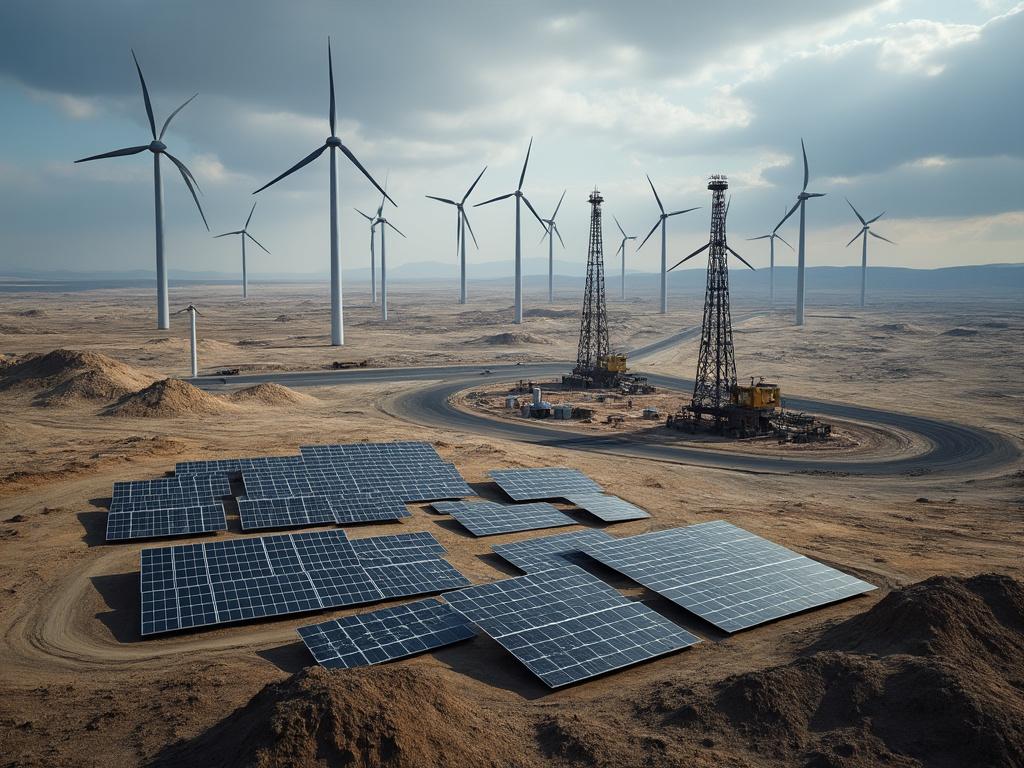
In 2025, the Trump administration introduced a series of regulatory changes and executive orders aimed at impeding the development of renewable energy in the United States, favoring fossil fuels over wind and solar.
Key Policy Moves and Executive Orders
In July 2025, a notable shift in environmental policy was marked by the issuance of an executive order titled ‘Ending Market Distorting Subsidies for Unreliable, Foreign Controlled Energy Sources.’ This directive specifically targeted the financial underpinnings of the renewable energy sector—mainly solar and wind. By cutting subsidies and tax incentives that had long bolstered these industries, the order significantly altered the economic landscape. Financial models reliant on government support faced abrupt recalibrations, disrupting established forecasts and valuations. This unraveling reached into international markets where U.S.-based renewable projects had attracted foreign investments under previous, more encouraging fiscal frameworks. The fallout prompted a strategic reevaluation, as stakeholders grappled with a pivot to operating without the cushion of governmental incentives.
Interior Department Oversight and Federal Siting Barriers
Instituting the requirement for the Secretary of the Interior to personally approve all wind and solar projects on federal lands has drastically altered the permitting landscape. This measure introduces a significant bureaucratic layer that decelerates the approval process. Previously, these decisions were managed by agency staff with relevant expertise, which streamlined evaluations. Now, each project must ascend to the highest administrative levels, prolonging project timelines markedly. For developers, this translates into recalibrated strategies where they must not only factor in elongated approval phases but also increased uncertainty in project start times. The stakes in this new environment are high, intertwining economic vitality with urgent environmental goals, pushing developers to navigate a markedly more complex regulatory terrain. To adapt, developers are increasingly seeking private and state-owned lands for their new projects, sidestepping federal bottlenecks where possible.
Sweeping Leasing and Permit Moratoriums
In 2025, the Trump administration imposed comprehensive moratoriums on new federal leasing crucial for offshore wind energy projects, creating an abrupt halt to expansions in renewable energy sectors. The rationale provided centered on national security concerns and the perceived economic inefficiencies of renewable energy sources. These restrictions not only stymied new ventures but also necessitated stringent reassessments of existing projects, which had to prove their economic viability and security compliance anew.
Legally, this shift introduced a layered complexity for developers, mandating extensive compliance and reevaluation procedures that significantly lengthened project timelines. Economically, the moratorium threatened the investment inflow into renewable energy projects, as the unpredictable policy landscape deterred potential investors’ confidence. The broader repercussions echoed through the national energy strategy, pushing a noticeable pivot back towards fossil fuels and away from the government’s previous commitments to renewable energy goals. This regulatory backtrack marks a critical moment of departure from global trends towards greener energy solutions, affecting the U.S.’s standing in international environmental discussions.
Temporary Freezes on Solar and Collateral Effects
The intermittent freezing of solar energy project permits by federal agencies such as the Bureau of Land Management (BLM) and the Department of the Interior (DOI) has unpredictably disrupted the trajectory of solar development across the United States. These freezes often come without prior warning and last for varying periods, leaving developers in limbo and unable to proceed with planning or construction. In this fluctuating policy landscape, the toll on the development path of solar energy has been significant. Stakeholders report a marked decrease in market confidence, which is crucial for securing financing and long-term investments. The immediate effect is a stall in project timelines and increased costs due to delays. Long-term, there may be a deeper shift as developers begin to see these periodic policy interruptions as the norm rather than exceptions, potentially diverting investments to more stable markets abroad. The uncertainty fostered by such a regulatory environment undermines the goals outlined in the Paris Agreement, which the U.S. has committed to uphold.
Industry Response and Future Outlook
Following the temporary freezes on solar project permitting, renewable energy advocates and industry analysts have expressed significant concerns. The response has largely involved mobilizing for potential legal challenges against what many view as a regressive step. There’s a widespread consensus among experts that continuing on this path could severely dampen the U.S. position in the global renewable energy market. Advocates fear that without serious reinvestment in clean technologies, the U.S. risks falling behind nations that are rapidly expanding their renewable sectors, such as China and members of the EU. They predict that prolonged reliance on fossil fuels may not only harm the environment but could also disadvantage the U.S. economically by missing out on the job creation and technological advancements being driven by renewable energy industries worldwide.
Conclusions
The Trump administration’s aggressive stance against renewable energy in 2025 introduces a series of barriers that potentially derail U.S. efforts in wind and solar expansion. These policy shifts add regulatory hurdles and disrupt funding mechanisms, pressing a crucial pivot towards fossil fuels amidst global energy transition.