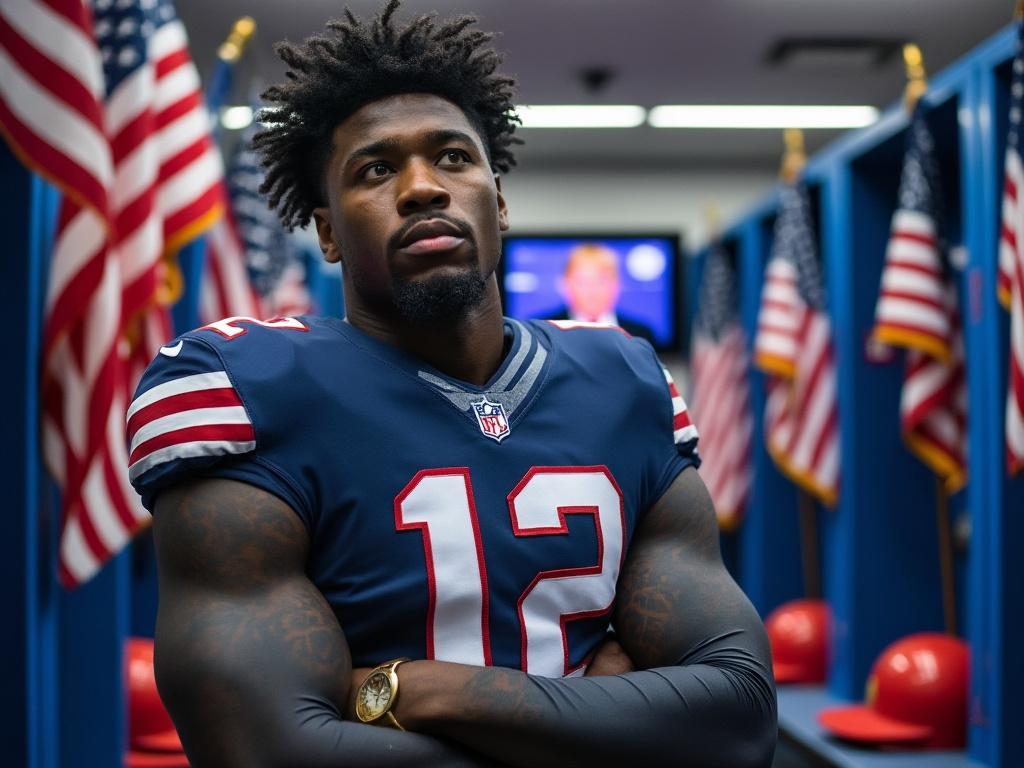
Saquon Barkley, running back for the Philadelphia Eagles, recently made headlines by declining an unexpected invitation from President Trump to join the President’s Council on Sports, Fitness and Nutrition. This decision reflects a broader discussion on the involvement of athletes in political matters.
The Unexpected Invitation
When President Trump reinstated the President’s Council on Sports, Fitness, and Nutrition, he unexpectedly named NFL star Saquon Barkley as a proposed member. Barkley, taken aback by the announcement, promptly declined the invitation. His decision was rooted in practical concerns about his demanding schedule and insufficient clarity about the council’s goals. Barkley felt it was vital to fully understand an organization’s mission before making a commitment, emphasizing the need for awareness and alignment with his personal and professional values before endorsing or joining any such initiative.
Council’s Role and Vision
The President’s Council on Sports, Fitness, and Nutrition plays a pivotal role in promoting national health through advocacy for physical education and active lifestyles. Established aims include not only improving general fitness levels but also implementing educational initiatives such as the Presidential Fitness Test. These endeavors seek to address the alarming trends in national health metrics, including rising rates of obesity and cardiovascular diseases. In this framework, the involvement of prominent sports figures like Saquon Barkley is crucial. Their influence can significantly amplify the council’s messages and initiatives, galvanizing broad public engagement and promoting healthier lifestyles across diverse communities. Barkley’s potential contribution might have bridged sports fans’ enthusiasm with serious health advocacy, leveraging his status to foster a more health-conscious society.
Public Reaction and Media Discourse
Saquon Barkley’s decision to decline President Trump’s invitation to join the Sports Council sparked a complex array of reactions, vividly illustrating the intersection of sports and politics. Media coverage varied widely; mainstream outlets generally portrayed Barkley’s move as a stand for personal values, often highlighting it under themes of athlete empowerment and political activism. In contrast, some conservative platforms critiqued his decision, framing it as a missed opportunity to positively influence governmental policy on sports and nutrition.
The public response was equally polarized. Fans and fellow athletes mostly supported Barkley, viewing his choice as an assertion of independence and moral integrity. Social media threads buzzed with discussions about the role of athletes in political arenas, reflecting a broader societal shift towards endorsing activists in sports. However, there were notable exceptions, with some expressing disappointment, arguing that Barkley could have effected more change from within the council.
Political commentators dissected Barkley’s declination as either a political statement or a missed civic duty, depending on their viewpoint. This scenario underscored the nuanced role athletes play in political discourses, transcending traditional boundaries that once defined sports figures solely by their athletic achievements.
Athletes in the Political Arena
Saquon Barkley’s rejection of President Trump’s offer to join the sports council is not the first instance of an athlete stepping into the political fray; this action is rooted in a deep history of sports figures leveraging their prominence to voice societal concerns. Barkley’s decision echoes the actions of athletes like Muhammad Ali and Tommie Smith, who famously used their athletic platforms for political protest. The influence of such figures can extend far beyond the sports arena, impacting both public opinion and potentially swaying policy through their broad visibility and the strong emotional connections they forge with fans. This interplay, however, is fraught with complexities. Athletes must navigate the resultant controversy that can polarize fan bases and stir significant media discourse. Following the media’s and public’s mixed reactions discussed in the prior chapter, the attention now turns to understanding both the positive and negative ramifications that can emerge from such decisions. How Barkley’s stance might shape future intersections of sports and political advocacy is a scenario teeming with possibilities and risks, forming a junction of societal change and personal consequence.
Future Implications for Sports and Politics
Saquon Barkley’s refusal to join President Trump’s sports council signifies a pivotal moment in how athletes may handle political affiliations. This decision could shield Barkley from potential backlash tied to controversial political figures, possibly preserving his public image and sponsor relations. It also sets a precedent for athletes to assess political invitations not just on basis of personal beliefs, but also on how such decisions resonate with their fan base and affect their career longevity. Future athletes might adopt a more calculated approach to political engagements, weighing endorsements, fan expectations, and personal values closely. This evolving dynamic underscores the importance of strategic decision-making in the nexus of sports and politics, marking a shift towards more nuanced forms of advocacy.
Conclusions
Saquon Barkley’s declination to join President Trump’s Council on Sports underscores the complex relationships between sports figures and political engagement. His decision highlights the careful considerations athletes must address regarding time, image, and influence. This episode serves as a pivotal example of how personal values and professional responsibilities shape responses to political affiliations in sports.