
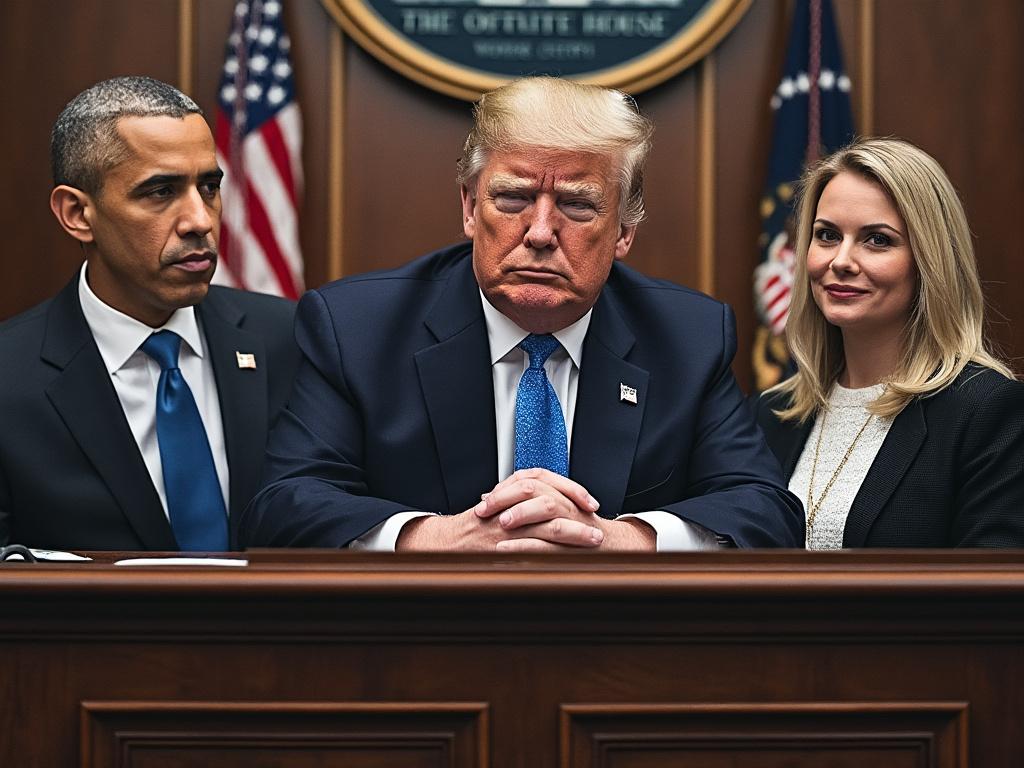
In a controversial political move, a grand jury has been summoned to scrutinize the Obama administration’s handling of Russian interference intelligence, an action heavily critiqued by MSNBC’s Joe Scarborough as misguided and potentially harmful for the justice system.
The Launch of the Investigation
In the wake of controversial claims by President Trump regarding political interference, Attorney General Pam Bondi initiated a grand jury investigation to scrutinize the handling of intelligence by Obama-era officials. This probe aimed to uncover whether there was an orchestrated fabrication of evidence linking Trump’s campaign to Russian interference in the 2016 election. Enthusiastic support from Trump fueled the launch, spreading significant polarization. The Department of Justice swiftly established a specialized strike force, focusing sharply on communications and decisions made within the intelligence community during the Obama administration. This dramatic step highlighted the gravity of the allegations and the seriousness with which they were regarded by the current administration.
Media Reactions and Public Perception
Joe Scarborough, an outspoken critic on MSNBC, lambasted the grand jury investigation into Obama’s administration as “extraordinarily stupid,” characterizing it as a transparently political maneuver rather than a legitimate legal inquiry. By dismissing the probe’s foundation, Scarborough echoed a sentiment prevalent in several media quarters that saw the investigation as a continuation of Trump-era tactics to divert attention from his administration’s controversies. This broad media skepticism feeds into the public’s distrust towards federal probes, influencing perceptions about their legitimacy. Such reactions are crucial in shaping debates about justice and political retaliation, especially when amplified by figures with significant platforms like Scarborough. Given the contentious nature of the accusations against Obama, Scarborough’s harsh critique highlights the polarized climate surrounding these federal actions.
Political Context and Accusations of Treason
In a highly charged political climate, President Trump accused former President Obama of treason, alleging misuse of intelligence agencies to sabotage his presidential campaign. This accusation came amidst claims that the Obama administration had weaponized intelligence—a contentious point that deepened political divides. These serious allegations by Trump not only intensified partisan tensions but also shaped public discourse, anchoring it around themes of loyalty, betrayal, and the sanctity of democratic institutions. This framing by Trump, whether substantiated or not, catered to an existing base of supporters while alienating opponents, thus reinforcing existing polarizations rather than bridging divides. This strategic invocation of “treason” by Trump serves as a potent example of how accusations at high political levels can have far-reaching impacts on public perception and political rhetoric.
Potential Consequences and Legal Implications
Legal experts are concerned about the potential consequences of this grand jury investigation. They fear significant legal ramifications for officials from the Obama administration, which could include charges of misconduct or misuse of authority. The legal basis and the justification for pursuing these charges remain heavily debated. Many see this as an unprecedented move that may set a dangerous precedent regarding presidential powers and prosecutorial discretion. The implications for federal law are considerable, potentially leading to new interpretations of what actions are permissible for a sitting president. Furthermore, the integrity of the Justice Department is at stake. If perceived as being used as a political tool, trust in the impartiality of federal investigations could be irreparably damaged, affecting how future administrations conduct themselves and are perceived, both domestically and internationally.
The Broader Impact on American Politics
The utilization of investigatory powers in scenarios like the probe into Obama’s administration extends beyond legal ramifications, entering the realm of political strategy. These investigations can be perceived as attempts by political figures to discredit predecessors or opponents, thereby influencing public opinion and skewing the political balance. Such actions may lead to a cycle where every administration prioritizes investigations into prior ones, potentially derailing focus from policy-making to political combat. This shift can erode public trust in the judicial system as it becomes seen less as a mechanism for justice and more as a tool for political gain. In the long term, the frequent use of judicial probes for perceived political ends might lead to significant policy stagnation, as government officials become more involved in legal defenses and less in governance.
Conclusions
The grand jury investigation led by Pam Bondi, criticized by Joe Scarborough, encapsulates a starkly political endeavor mired in controversy. Reflecting deep divisions, it illustrates the intense politicization of legal mechanisms and its profound implications on public trust and the integrity of American democracy.