
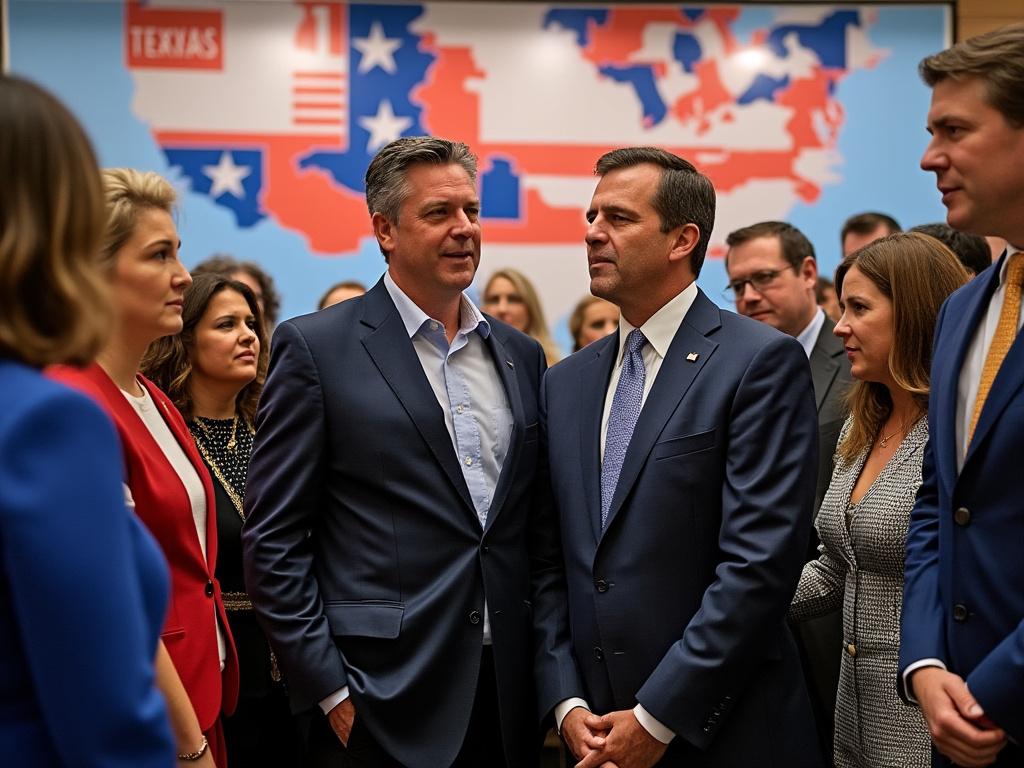
At the center of the political storm, Illinois Governor JB Pritzker and DNC Chair Ken Martin stand beside Texas Democrats, challenging recent GOP efforts in Texas to redraw the congressional map. This contentious shift marks a pivotal moment in U.S. redistricting debates, as both sides brace for impacts on the 2026 midterms.
The Spark of Controversy: Texas’s Mid-Decade Redistricting
In a notable strategic shift from the usual post-census redistricting process, Texas Republicans introduced a mid-decade plan seeking to redraw the state’s congressional districts. This unexpected move, proposed to add five districts with demographic trends favoring the Republican party, stands as a sharp deviation from the standard ten-year redistricting cycle. The Texas Democratic Party and various civil rights groups argue that this plan undermines democratic norms by entrenching partisan advantage, thus threatening the principle of fair representation. They claim the new boundaries dilute the political influence of rapidly growing Hispanic and Black communities across the state, potentially skewing future electoral outcomes to favor one party.
Democratic Exodus and the Texas Legislature Standoff
In protest against the contentious redistricting plan, Texas Democrats undertook a dramatic maneuver by fleeing the state, a strategic decision aimed at breaking the legislative quorum required to approve the proposed redistricting maps. This bold exodus underscored their resolve to block what they perceived as an overt manipulation of electoral boundaries favoring the GOP. The absence of the Democratic lawmakers led Governor Greg Abbott and House Speaker Dustin Burrows to escalate measures, including issuing civil arrest warrants to compel their return. The political stakes intensified as this deadlock not only stalled the redistricting process but also sparked a broader legal and ethical debate on the limits of legislative power and minority rights within the state’s governance system. The repercussions were immediate, impacting legislative functions and heightening tensions across political divides.
National Reactions and the Role of External Political Leaders
Amid the echo of Texas Democrats’ bold exodus, external political figures like Illinois Governor JB Pritzker and DNC Chair Ken Martin have pivotal roles in this expansive redistricting saga. Their involvement underlines broad national stakes pegged on these district delineations. Pritzker eloquently criticized the Texas GOP’s redistricting plans as an “assault on democracy”, pledging staunch support to the displaced Texas Democrats. Martin, articulating similar dismay, reinforced the DNC’s commitment to safeguard electoral integrity. This fierce engagement from external figures not only highlights a national unified front against perceived injustices in electoral processes but also signals how critically redistricting debates could influence future electoral landscapes across other states.
Impact of Supreme Court Decisions on Redistricting
The 2019 Supreme Court decision in Rucho v. Common Cause has notably intensified state redistricting efforts, effectively endorsing an era where partisan gerrymandering faces no federal judicial restrictions. Legal experts, including Professor Steve Vladeck, argue that the ruling has empowered state legislatures to prioritize partisan advantage without fear of constitutional repercussions. This decision has led to strategic shifts in how parties manipulate electoral maps, with Republicans and Democrats alike recalibrating their approaches to fortify or expand their legislative power. The consequences of this ruling are extensively visible in contemporary redistricting clashes, where states are witnessing unprecedented levels of partisan drawing of congressional boundaries.
Escalating Redistricting Wars and Future Threats
In response to Texas’s aggressive redistricting tactics, Democratic strongholds are deliberating on their counterstrategies. Governor Kathy Hochul of New York has publicly criticized the move, suggesting similar aggressive measures might be necessary to preserve Democratic representation. Nationally, the issue has further polarized opinions, evidenced by former President Donald Trump’s endorsement of the Texas GOP’s approach, which he argues is merely balancing the scales against Democratic maneuvers in other states. These developments underscore the intensifying national division around redistricting, promising a continued tug of war over electoral influence through tactical map drawing.
Conclusions
The battle over Texas’s redistricting plan is more than a state issue; it has become a national flashpoint for democratic norms and fair representation. As the 2026 midterms approach, the implications of these redistricting efforts will profoundly affect the political landscape, necessitating vigilance and active participation from all democratic stakeholders to ensure electoral fairness.