
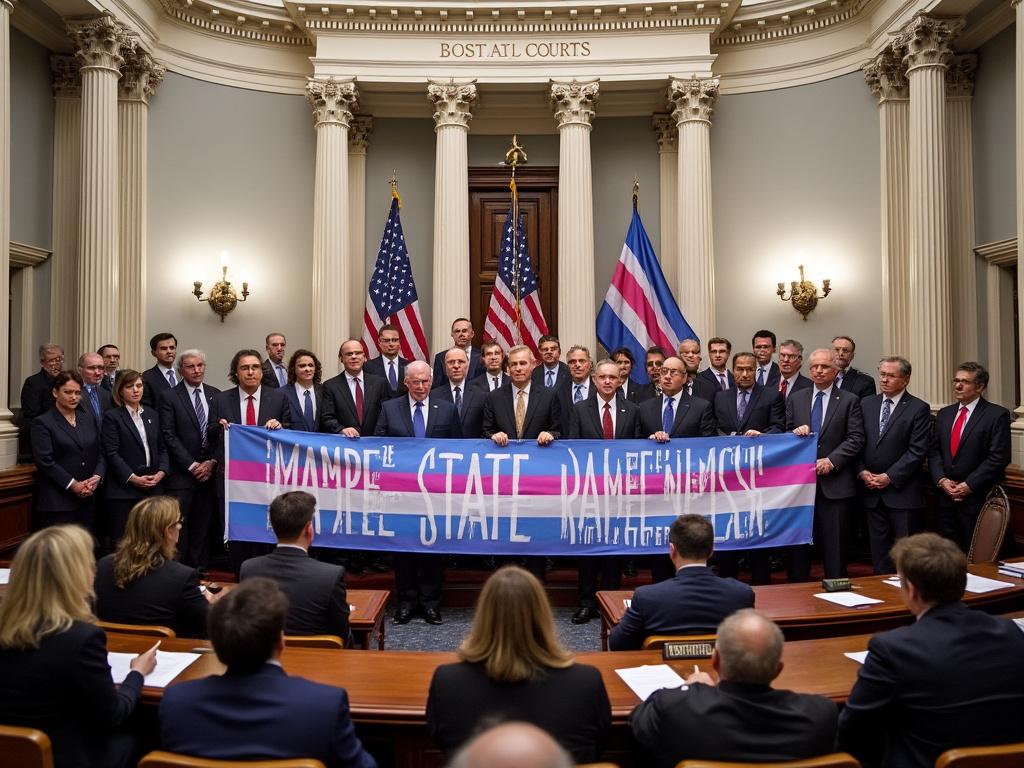
In a groundbreaking legal battle, a coalition of 16 states led by California has filed a lawsuit challenging new federal restrictions on gender-affirming care for transgender youth. This article dissects the implications of this conflict between state and federal powers.
The Trigger
In January 2025, President Trump issued executive orders categorizing gender-affirming care as ‘mutilation’ and enforced severe bans on such medical treatments. These restrictions applied heavy penalties for non-compliance, impacting healthcare providers nationwide. Facilities offering hormone therapy, puberty blockers, or surgical procedures faced potential loss of licensure or exorbitant fines. This direct assault compelled numerous clinics to either abruptly halt these services or risk crippling sanctions, profoundly affecting transgender individuals dependent on these critical healthcare services.
State-Led Legal Challenge
In response to President Trump’s 2025 executive order characterizing gender-affirming care as “mutilation,” California, along with other blue states, spearheaded a vigorous legal suit challenging this directive. This coalition argued that the federal government’s actions constituted an overreach into realms traditionally managed by state governance. Central to their argument was the assertion that theserestrictions infringed upon the Equal Protection Clause of the Fourteenth Amendment. They posited that the decree discriminatorily targeted transgender individuals, denying them medically necessary care recognized by numerous healthcare authorities. Furthermore, there was an alleged breach of non-discrimination protections that are explicitly outlined in state laws which mandate the availability of gender-affirming care. The legal fight underscored a significant clash not merely in policy, but in the protection and recognition of transgender rights at both the state and federal levels.
Real-World Impact
The tangible effects of federal restrictions on gender-affirming care have been severe, with multiple clinics forced to suspend services or close entirely. Personal accounts from transgender youth reveal a landscape of uncertainty and distress. One 15-year-old expressed feeling “invisible and invalidated,” unable to continue hormonal treatments that had significantly alleviated their gender dysphoria. Families too are caught in painful dilemmas, often traveling across state lines for essential care or grappling with the psychological toll on their children. Healthcare providers find themselves in a precarious position: while committed to patient care, they must navigate a complex mesh of legal constraints that often contradict their medical judgment and ethics. In blue states, leaders and activists are pushing back, organizing legal suits and advocacy campaigns, but the immediate impacts are deeply felt within the community, creating an environment of fear and confusion.
Broader National and Political Context
Under the Trump administration, there was a pronounced shift in federal policy that significantly affected transgender rights, emphasizing a rollback of federal protections. This policy orientation drew on broader societal tensions around gender identity and civil rights, placing the administration in direct opposition with states that advocate for progressive transgender healthcare policies. Blue states notably challenged these federal restrictions, critiquing them as regressive and harmful to transgender individuals. By prioritizing the rescission of transgender protections, the administration not only stirred a legal battle but also a deep ideological divide across the nation. This clash highlighted a fundamental conflict between federal intentions to impose uniform standards and the rights of states to protect their residents’ healthcare needs, leading to a contentious legal and political standoff. This broader national and political context illustrates the polarizing effect of such federal policies on American society and governance.
Next Steps
As the legal confrontation over gender-affirming care intensifies, several potential future scenarios may unfold. States that oppose Trump’s restrictions could challenge these federal limitations through lawsuits potentially reaching the Supreme Court. Given the complexity of the issues and the profiles of current justices, outcomes are highly unpredictable. If the Supreme Court rules against federal restrictions, it could set a landmark precedent strengthening state authority over healthcare policies and reinforcing transgender rights. Conversely, a decision favorable to the restrictions might embolden federal overreach into state-regulated healthcare matters. Such outcomes will significantly shape future federal-state relations and could either advance or set back healthcare policies pertaining to transgender individuals. The legal processes are expected to be protracted, with initial judicial decisions potentially setting the course for extended legal battles over the coming years.
Conclusions
The legal contention over gender-affirming care underscores a pivotal conflict between state sovereignty and federal oversight in the U.S. healthcare landscape. As the lawsuit progresses, it presents a crucial turning point that could redefine transgender health rights and the balance of power in healthcare governance.