
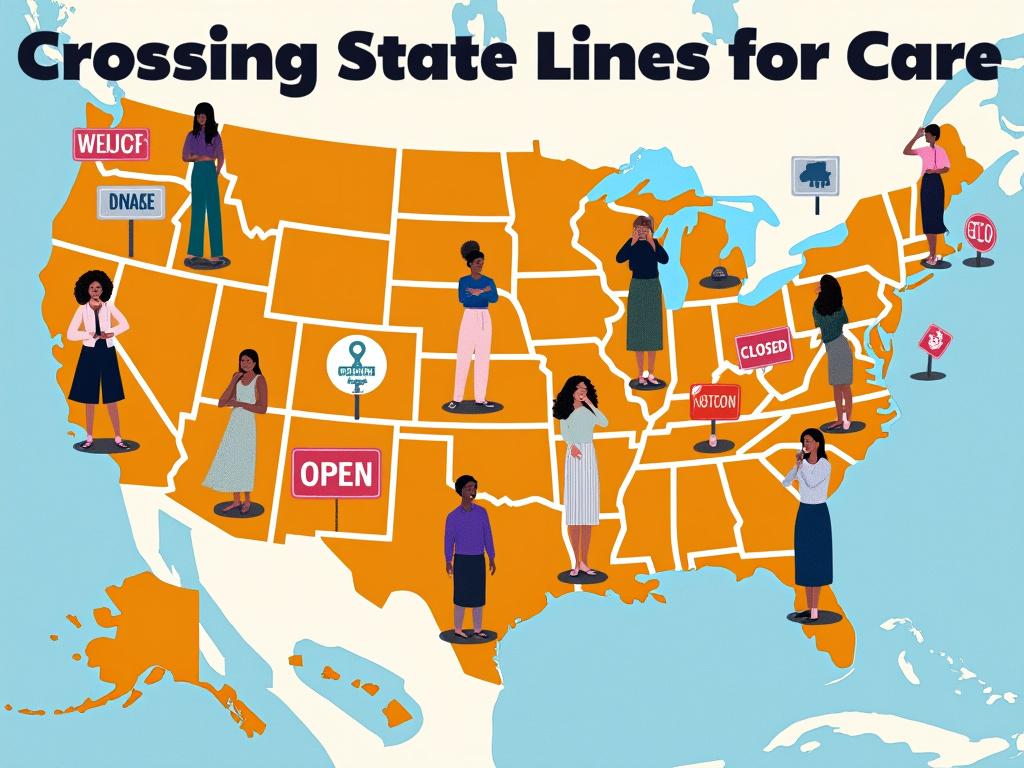
Between 2021 and 2023, the number of Texans traveling out of state for abortion services more than quadrupled, a direct response to the stringent abortion bans enacted within Texas. This article delves into the demographic trends, geographical shifts, and the broader societal and public health impacts of this significant change.
Rapid Increase After 2021 Abortion Restrictions
Following the implementation of Senate Bill 8 and the subsequent reverse of Roe v. Wade, a profound shift occurred in abortion access for Texans. Prior to 2021, the number of residents traveling for an abortion was considerably lower. Post-legislation, the figures multiplied substantially as restrictions tightened, leaving no legal room for the procedure across vast segments of the state. The data from various health agencies and non-profit organizations indicate that the number of Texans receiving out-of-state abortions more than quadrupled by 2023. This steep rise underlines the drastic and immediate effects of the restrictive laws on reproductive health and autonomy, forcing many to seek services far beyond their immediate geographical boundaries.
Where Are Texans Traveling
An analysis of destination states for Texans seeking abortion care post-2021 reveals a pattern focused on geographic proximity and legislative landscapes. States like New Mexico, Kansas, Colorado, and California have become focal points, reflecting both logistical necessity and the availability of services. These states not only offer more accessible abortion services but also legislative environments that are less restrictive compared to Texas. The choice of these destinations is influenced heavily by the balance between distance and the assurance of obtaining the needed care without legal obstructions. This geographical shift underscores the complexity and desperation in seeking reproductive rights in a post-Roe America, especially by those who may not have the means or time to travel even farther from home.
Demographic Profile of Out-of-State Patients
The demographic profile of Texans traveling out of state for abortion services from 2021 to 2023 varied widely, underscoring a significant demand across multiple populations. Statistically, the majority were women aged 18 to 34, reflecting national abortion trends. However, considerable variability was noted within age groups, including a notable percentage of women over 35, challenging assumptions about typical patients. Socioeconomically, these women often hailed from lower-income backgrounds, exacerbating disparities since travel for healthcare precluded additional financial burdens. This demographic spread highlights a crucial aspect: restrictive local policies uniformly affect diverse groups, universally amplifying the need for accessible reproductive healthcare, regardless of age or economic status.
Magnitude and Policy Impact
As the number of Texans seeking abortions in other states quadrupled from 2021 to 2023, both Texas and the recipient states faced complex challenges. Logistically, the sudden increase required massive coordination for safe travel arrangements and appointment scheduling. Financially, patients often encountered strenuous costs associated with long-distance travel, including transportation, accommodation, and procedural fees, which disproportionately affected lower-income individuals. Additionally, healthcare systems in recipient states had to adapt quickly. This often meant scaling up facilities and resources to provide timely and effective care without compromising the quality of services for their own residents. This shift not only tested the resilience and flexibility of state healthcare infrastructures but also sparked discussions on the necessity for federal actions to address such disproportionate healthcare burdens across state lines. As this situation evolved, it laid bare the extensive network of consequences stemming from restrictive health policies, which would subsequently impact broader public health metrics such as maternal and infant mortality rates.
Health and Social Implications
The abrupt enforcement of restrictive abortion laws in Texas has not only impacted individual rights but also public health at large. A concerning trend has emerged: the increase in infant mortality rates linked to decreased access to abortion services. With many forced to cross state lines under stress and financial strain, the physical and mental health repercussions extend widely. This strain disproportionately affects low-income families, further entrenching social inequalities and complicating existing public health challenges. As Texans navigate these arduous barriers, the broader health implications begin to surface, revealing a grim reality of heightened risks and adverse outcomes on a population level. This exodus for care shatters the notion of localized effects of state laws, illustrating a rippling impact through interconnected health systems across state borders.
Conclusions
From 2021 to 2023, Texans seeking abortions in other states quadrupled, driven by restrictive state laws. The demographic breadth and geographic spread of these changes underscore significant shifts in healthcare needs and highlight ongoing public health challenges. This trend illustrates the enduring demand for abortion care, regardless of legislative barriers.