
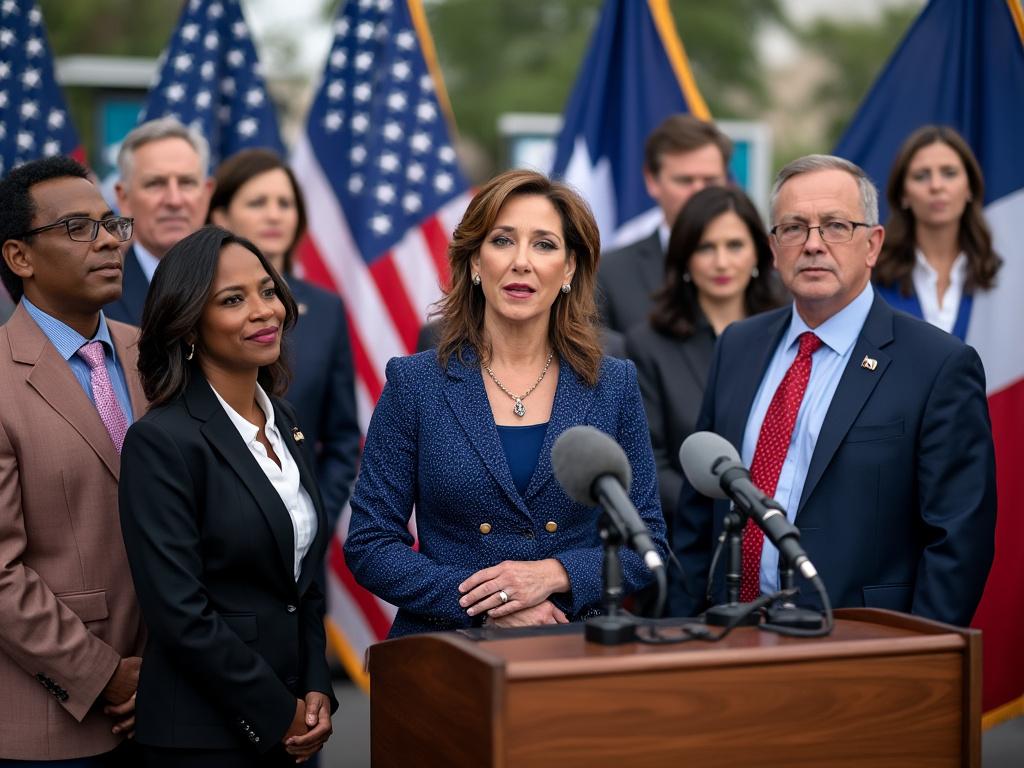
On August 5, 2025, Texas Democrats, flanked by national leaders, took a dramatic step by fleeing to Illinois to prevent a controversial vote on redistricting, underscoring a deep battle over voting rights and democratic governance.
Background: The Quorum Break and the Redistricting Fight
As the Texas Democrats touched down in Chicago, the urgency of their mission was palpable. Standing before an assembled crowd, they detailed how the proposed redistricting maps threatened the very fabric of equal representation in Texas. The Democrats argued that these new boundaries would disproportionately dilute the voting power of minorities, effectively sidelining the diverse voices that characterize the state’s demographic landscape. They pointed out that such maneuvers were not merely administrative but poised to reshape political power in favor of one party. By breaking the quorum, they aimed not just to protest but to halt what they viewed as an unconstitutional overreach, spotlighting their actions as a desperate measure in a democratic system facing severe strain. This move echoed broader themes of civil rights struggles, symbolizing a stand not just for Texas, but for democratic integrity across the United States.
The Press Conference: Core Themes and Urgency
In Chicago, Illinois Governor JB Pritzker and DNC Chair Ken Martin spoke urgently of the quorum break, likening the Texas Democrats’ actions to historical civil rights movements. Deliberately timed around the anniversary of the Voting Rights Act, their speeches framed the redistricting as not only a political crisis but a stark violation of democratic ethics and minority rights. They accused the GOP of engineering a redistricting plan that systematically undermined the voting power of minorities, portraying it as an attack on the very foundations of democracy. This confrontation in Illinois highlighted the broader implications of the Texas struggle, showing it as a flashpoint in the ongoing battle for voting rights in America.
Arguments Against the Redistricting Plan
The Texas Democrats’ stark resistance to the redistricting plan hinges on allegations of an accelerated legislative process, bypassing substantial state concerns such as recurrent flooding issues. This selective focus, critics argue, underscores a deliberate neglect of comprehensive governance. Further deepening this grievance is the dominant accusation of racial gerrymandering. The redistricting blueprint purportedly undermines the electoral influence of Black and Latino communities through strategic boundary manipulations. This tactic, allegedly targets these communities to diminish their representation clout in a state experiencing demographic shifts towards greater ethnic diversity. Such maneuvers challenge the very foundations of electoral integrity and fair representation, raising significant questions about the adherence to democratic principles in the legislative processes employed. The broader implications of these actions signal a disturbing trend that could undermine the essence of democratic participation and equality in the electoral arena, not just in Texas but potentially as a precedent for other jurisdictions.
Wider Political Implications and Public Reaction
The strategically staged press conference by Texas Democrats in Chicago turned the national spotlight on their bold quorum break. Public reaction was polarized; many on social media platforms lauded their courage in standing against perceived electoral injustices, while critics argued they were abdicating their legislative responsibilities. The event underscored an ideological battle over voting rights, epitomizing the tension between state authority and centralized federal intervention in electoral policies.
Media coverage varied widely, with liberal outlets characterizing the move as a noble stand for democracy, and conservative commentators decrying it as a stunt. These disparate narratives highlight the deepening division in U.S. politics, especially around issues of democratic norms and practices.
Moreover, the standoff potentially sets up a larger legal battle concerning state rights and legislative procedures, with Republicans likely planning stringent countermeasures. Democratic strategies may include sustained national advocacy and legal challenges to voting laws, aiming to keep this issue in the public eye ahead of upcoming elections.
Conclusion and Next Steps
The aftermath of the quorum break by Texas Democrats illustrates a pivotal moment in U.S. politics, especially as we edge closer to the 2026 elections. The sustainability of such political tactics remains under scrutiny. These actions may precede a new legal precedent regarding the enforcement of quorum requirements, potentially reshaping legislative strategies in state governments. Public opinion, meanwhile, continues to oscillate, influenced heavily by media portrayal and grassroots movements advocating for or against such measures.
The upcoming elections will certainly be a litmus test for the efficacy of this dramatic approach. As both parties analyze the fallout, the Democrats might refine their strategies towards mobilizing voter bases that sympathize with their bold stand. Conversely, Republicans might focus on legislative fortifications against future disruptions, possibly altering the procedural landscape of legislative bodies.
The long-term implications for voting rights remain uncertain. Should these measures prove to galvanize voter activism and legislative change, they might be remembered as a necessary spark for reform. However, persistent use could also lead to increased polarization, urging a reevaluation of tactics employed within the democratic framework to ensure both efficacy in policymaking and adherence to democratic principles.
Conclusions
The Texas Democrats’ dramatic flight to Illinois is more than a simple legislative maneuver; it’s a significant protest intended to defend voting rights and challenge a perceived encroachment on democratic principles. Their actions have thrust the issue of redistricting, and its implications for minority representation, into the national spotlight, setting the stage for a protracted legal and political battle.