
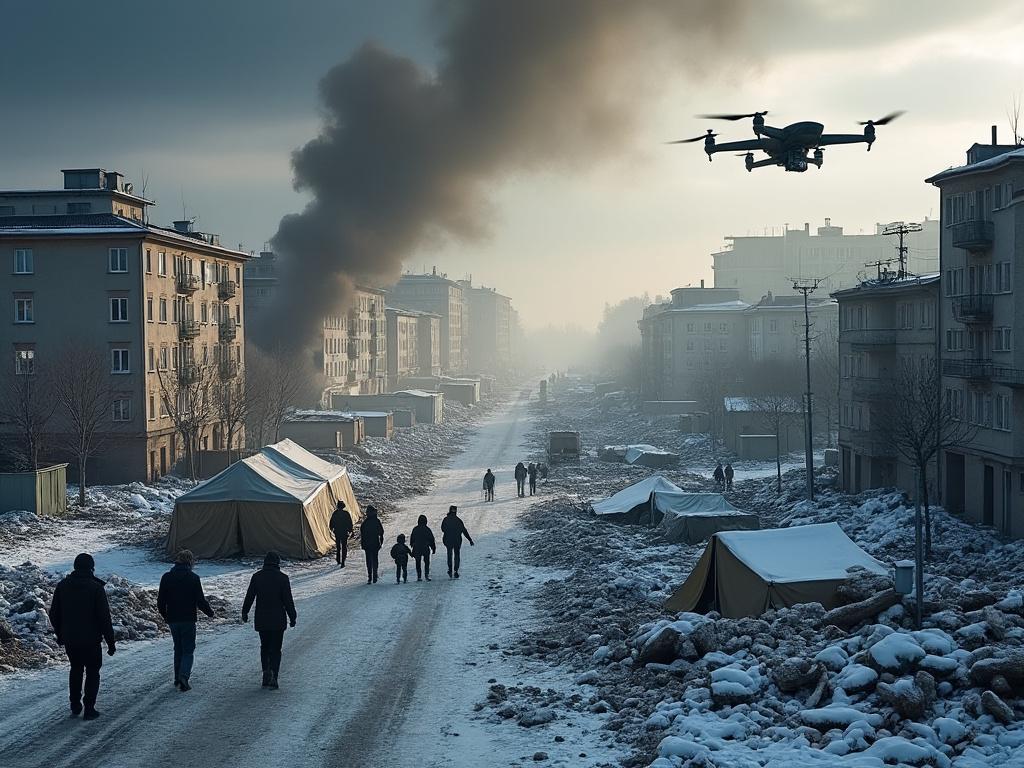
Three years into Russia’s full-scale invasion, life in Ukraine has been transformed by constant danger and disruption. This article explores how Ukrainians navigate daily life under siege, enduring relentless attacks, displacement, and profound psychological trauma.
Relentless Attacks, Disrupted Daily Life
In Ukraine, relentless aerial bombardments have reshaped civilian life into a dystopian reality marked by the cacophony of sirens and explosions. The systematic destruction of infrastructure targets, particularly power plants and heating facilities, plunges many into cold darkness, disrupting essential services pivotal for survival, especially during harsh winters. Adaptation involves an orchestrated ballet of daily adjustments: residents rely heavily on mobile alert applications predicting the next wave of danger. These tools dictate when to seek shelter, influencing everything from grocery shopping to school runs. Embedded in this new routine is a resilient spirit, crafting moments of normalcy amid pervasive threats, demonstrating an unwavering human resolve to persevere.
Displacement and Housing Crisis
The humanitarian fallout of the conflict in Ukraine reverberates most poignantly through the displacement of millions. As incessant attacks rupture everyday life, vast swaths of residents have been coerced into a nomadic existence, fleeing their homes to escape the immediate threats of war. This exodus intensifies the housing crisis, with the damaged infrastructure failing to accommodate the swelling numbers of dislocated families. Amidst this displacement, the Ukrainian winters pose severe survival challenges, forcing dependencies on already overstretched humanitarian networks. These aid systems struggle against both the harsh elements and logistical nightmares to deliver essentials like warm shelter and food, as supplies often must navigate through conflict zones to reach those in desperate need.
Humanitarian Strain and Health Catastrophe
The siege in Ukraine has catastrophically strained the healthcare system, contending with a dramatic uptick in casualties and displaced populations needing medical care. Dire, too, are the repercussions of targeted aggressions against medical facilities; hospitals and clinics have sustained severe damages, debilitating their operational capacities at a time of overwhelming demand. This destruction impedes the delivery of essential services, further complicated by the compromised water supply systems that impact sanitation and hygiene in medical environments. Communities, grappling with these compounded challenges, are forced into dire coping mechanisms. They rely increasingly on international aid and improvised solutions, striving to maintain health standards in conditions starkly averse to well-being. With both medical and basic survival resources stretched perilously thin, the encumbrance on civilians continues to mount, seamlessly leading into issues surrounding the pervasive mental health crises.
Mental Health Crisis and Trauma
The psychological toll of the Ukrainian conflict, particularly on those residing near active combat zones, reveals a landscape marred by trauma and an ongoing mental health crisis. Daily life is punctuated by the ominous sounds of sirens and explosions, driving civilians to frequently seek refuge in bomb shelters—a distressing routine that exacerbates anxiety and stress disorders. The persistent state of alert has eroded the psychological resilience of many, with the cumulative exposure to threat fostering symptoms of post-traumatic stress disorder (PTSD) among wide swaths of the population. Despite the glaring need, mental health support remains critically insufficient. Resources are thinly spread, as the healthcare focus has been on addressing acute physical injuries and the immediate demands posed by the humanitarian crisis. Moreover, the continuity of care for mental health is disrupted, as facilities are often damaged and practitioners are overwhelmed by the sheer volume of need, creating a dire gap in psychological support services. This scenario deeply affects societal morale and individual coping capacities, highlighting an urgent need for comprehensive psychological support systems to address the layered trauma experienced by the populace.
Civic Resilience and Adaptation
In response to the unyielding adversity imposed by war, Ukrainian civilians have remarkably transitioned into a new realm of daily life, defined by a robust tapestry of resilience and adaptation. Communities, often cut off from formal military aid, have organized local self-defense teams, utilizing whatever resources are at hand to safeguard their neighborhoods. This grassroots militarization is paralleled by the sharing of crucial resources such as food, medical supplies, and shelter—where the homes of some become sanctuaries for others in times of danger. Moreover, networks of civilian intelligence have emerged, informing on occupier movements and strategizing passive resistance efforts, which restore a sense of control and purpose among the populace.
The Ukrainian government plays a vital role in this fabric of resilience, providing citizens with essential guidelines on survival tactics; from understanding and responding to air raid signals to methods of improvised barricading. Such advisories are communicated through various channels, ensuring they reach as wide an audience as possible, thus ingraining a collective identity focused on national survival and defiance. This organizational backbone supports not just the physical, but the psychological resilience of communities, offering a semblance of normalcy and routine amidst the pervasive chaos of war.
Conclusions
Ukrainians have rallied to adapt to the extraordinary challenges posed by ongoing war, showing remarkable resilience. Despite severe threats to their security and basic needs, their enduring spirit and collective strength offer powerful examples of human endurance and the capacity to rebuild.