
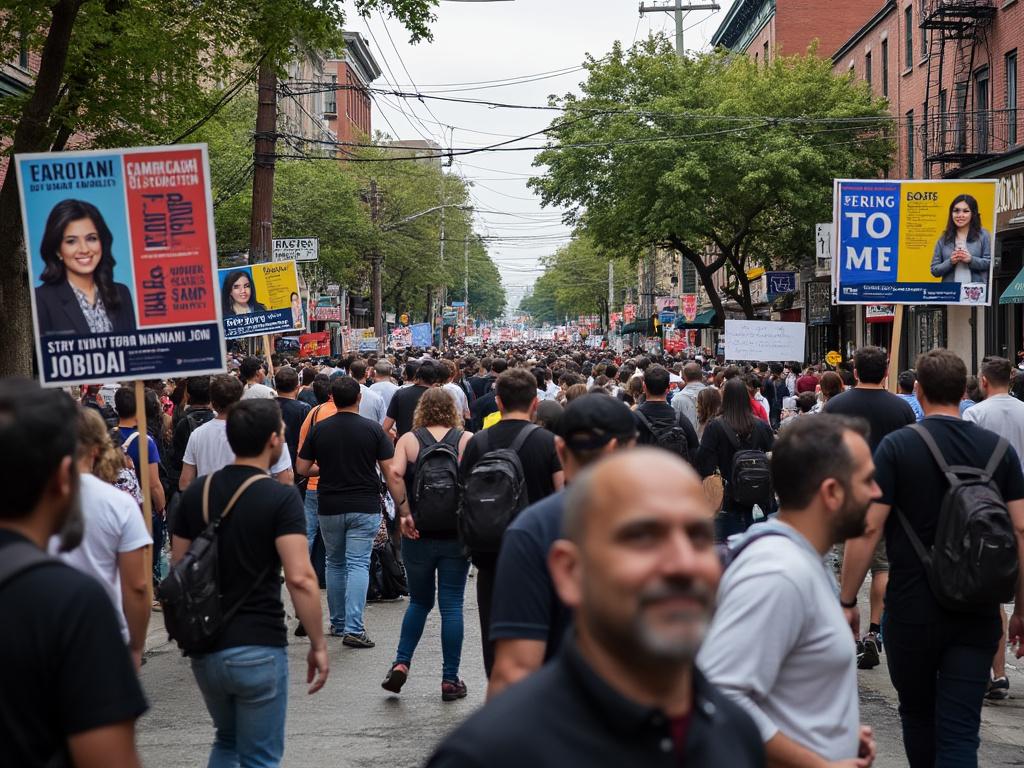
As Zohran Mamdani aims for the New York City Mayor’s office, his Assembly District 36 seat becomes a coveted prize. This article delves into the potential succession by Mary Jobaida and the broader political dynamics at play.
Who is Zohran Mamdani
As Zohran Mamdani steps towards a higher role in New York’s political scenery, his Assembly seat sparks a notable rivalry. Primarily eyed by Mary Jobaida, a determined progressive, the seat symbolizes more than a position; it’s central to continuing the leftist reforms in Queens. A past candidate, Jobaida’s readiness to step back into the arena underscores her commitment to the district’s progressive future and poses critical questions about maintaining momentum amidst political transitions in a rapidly evolving landscape. Her campaign is poised to inherit not just an office, but the spirited grassroots movement galvanized by Mamdani’s policies.
Who Wants His Seat Enter Mary Jobaida
Mary Jobaida, already a familiar name in Queens politics, emerges as a key contender for Mamdani’s Assembly seat should it become vacant. Jobaida, who had a previous unsuccessful run in 2020, has aligned her political vision with that of Mamdani’s progressive policies. This chapter will focus on her political background, her campaign strategies, and the significance of her potential election to preserve the leftist momentum in District 36.
Once a candidate disillusioned by the status quo, Mary Jobaida has since become a vibrant symbol of progressive politics in Queens. Her 2020 campaign, although not victorious, laid a robust foundation, resonating strongly with a demographic hungry for change. Her platform, echoing Mamdani’s, promises extensive housing reforms and more accessible healthcare—a direct appeal to the working-class base that has felt overlooked.
Delving deeper into her strategic playbook, Jobaida leverages grassroots organizing and digital outreach to galvanize supporters. Her campaign effectively uses social media, town halls, and door-to-door canvassing to engage directly with constituents, ensuring their voices and concerns shape the agenda. This hands-on approach not only broadens her appeal but also cements her image as a people’s advocate, crucial for her anticipated run.
If successful, Jobaida’s election would be a seminal moment for Queens’ left-wing politics. It would affirm the district’s appetite for progressive change, initiated by Mamdani, while potentially setting a precedent for neighboring regions. Her victory could thus signify more than just a political win; it would be a statement on the shifting ideological tides, reinforcing the leftist momentum in a typically fluctuating political landscape.
How the Succession Battle Will Unfold
Should Zohran Mamdani vacate his seat for a mayoral run, a layered and competitive succession process would kickstart in the 36th Assembly District, invoking a special election followed by primary and general elections. This interval proves vital, as the Queens County Democratic Party, traditionally moderate, exercises substantial influence. Here, they may endorse a candidate reflecting their ideological stance, shaping both the primary outcomes and the electoral strategies. Key factors such as candidate alignment with party leaders, fundraising capability, and grassroots support play crucial roles. This intensely political chess game, immersed deeply in strategy and local alliances, will ultimately determine who seizes the torch in this progressively inclined district.
Political and Social Dynamics in Astoria
Astoria, with its tapestry of ethnic enclaves and burgeoning youth culture, serves as a microcosm of progressive urban policy. The district, densely populated by immigrants and young professionals, overwhelmingly supports progressive tenants such as rent stabilization and improved public services. This alignment often clashe with Queens’ historically moderate Democratic establishment, illuminating the internal friction within the party. As demographic shifts continue to tilt leftward, the political dynamics in Astoria remain pivotal, setting the stage for intense ideological debates and mobilizing grassroots activism that seeks to redefine the boundaries of traditional urban governance. These underlying tensions and their manifestations could profoundly shape the outcome of the upcoming electoral process.
What’s at Stake
The race for Zohran Mamdani’s Assembly seat transcends local politics, highlighting the broader ideological conflict within the New York Democratic Party. Victory for a progressive candidate would reinforce the growing leftist influence observed in Queens, particularly in policies championing social equity and extensive public services. Conversely, a traditionalist win could signify a return to more centrist, pragmatic politics, potentially stalling ambitious reforms. The outcome will thus not only shape local governance but also serve as a litmus test for the Democratic Party’s direction ahead of pivotal national elections, influencing strategies and alliances.
Conclusions
The potential vacancy of Zohran Mamdani’s seat is more than a local election; it’s a litmus test for the progressive movement in New York City. Mary Jobaida’s candidacy could either bolster this movement or indicate a shift back to moderate politics, impacting the future trajectory of the Democratic party and local governance.