
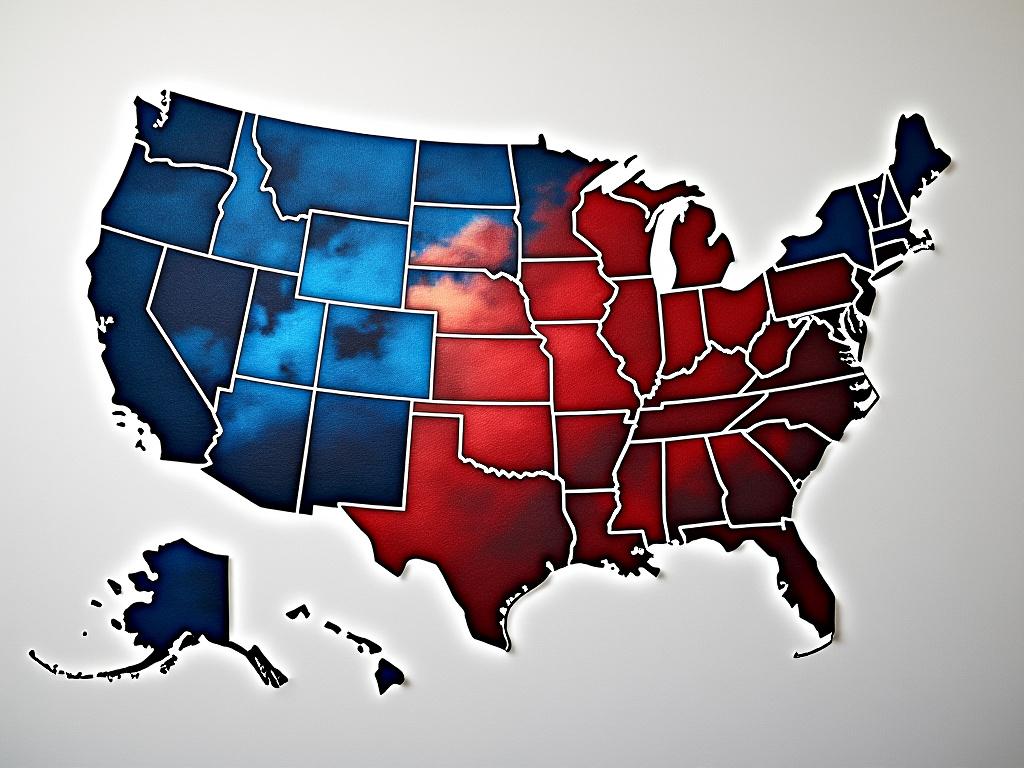
Gerrymandering is a profound influence in U.S. politics, where electoral districts are manipulated by major parties to secure legislative power. This manipulation impacts electoral fairness and reflects deep political divisions.
Understanding Gerrymandering and Its Methods
Gerrymandering, a deeply entrenched strategy in U.S. politics, exploits the flexibility within redistricting processes to craft electoral districts that provide disproportionate benefits to those in power. At the heart of this practice are the methods of packing and cracking. Through packing, a large number of voters from the opposition are confined into the narrow bounds of minimally required districts, effectively marginalizing their broader political influence. Conversely, cracking dilutes the opposition’s vote by distributing them across several districts where they constitute a harmless minority. Both tactics artfully weaken the opposition’s potential, ensuring a structural advantage in electoral landscapes and securing systematic victories, often at the cost of fair political representation and competition.
Historical Context and Evolution of Gerrymandering
The roots of gerrymandering trace back to 1812 when Massachusetts Governor Elbridge Gerry sanctioned a controversial redistricting plan. This incident birthed the term “gerrymander,” derived from a district’s resemblance to a salamander on a map. Historically, gerrymandering has evolved alongside political strategies, reflecting shifts in power and enabling parties to maintain or alter control. As technological advances emerged, so did the sophistication of redistricting methods, allowing for more precise manipulation of electoral boundaries. This manipulation is not merely a modern tactic but an entrenched part of U.S. political history, systematically influencing legislative dominance and consequently, skewing representative democracy.
Political Motivations and Implications
Gerrymandering is intrinsically tied to political motivations, with legislative and congressional majorities hinging crucially on redistricting outcomes. Political parties orchestrate redistricting to secure a strategic advantage, crafting districts that consolidate their voter base while dispersing opposition voters across multiple districts, thereby diluting their voting strength. This manipulation fosters reduced political competition, as carved-out safe seats shield incumbents from meaningful challenges. The consequent lack of electoral competitiveness stifles voter choice, entrenching party dominance and minimizing the impact of dissenting voices within the electorate. By manipulating district boundaries, political entities not only alter the present balance of power but also cement their influence over future legislative terms, effectively deciding political victors in advance and relegating electoral competition to a mere formality.
Legal Battles and Democratic Concerns
In the labyrinth of U.S. politics, the judiciary has undertaken a pivotal role in addressing the convolutions of gerrymandering. Key legal battles, such as Shelby County v. Holder and Rucho v. Common Cause, reveal the courts’ attempts to delineate the bounds of acceptable redistricting practices. However, despite clear judicial intent, legislation and court decisions have often shown only ephemeral effects on the entrenched habits of manipulating district lines for electoral advantage. In particular, the Supreme Court’s decision in Rucho highlighted the limitations of judicial intervention, asserting that excessive partisan gerrymandering questions are “beyond the reach of the federal courts,” thus shifting responsibility to state legislatures and initiatives. This deference underscores a significant democratic concern: the reliance on the very bodies that benefit from electoral manipulation to correct their own misalignments.
Reform and Challenges to Gerrymandering
Despite previous legal efforts to control gerrymandering, achieving substantive reform often confronts stiffer resistance due to entrenched political interests. Advocates have turned to promoting independent redistricting commissions as a solution to curb partisan manipulation. However, establishing these commissions involves navigating complex legislative barriers, as lawmakers who benefit from current districting maps wield significant power in blocking change. Furthermore, strong partisan loyalties and fears of losing electoral advantages drive opposition against these reforms. Nonetheless, several states have seen successful campaigns that bypass legislative roadblocks through direct voter initiatives, suggesting that reform is possible but requires considerable public support and mobilization efforts. These instances highlight a grassroots approach to overcoming the challenges posed by deep-rooted political resistance to fair redistricting practices.
Conclusions
Gerrymandering critically shapes U.S. political landscapes by amplifying party power and diminishing electoral competition. While recognized as a serious democratic flaw, meaningful reform is hampered by institutional resistance and entrenched partisan advantages.