
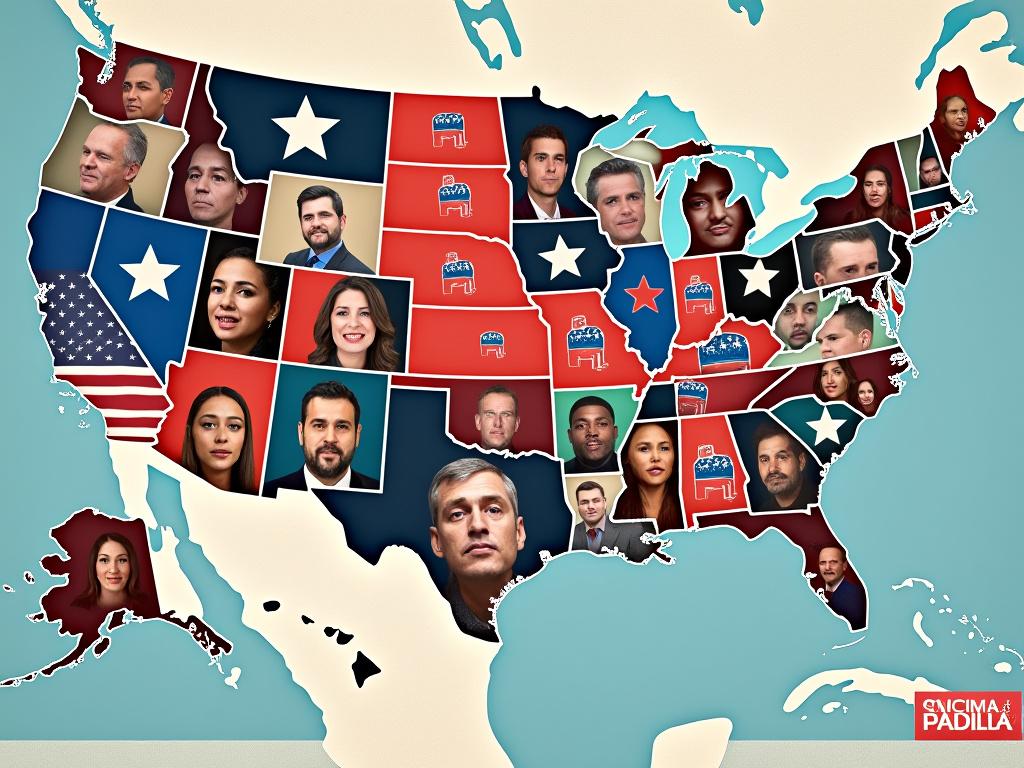
In a pivotal shift, Senator Alex Padilla has emerged as a vociferous opponent of Republican-led redistricting efforts in Texas, slated for the 2026 midterm elections. This article delves into the reasons behind these initiatives and the broader consequences for American democracy.
Context: Republicans’ Unusual Mid-Decade Redistricting Push
Senator Alex Padilla has pointedly criticized the Republican mid-decade redistricting efforts in Texas, arguing that it signals a lack of faith in their own policy platform. He asserts that if the GOP were truly confident in the strength and appeal of their policies, they would not resort to manipulating electoral boundaries to secure legislative victories. According to Padilla, this strategic move is less about responding to demographic changes and more about preempting electoral challenges by optimizing districts for Republican wins, circumventing the more straightforward and democratic method of engaging with voters on policy issues. This interpretation aligns with broader concerns regarding the integrity of electoral processes and reflects a deep-seated unease around the motivations steering such significant changes outside the standard ten-year cycle.
Padilla’s Critique: Policy Weakness and Electoral Manipulation
Senator Alex Padilla’s critique of Republican redistricting practices hinges on a stark accusation: the GOP lacks faith in its policy platform’s appeal to voters, resorting instead to electoral engineering. He posits that rather than competing on the strength of their policies, Republicans opt to “rig the election before it starts,” a tactic mirroring the strategies employed by former President Trump and his allies post-2020 election. Padilla’s argument suggests a systematic avoidance of policy debate, leaning instead on manipulating electoral maps to secure unwarranted advantages. This method, he implies, reveals a continuity in Republican strategy, designed to undermine electoral integrity and eschew genuine democratic competition. These actions, as Padilla asserts, reflect a broader intent to maintain power by altering the rules of the game, rather than engaging in a fair contest of ideas and policies.
Allegations of Racial Gerrymandering and Voter Suppression
Senator Alex Padilla’s concerns about racial gerrymandering and voter suppression in Texas highlight a disturbing pattern wherein redistricting appears strategically designed to weaken minority voting power. Allegations suggest that these efforts selectively carve districts to fragment cohesive minority communities, thereby diluting their electoral influence in favor of bolstering Republican strongholds. This not only threatens the principle of equal representation but also hints at a deeper agenda of retaining power irrespective of demographic shifts. The role of the Trump administration in perpetuating such strategies is particularly troubling, as it seems to endorse these divisive tactics, risking the undermining of the democratic framework designed to reflect a true and fair electorate landscape. Such actions depict a direct challenge to the Voting Rights Act’s provisions aimed at protecting minority voters, raising urgent questions about the preservation of civil rights in electoral processes.
Formal Investigations and Hatch Act Concerns
Senator Alex Padilla’s insistence on formal investigations into the Trump administration’s involvement in Texas’s mid-decade redistricting points to potential violations of the Hatch Act, which prohibits federal employees from engaging in certain political activities. The Office of Special Counsel is tasked with examining these accusations, a move that underlines the gravity of Padilla’s allegations. These investigations are crucial not just for understanding the extent of potential legal breaches but also for safeguarding electoral integrity and ensuring governmental accountability. The implications are vast, shaping how future administrations might influence redistricting efforts and the overall fairness of electoral processes. This rigorous legal scrutiny follows concerns about racial gerrymandering and sets the stage for significant Democratic responses to uphold democratic principles.
Democratic Response and Broader Political Stakes
Amidst the formal investigations spotlighting potential legal breaches, the dialogue shifts to the robust opposition led by Democrats against the redistricting efforts, particularly under the urging of Senator Alex Padilla. He contends that the aggressive remap is a tactic employed by Republicans due to insecurity in their policy’s public appeal. This strategic pivot to federal voting rights legislation highlights a Democratic coalition, including leaders like Schumer and Booker. They articulate an urgent need to protect the integrity of electoral districts and advocate for a fair representation system, reflecting the electorate’s true demographics without partisan skew. The stakes escalate not merely for upcoming elections but challenge the bedrock principles of equitable democratic processes. This battle delineates not just future political landscapes but the perseverance of transparent governance.
Conclusions
The battle over redistricting in Texas encapsulates broader issues of electoral fairness and democracy in America. Senator Padilla’s sharp critique underscores a critical discourse on political strategy over policy strength, which could shape the legislative and ethical contours of future elections.